
What are the key maintenance steps for ensuring the longevity of my curved stairlift?
To extend the life of your curved stairlift, keep the track and seat clean, check for obvious wear or damage, use the lift as instructed, and arrange professional servicing at the recommended intervals. Keep the charging points clear, report unusual noises or movement promptly, and do not attempt electrical or mechanical repairs yourself.
Regular cleaning, sensible daily use, prompt reporting of faults and professional servicing are the key maintenance steps for extending the working life of a curved stairlift. Curved systems have made-to-measure rails, moving drive components, charging contacts and safety sensors, so keeping each part clear and arranging the correct service support helps preserve safe, reliable operation.
Keep the rail and surrounding area clean. Dust, pet hair and other debris can collect around the rail, drive mechanism or charging points. Wipe accessible surfaces with a soft, slightly damp cloth and dry them afterwards. Follow the cleaning instructions supplied with your stairlift, particularly around the controls, sensors and upholstery. Do not pour or spray cleaning products onto the lift, rail, motor or electrical components, and avoid abrasive products that could damage finishes.
Check that the track remains free from objects such as bags, clothing, toys and household furniture. On a curved staircase, even a small obstruction can affect a bend, landing or parking position. Keep the stairlift’s travel path clear before use and make sure doors, cupboards or other items cannot interfere with the lift at its parked position.
Check the charging points. A stairlift should normally be left at its designated charging position when it is not in use, unless your installer has advised otherwise. Keep the charging contacts clean and unobstructed, and check that the lift starts charging when parked correctly. If the lift repeatedly fails to charge, loses power quickly or stops before reaching its usual destination, contact us or your servicing provider rather than repeatedly moving it away from the charger.
Use the lift as instructed. Sit fully back in the seat, use the safety belt where fitted, keep hands and feet within the designated areas and do not carry loads that could affect balance or obstruct the controls. Do not allow additional people to ride on the stairlift unless it has been specifically designed and approved for that use. Avoid forcing the controls, stopping and starting unnecessarily, or using the lift to transport items that could catch on the rail or staircase.
Carry out simple visual and functional checks. Before using the stairlift, look for loose covers, damaged upholstery, exposed wiring, unusual marks on the rail or anything that appears out of position. Check that the seat, armrests, footrest, swivel mechanism and safety belt operate as expected, without forcing any component. Test the controls only as described in the user instructions. If a safety feature does not work correctly, stop using the lift and arrange an inspection.
Pay attention to changes in operation. Grinding, knocking, squeaking, juddering, hesitation, uneven movement, unexpected stopping or a change in speed can indicate wear, an obstruction, a charging issue or a fault that needs professional attention. A curved stairlift may also develop problems with a folding or swivel section if it is obstructed or handled incorrectly. Do not continue using the lift simply because it still completes the journey.
Arrange professional servicing at the recommended intervals. A trained engineer can inspect the rail, drive system, batteries, charging equipment, safety sensors, switches, wiring, seat mechanisms and fixings. They can also identify wear that is not visible during routine cleaning and confirm that the stairlift remains correctly aligned and securely installed. Follow the service schedule provided for your specific model and contact the servicing team sooner if the lift has developed a fault, has been affected by water or impact, or has been unused for an extended period.
Do not lubricate the rail, gears or other moving parts unless the manufacturer or a qualified engineer specifically instructs you to do so. Applying the wrong product can attract dirt, affect braking or interfere with components and sensors. Similarly, do not remove covers, adjust the rail, alter safety switches or attempt electrical repairs. These tasks require appropriate technical knowledge and may create a safety risk or affect the equipment’s warranty and service records.
Take extra care in outdoor or damp conditions. If any part of the installation is exposed to weather, keep it protected in accordance with the manufacturer’s instructions. Look for signs of moisture, corrosion or water ingress and report them promptly. Never use the stairlift while electrical components are wet, and do not clean an outdoor unit with a pressure washer or direct hose spray.
Keep the user manual, service information and engineer’s contact details accessible. Record recurring warning lights, error messages or unusual behaviour, including when the issue occurs and whether the lift was charging. This information can help the engineer diagnose the problem efficiently. If the stairlift stops, isolate it according to the user instructions, keep the stairs clear and seek advice; do not try to bypass a safety feature or move the lift by force.
Good maintenance does not prevent every fault, but it reduces avoidable wear and helps problems receive attention before they become more disruptive. For day-to-day care, keep the rail and charging areas clear, use the lift correctly, check visible components and report changes promptly. Combine these checks with servicing by a qualified engineer, and your bespoke curved stairlift can continue to provide dependable access while remaining safe for the person using it.
Professional servicing is a key part of maintaining a curved stairlift because its made-to-measure rail, drive system, batteries and safety sensors require checks that are not possible through routine cleaning. A qualified engineer can inspect alignment, fixings, charging equipment, switches and seat mechanisms, while identifying wear before it affects safe operation.
Arrange servicing at the intervals recommended for your specific model, and request an inspection sooner if the lift develops unusual noise, hesitation, uneven movement, charging problems or unexpected stops. Do not remove covers, lubricate components or adjust the rail yourself, as an incorrect repair can affect safety systems and create further damage.
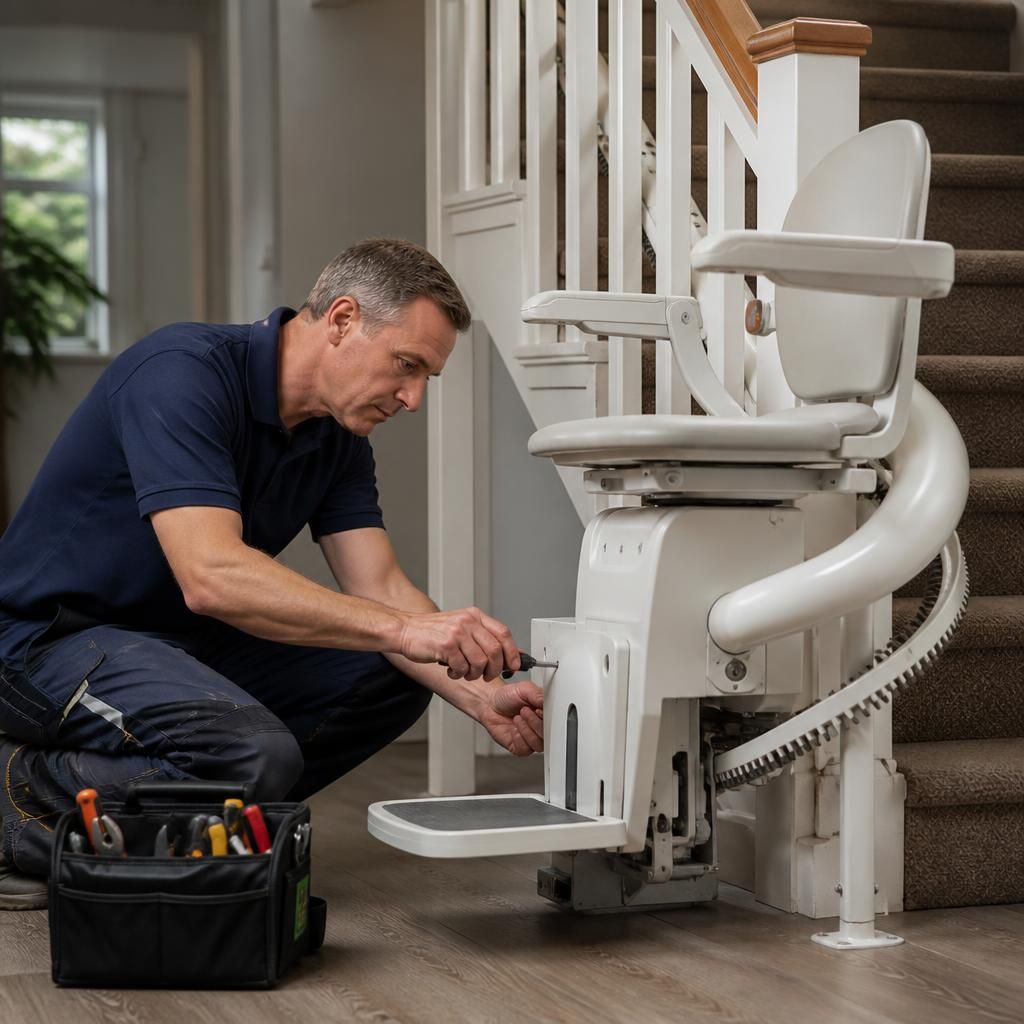
Arrange professional curved stairlift servicing
If your curved stairlift is due for a service or has developed unusual noise, movement or charging problems, contact our team to arrange a professional inspection.