
How do I ensure my curved stairlift remains safe and operational during power outages?
A curved stairlift normally remains usable during a power cut because its batteries provide temporary backup power, provided they are charged and in good condition. Keep the lift parked on its charging point when not in use, avoid unnecessary journeys during an outage, and contact Independent Stairlifts if it will not move, displays a fault, or the batteries do not hold charge.
A curved stairlift should normally remain available for limited use during a power cut because its rechargeable batteries provide backup power. To keep it safe and operational, leave the stairlift on its charging point whenever it is not in use, keep the batteries in good condition, minimise journeys while the power is off and contact Independent Stairlifts if the lift stops, shows a fault or does not hold its charge.
Before a power cut
- Park the stairlift fully on its designated charging point when it is not being used. Depending on the installation, this may be at the top or bottom of the staircase, or at another specified parking position.
- Check that the charging indicator shows that the batteries are charging. If it does not, check that the charger is connected to the mains and report the issue rather than waiting for a power cut to occur.
- Keep the track, seat and footrest clear of objects that could obstruct movement. A curved stairlift follows a bespoke rail, so an obstruction at a bend or landing can prevent safe travel.
- Keep the remote controls and the stairlift handset accessible, and make sure household members know how to stop the lift using its normal controls.
- Follow the operating and battery-care instructions supplied with your particular model. Battery performance can vary with the age, condition and usage of the stairlift.
Using the stairlift during an outage
Use the lift only when necessary and make each journey carefully. Sit fully back in the seat, fasten the safety belt if fitted, place your feet on the footrest and keep your hands away from the track, carriage and moving parts. Do not carry extra items that could catch on the rail or affect your balance.
Use the normal controls and travel at the speed intended by the manufacturer. Avoid repeated journeys, unnecessary repositioning or holding the control continuously after the stairlift has reached its destination, as these actions use additional battery power. If the lift stops, release the control and remain seated if it is safe to do so. Do not try to push, pull or manually move the stairlift while you are on it.
If the stairlift stops on the stairs, do not attempt to climb past it or get out onto the staircase unless there is no safer alternative and you have been advised how to do so. Use the telephone or another agreed method of contacting a family member, carer or the stairlift service team. If there is an immediate risk to your health or safety, contact the emergency services.
What to do when the power returns
- Return the stairlift to its charging point as soon as it is safe and practical to do so.
- Check that the charging indicator is working and leave the lift charging before relying on it for normal use.
- If a warning light, audible alert or fault message remains, switch off or reset the lift only if the user instructions specifically permit this.
- Do not remove covers, access the battery compartment or work on electrical components yourself. Arrange an inspection if the lift will not charge, moves slowly, cuts out or repeatedly reports a fault.
Battery care is particularly important
Rechargeable stairlift batteries are designed to be maintained by regular charging. Leaving the lift away from its charging point for long periods, allowing the batteries to become completely depleted or repeatedly using the stairlift during outages can reduce the available backup power. A battery may also appear to charge but provide limited travel if it is ageing or defective.
Report any change in performance, including shorter journeys, slower movement, repeated low-battery warnings, failure to start after charging or a charging light that does not operate normally. An engineer can test the batteries, charger and electrical connections and replace components where necessary. Do not substitute batteries or chargers unless they are confirmed as suitable for the installed stairlift.
A power cut can also affect other safety arrangements in the home. Keep the staircase adequately lit with a torch or emergency light, avoid leaving loose items on the steps and ensure that someone can check on the stairlift user if required. If outages are frequent or prolonged, discuss the installation with Independent Stairlifts so that its battery condition, charging arrangement and suitability for your circumstances can be reviewed.
The precise backup time and warning signals depend on the stairlift model, battery condition and the route of the bespoke curved rail. The safest approach is to follow the instructions provided for your installation, keep the lift charged, use it sparingly during an outage and arrange professional help for any fault rather than attempting a repair yourself.
The most important preparation for a power cut is keeping your curved stairlift’s batteries fully charged. Park the lift on its designated charging point whenever it is not in use and check that the charging indicator is operating normally. During an outage, use the stairlift only when necessary, as repeated journeys will reduce the remaining backup power.
When the electricity returns, place the stairlift back on its charging point and allow it to recharge before relying on it again. If it moves slowly, stops unexpectedly, gives repeated low-battery warnings or fails to charge, stop using it and contact Independent Stairlifts. Do not open the battery compartment or attempt electrical repairs yourself.
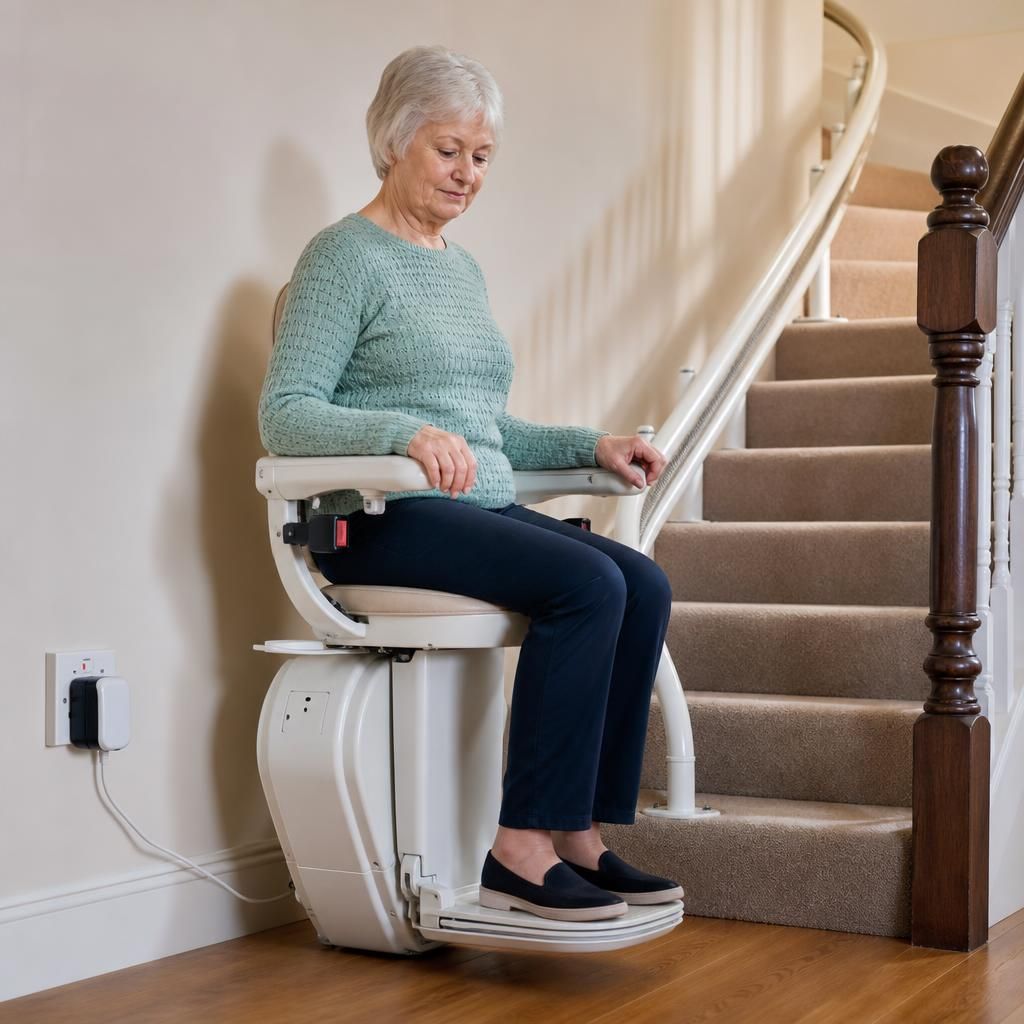
Need Help Preparing Your Curved Stairlift for a Power Cut?
If you need help checking your curved stairlift’s battery, charging point or performance during power cuts, contact Independent Stairlifts to arrange professional advice or a service visit.