
What happens if my stairlift loses power unexpectedly?
If your stairlift loses mains power unexpectedly, its rechargeable batteries will normally allow it to continue operating for a limited time, provided they are charged. If it stops, remain seated safely, do not try to force the lift or leave it on the stairs, and contact us for advice or repair.
If your stairlift loses mains power unexpectedly, its rechargeable batteries will normally keep it operating for a limited period, provided they are charged and the stairlift itself has no fault. If the batteries are depleted, or the loss of power is caused by a technical problem, the lift may stop on the stairs. Remain seated, keep your seat belt fastened, and do not try to force the stairlift to move.
Most stairlifts are designed to charge automatically when parked correctly at a charging point. During a power cut, the lift can usually complete a limited number of journeys using battery power. The exact response depends on the model, the condition of the batteries and how long the mains supply has been unavailable. A warning tone or indicator may show that the batteries are being used or are becoming low.
If the stairlift stops while you are using it:
- Stay seated and keep the safety belt fastened.
- Keep your hands, feet and clothing clear of the moving parts and the edge of the stairs.
- Do not attempt to push, pull or manually force the stairlift along the rail.
- Do not try to climb over the stairlift or get off on the stairs.
- Use the communication method agreed with your family, carer or support contact, and contact us for advice.
If the stairlift has stopped at a landing and you can leave the seat safely without using the stairs, move to a safe area and avoid operating the lift again until the power supply or fault has been checked. If it has stopped part-way up or down the staircase, remain seated unless staying there presents a greater immediate danger. Anyone assisting you should not attempt to lift or carry you from the stairlift without appropriate training.
Check whether the problem is a general power cut. If lights and other appliances are also off, wait for the mains supply to return while following the safety advice above. If you can do so safely, check whether the household consumer unit has tripped. Only reset a switch if you are confident that it is safe to do so. If it trips again, leave it off and contact a qualified electrician or stairlift engineer rather than repeatedly resetting it.
If the rest of the property has power, check that the stairlift is fully parked at one of its charging points. On some installations, the lift charges only at a particular position at the top or bottom of the stairs. Make sure the charger is switched on and that there is no obvious obstruction, loose connection or visible damage. Do not remove covers or work on the wiring. If the lift has been left away from its charging point for a prolonged period, its batteries may have discharged even though the stairlift was working normally previously.
When power is restored, the stairlift may not operate immediately. Allow its controls and charging system to restart, then follow the normal operating instructions. Do not continue using it if you hear unusual noises, receive a fault warning, notice jerky movement or find that it will not charge. Repeated loss of power, poor battery performance or a lift that stops shortly after being charged may indicate a battery, charger, electrical or control-system fault rather than a simple power cut.
Contact us for service or repair if the stairlift remains inoperative after the mains supply returns, will not move from a charging point, displays a fault indication, or repeatedly loses power. Tell us whether the whole property was affected, where the stairlift stopped, whether any warning lights or tones appeared and whether it had been charging normally. This information helps identify whether the issue is likely to involve the domestic power supply, charger, batteries or the stairlift mechanism.
Keep the stairlift at a charging point whenever it is not in use, unless your model’s instructions say otherwise. Avoid switching off its dedicated supply, and report unusual battery warnings or reduced operating time promptly. Regular servicing also helps identify ageing batteries, charging problems and electrical faults before they leave the lift unavailable during a power interruption.
If you or the person using the stairlift is unwell, injured or at immediate risk, call the emergency services. Do not delay urgent medical assistance while waiting for a stairlift repair.
If your stairlift loses mains power, its rechargeable batteries will usually provide temporary operation if they are charged and in good condition. If the lift stops on the stairs, remain seated with the safety belt fastened and do not try to force it, climb over it or leave the seat onto the staircase.
Check whether the whole property has lost power. Once the supply returns, allow the stairlift to restart and do not use it if it shows a fault, makes unusual noises or fails to charge. Contact us for advice if it remains inoperative, repeatedly loses power or stops shortly after charging.
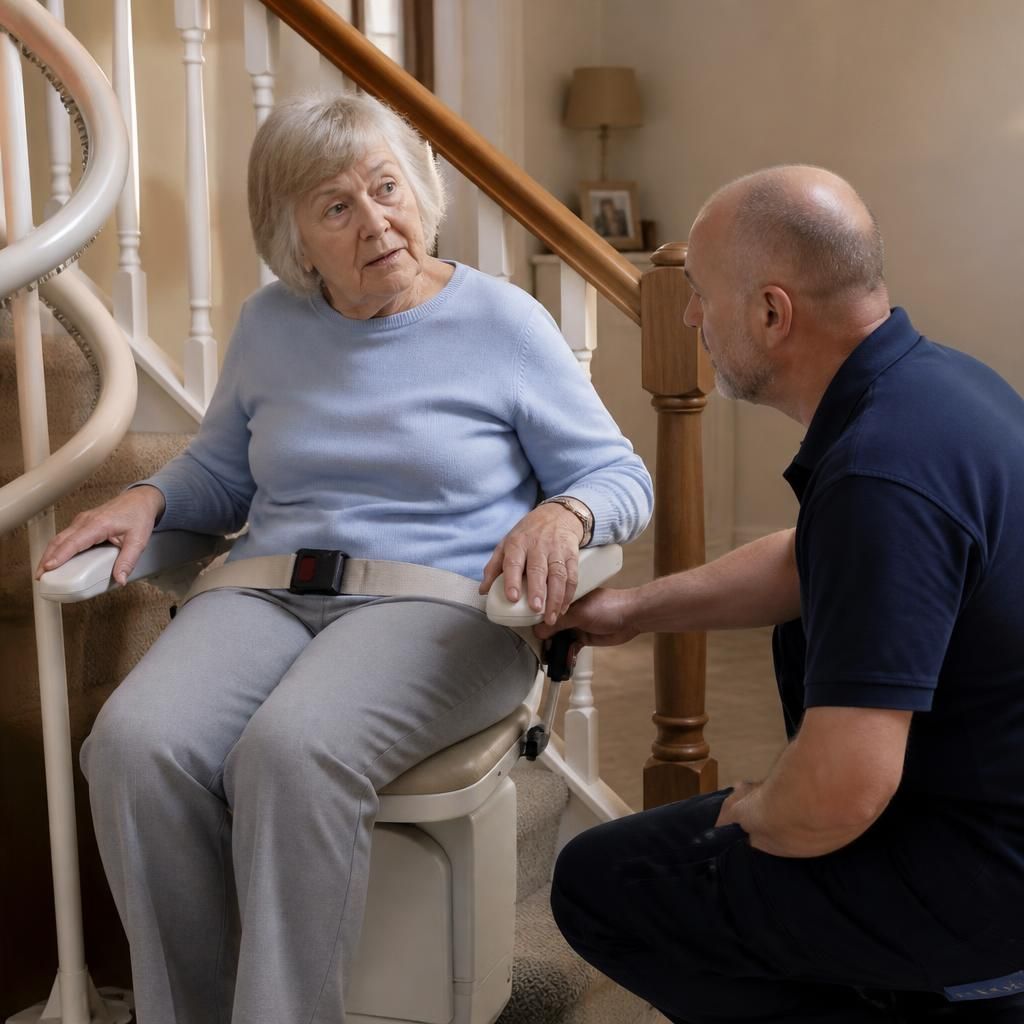
Need help after an unexpected power loss?
If your stairlift remains stopped after a power cut, will not charge or shows a fault warning, contact us for advice and arrange a repair assessment. Tell us where it stopped and whether the rest of the property also lost power so we can advise on the appropriate next step.