
What are the signs that my stairlift needs immediate repair service?
Your stairlift needs immediate repair if it stops unexpectedly, moves unevenly or unusually slowly, makes new grinding or rattling sounds, jolts during travel, fails to start, or shows persistent warning lights or fault beeps. Stop using it if it appears unsafe, switch it off if possible, and contact a qualified stairlift repair service for advice rather than attempting to fix the mechanism yourself.
A stairlift needs immediate repair when it stops unexpectedly, moves unevenly or unusually slowly, jolts during travel, makes a new grinding or rattling noise, fails to start, or displays persistent warning lights or fault beeps. These symptoms can indicate a mechanical, electrical or battery-related fault. Stop using the stairlift if its operation appears unsafe, and contact a qualified stairlift repair service for advice rather than attempting to repair the mechanism yourself.
Some faults may be resolved through straightforward checks, such as confirming that the power supply is switched on or that the lift is correctly positioned on its charging point. However, recurring faults, unusual movement and any change that affects stability should be assessed by a trained engineer. Continuing to use a faulty stairlift can worsen the damage and may increase the risk of the user becoming stranded on the stairs.
Signs that require prompt repair attention include:
- Unexpected stopping: The stairlift stops part-way along the rail, will not complete its journey or repeatedly cuts out. Do not assume that resetting it has fixed the problem if the fault returns.
- Jerking, jolting or uneven movement: A stairlift should travel smoothly. Sudden changes in speed or a noticeable lurch when starting, stopping or rounding a bend may point to a drive, rail, motor or control issue.
- Grinding, scraping, clicking or rattling: New or worsening noises should not be ignored, particularly if they occur during movement. They can be associated with worn components, an obstruction, loose parts or a problem with the drive system.
- Unusually slow travel: Reduced speed can result from a weakening battery, charging problem, motor fault or resistance in the mechanism. If the lift also struggles on an incline or stops under load, arrange an inspection promptly.
- Failure to start: If the lift does not respond to the controls, check that the key switch, isolation switch and main power supply are on, where these are accessible and safe to check. If it still does not operate, or if the cause is unclear, request a repair assessment.
- Persistent warning lights or fault beeps: A warning that remains after the stairlift is correctly parked and connected to its charger may indicate a fault. Make a note of the warning pattern and tell the service team, as this can help with diagnosis.
- Problems with the seat, arms, footrest or swivel: Do not use the lift if the seat does not lock securely, the swivel seat does not return to its travel position, the armrests do not stay in place or the footrest is loose or obstructed.
- Unexpected movement or control problems: If the stairlift moves without the intended control being operated, or a control remains stuck, switch it off if possible and keep people away from it until it has been examined.
- Visible damage or a burning smell: Damage to the rail, wiring, seat, safety edges or controls, along with smoke, overheating or a burning smell, requires immediate attention. Isolate the power only if it can be done safely and do not use the stairlift.
What to do when you notice a fault
- Stop the stairlift in a safe position if it is still moving normally. If it has stopped on the stairs, follow the user instructions for safely leaving the seat and ask for assistance if needed. Do not climb around the lift or try to move it manually unless the manufacturer’s instructions specifically allow this.
- Remove the key or switch off the stairlift if there is a risk of unintended movement. Do not disconnect wiring, open covers or remove batteries.
- Check for simple, external issues only. Look for an obstruction on the footrest, rail or stairway, and check that the lift is parked correctly on its charging point. Keep hands, clothing and loose items clear of moving parts.
- Contact the service team and describe exactly what happened. Include whether the stairlift was moving up or down, whether anyone was using it, any beeps or lights shown, and whether the problem is intermittent or constant.
- Keep the stairlift out of use until you have been advised that it is safe, particularly if there is a movement, braking, seating or electrical fault.
A stairlift that will not charge also needs attention if the problem persists. A discharged battery may be caused by the lift not being parked correctly, an interrupted power supply, a failed charger or ageing batteries. Repeatedly switching the lift on and off will not resolve an underlying charging fault. If the lift has enough power to move but the battery warning returns, arrange a service visit before it becomes completely unusable.
Do not attempt to lubricate the rail, adjust the drive system, bypass a safety switch or replace electrical components without suitable training and the correct technical information. Stairlifts contain safety systems designed to control movement, braking, charging and obstacle detection. Incorrect adjustments can create a more serious fault or invalidate applicable warranty and aftercare arrangements.
Not every unusual symptom means the stairlift has suffered a major failure. A single beep caused by incorrect parking or an object touching a safety sensor may clear after the obstruction is removed and the lift is returned to its charging position. The important distinction is whether the symptom is new, repeats, affects safe operation or remains after the basic checks described in the user instructions. When in doubt, treat a recurring or safety-related fault as requiring repair.
When an engineer attends, they should identify the fault, inspect relevant mechanical and electrical components, test the safety features and explain whether a repair, replacement part or battery change is required. Ask what has been found, whether the stairlift is safe to use, and whether any further servicing is recommended. If the stairlift is left out of use, request clear advice about safe access between floors and the expected next step.
Arrange immediate repair advice for any fault involving unexpected movement, loss of braking, insecure seating, exposed or damaged wiring, smoke, overheating or a stairlift stopping where the user cannot safely leave it. For less urgent issues, such as a gradually weakening battery or occasional warning tone, report the problem promptly rather than waiting for a complete breakdown. Early assessment can help restore reliable operation and maintain safe, accessible movement around the home.
A stairlift needs immediate repair when it behaves unpredictably or shows a fault that could affect safe movement. Stop using it and contact a qualified engineer if it jolts, stops unexpectedly, moves without the control being operated, makes a new grinding or rattling noise, or displays persistent warning lights or fault beeps.
Do not use the stairlift if the seat, swivel, armrests or footrest do not lock securely, or if you notice damaged wiring, smoke, overheating or a burning smell. Switch it off or remove the key if this can be done safely, keep people away from the lift and do not open covers, bypass safety switches or attempt mechanical repairs.
Minor issues such as incorrect parking or an obstruction may clear after following the user instructions, but a recurring fault should not be ignored. Tell the service team exactly what happened, including any sounds, warning signals and the position of the stairlift, so the engineer can assess the cause and confirm whether it is safe to use.
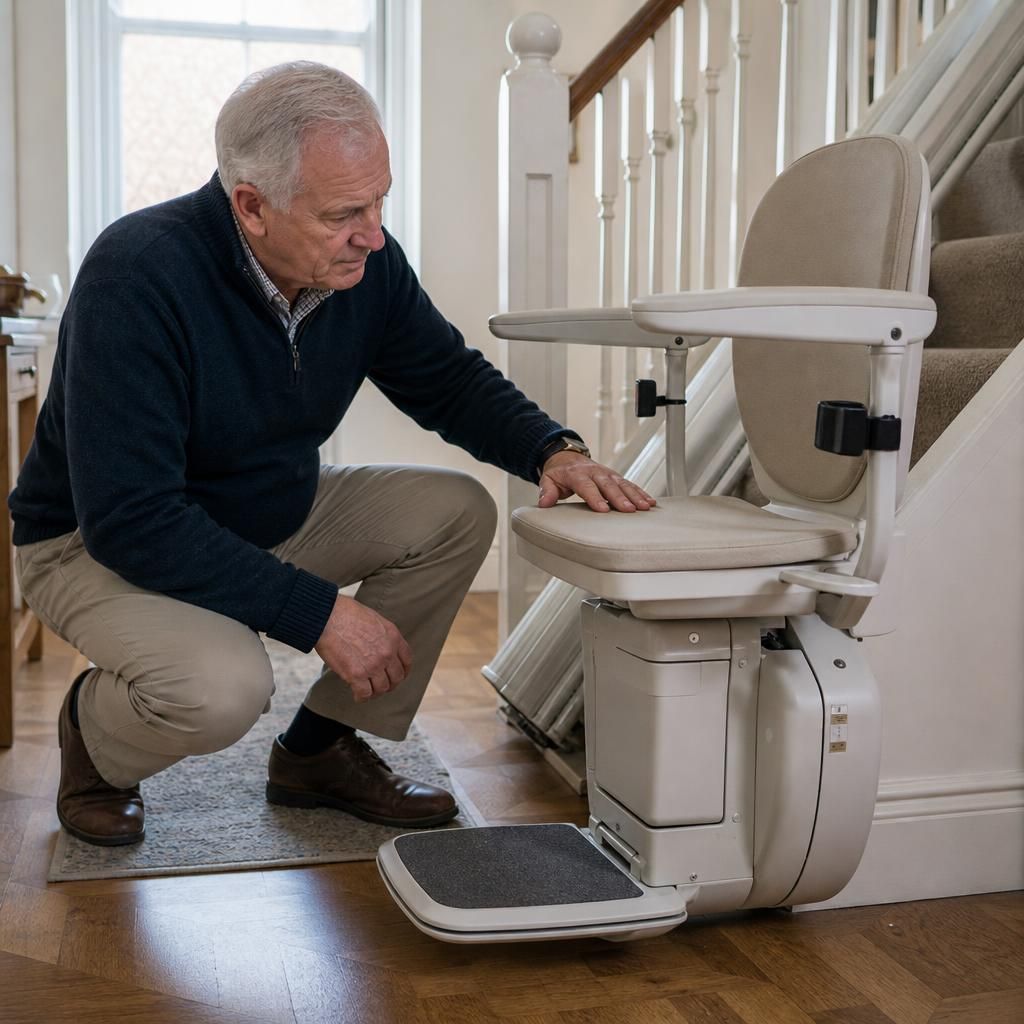
Need Immediate Stairlift Repair Advice?
If your stairlift has stopped, is moving unpredictably or shows a persistent fault, stop using it and contact Independent Stairlifts for immediate repair advice. Tell us what happened, including any warning lights, beeps or unusual noises, so we can advise on the safest next step.