
What steps are involved in a professional stairlift maintenance service?
A professional stairlift maintenance service typically includes a safety inspection, cleaning, testing of the lift’s mechanical and electrical parts, and adjustments or repairs where needed. The engineer will also check the track, seat, controls, batteries and safety features, then explain any work required before confirming that the stairlift is safe to use.
A professional stairlift maintenance service is a structured inspection, cleaning, safety test and adjustment of the complete lift system. The engineer checks the stairlift’s track, carriage, seat, controls, batteries, charging equipment and safety features, then carries out any appropriate adjustments or repairs and confirms whether the lift is safe to use.
The exact procedure varies according to the make, model, age and installation, but a thorough service normally follows these steps:
- Review of the stairlift and reported concerns
The engineer will usually begin by checking the stairlift model and service history. They may ask whether you have noticed changes such as slower movement, unusual noises, jolting, difficulty charging or controls that respond intermittently. This information helps direct the inspection towards symptoms that may not be apparent during a short test journey. - Visual inspection of the installation
The stairlift and its surroundings are examined for visible damage, loose fittings, obstructions or signs of wear. The engineer checks that the track remains secure and correctly aligned, that the carriage runs along it properly, and that the lift has not been affected by changes to the staircase or nearby flooring. Hinged or folding sections of track, where fitted, are also checked for safe operation and clearance. - Inspection of the seat and user supports
The seat, swivel mechanism, armrests, footrest, seat belt and associated catches are checked for damage, looseness and correct operation. The engineer confirms that the seat locks securely in its travel and exit positions, and that the swivel or powered swivel function operates as intended. The footrest is examined because it can be affected by impact, obstruction or repeated use. - Checks of controls and safety sensors
The hand control, remote controls, key switch and direction controls are tested. Depending on the model, the engineer will also check sensors that stop the stairlift if the footrest, seat, armrest or another part of the lift encounters an obstruction. Emergency stop controls and other user-safety features are tested to ensure the stairlift stops promptly when required. - Mechanical inspection and adjustment
Mechanical components such as drive parts, rollers, gears, brackets, fasteners and moving joints are inspected for wear or looseness. The engineer may clean and lubricate components where the manufacturer permits this, and adjust settings to improve smooth movement or reduce unnecessary noise. Lubrication is not applied indiscriminately, as the wrong product or excess lubricant can attract dirt or affect the drive system. - Electrical and battery checks
The engineer checks the power supply, charging points, wiring, connectors and battery condition. They will confirm that the stairlift charges correctly when parked and that the batteries provide appropriate power during operation. Battery performance can decline with age or with prolonged periods of disuse, so the engineer may recommend replacement if testing indicates that the batteries are no longer reliable. Fault codes or warning indicators are also investigated rather than simply reset. - Operational testing
The stairlift is run through its normal operating cycle, often several times, to assess starting, stopping, speed, noise, vibration and smoothness. The engineer checks travel at different points on the staircase and tests relevant functions such as swivel operation, folding sections, remote controls and charging. Safety circuits are tested in accordance with the equipment’s design and servicing requirements. - Repairs or corrective work
If the inspection identifies a fault, worn component or safety concern, the engineer will explain what has been found and what action is recommended. Minor adjustments or approved maintenance work may be completed during the visit. Parts that require replacement may need to be ordered, particularly where the component is model-specific. Any repair should be agreed before chargeable work is carried out, and the stairlift should not be used if the engineer considers it unsafe. - Final confirmation and service record
Once the work and testing are complete, the engineer records the condition of the stairlift, work carried out, parts fitted and any recommendations. You should be told about issues that may need monitoring, future servicing or further repair. The engineer will also confirm how to use the stairlift safely and whether any functions should be treated with particular care.
A service is not limited to making the stairlift move up and down the stairs. A lift can appear to work normally while having weakened batteries, loose fixings, worn rollers or a safety sensor that needs attention. Checking the complete system helps identify these issues before they develop into a breakdown or affect safe operation.
Before the engineer arrives, keep the staircase and the area around the charging points reasonably clear. Make a note of any fault messages, unusual sounds, interrupted journeys or changes in battery performance. If possible, explain when the problem occurs and whether it affects the hand control, remote control or a particular section of the track. Do not attempt to remove covers, adjust the track or work on the electrical system yourself, as this can create a safety risk and may make diagnosis more difficult.
After servicing, use the stairlift as instructed and pay attention to any advice in the service report. Contact the servicing team promptly if the same fault returns, the lift stops unexpectedly, the batteries fail to charge or a safety feature does not operate correctly. If the stairlift becomes unsafe or will not complete a journey, stop using it and follow the manufacturer’s emergency guidance rather than attempting to force the lift to move.
A professional stairlift service checks the complete system, not just whether the seat travels up and down the stairs. The engineer tests the controls, charging system, batteries, seat, belt, footrest, sensors and emergency stop, while also inspecting the track, fixings and moving parts for wear or damage.
Any safety concern or fault should be explained before further chargeable repairs are carried out. Once testing is complete, the engineer should confirm whether the stairlift is safe to use and record any adjustments, replacement parts or follow-up work recommended.
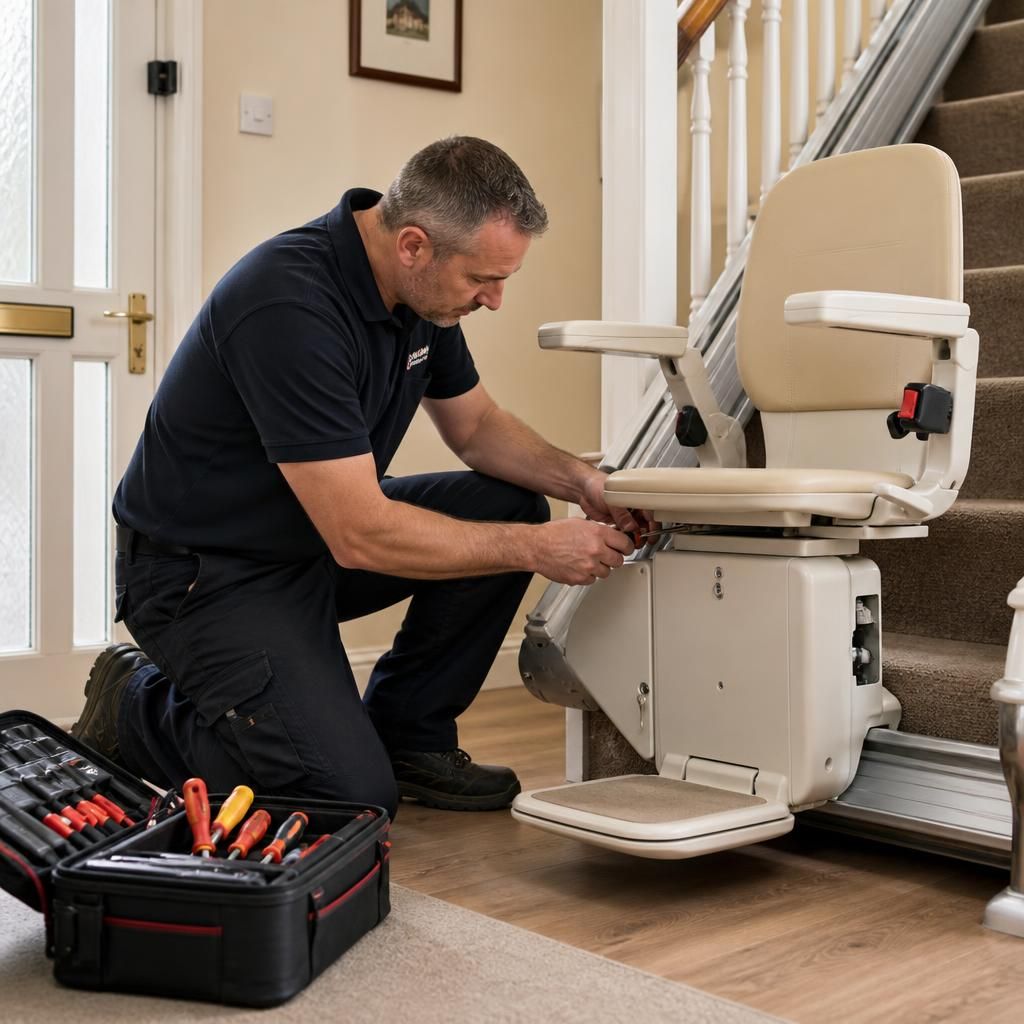
Arrange Your Professional Stairlift Maintenance Service
If your stairlift is due for servicing or has developed a fault, contact Independent Stairlifts to arrange a professional maintenance visit. We can assess the lift, explain any recommended work and confirm whether it is safe to use.