
What should I do if my stairlift starts making unusual noises or stops working unexpectedly?
If your stairlift makes unusual noises or stops unexpectedly, stop using it if it is safe to do so, switch it off, and contact Independent Stairlifts or your servicing provider for advice. Do not remove covers or attempt electrical repairs, as the fault may involve the drive system, batteries, safety sensors or controls.
If your stairlift starts making an unusual noise or stops unexpectedly, stop using it where it is safe to do so, switch it off and contact Independent Stairlifts or your servicing provider for advice. Do not remove covers, bypass safety features or attempt electrical repairs. A fault may involve the batteries, charger, drive system, controls, sensors or another safety-critical component.
Make the stairlift safe first. If the lift has stopped on the stairs, keep calm and do not try to force it to move. Leave the seat in a safe position, apply the seat belt if you are seated and keep hands, feet and clothing away from the rail and moving parts. If you can leave the stairlift safely without using the stairs, do so. If you are stranded and have a medical risk or cannot get to a safe place, contact the emergency services or ask someone nearby for immediate assistance.
Before contacting us, you may carry out a few basic visual and user checks, provided you can do so without standing on the stairs or reaching into the mechanism:
- Check that the stairlift is switched on and that the key, if fitted, is in the operating position.
- Make sure the seat, armrests and swivel mechanism are fully in their travelling position. Many stairlifts will not move unless these safety interlocks are engaged.
- Check that the footrest, seat and carriage are not obstructed by an object, rug, clothing or another item.
- Confirm that the control on the armrest or the remote control is being operated correctly. If the remote control does not work, try the other control only if it is safe to do so.
- Check whether the power supply or local isolator has been switched off accidentally. Do not reset a circuit repeatedly if it trips again.
- If the lift is parked at a charging point, check that it is positioned correctly and that the charger is connected to its power supply. Do not handle exposed wiring or damaged plugs.
These checks may identify a simple operating issue, but they do not establish that the stairlift is safe to use. If the lift remains stopped, moves erratically or makes the noise again, leave it switched off and arrange professional assistance.
Unusual noises can indicate different faults. A new grinding, scraping, knocking, clicking, squealing or repetitive mechanical noise should not be ignored. It may be associated with debris or an obstruction on the rail, a worn drive component, a problem with the motor or gearbox, loose fittings, battery or charging issues, or misalignment. A brief warning tone may instead indicate that a seat, armrest, swivel mechanism or safety sensor has not reached its correct position. The exact cause depends on the stairlift model and when the noise occurs, so avoid diagnosing or lubricating components yourself unless your installer has specifically instructed you to do so.
When reporting the problem, describe what happened as precisely as possible. Note whether the noise occurs while travelling, starting, stopping, turning or charging; whether the lift moves at all; whether warning lights or tones appear; and whether the problem affects the handset, armrest control or both. If it is safe, provide a photograph of any visible obstruction or display message. Do not deliberately operate the lift repeatedly to reproduce the fault.
Stop using the stairlift immediately if it jolts, slips, travels without a control being pressed, stops repeatedly, gives off a burning smell, shows signs of smoke, has damaged wiring, loses power on the stairs, or has a loose seat, armrest, footrest or swivel seat. Isolate the power only if you can do so safely, keep clear of the equipment and request urgent technical advice. If there is smoke, fire or an immediate electrical hazard, leave the area if possible and contact the emergency services.
A stairlift that stops may have a depleted or failing battery, an interruption to the power supply, a safety sensor detecting an obstruction, a control fault or a problem with the drive assembly. Continuing to press the control can worsen the fault and may leave the lift in a less accessible position. A service engineer can test the batteries, charging system, safety circuits, controls, rail and drive mechanism, then explain whether adjustment, a replacement part or further repair is required.
Do not remove the stairlift casing, reach beneath the carriage, alter the rail, disconnect the batteries or try to bypass a sensor or interlock. These actions can expose you to electrical and moving-part hazards, invalidate safety protections and make the original fault harder to assess. Only a suitably qualified engineer should carry out internal inspection, electrical testing, adjustment or repair.
After the fault has been dealt with, ask what caused it and whether any follow-up servicing is recommended. Keep the stairlift’s service information available and report recurring noises or intermittent stops even if the lift starts working again. Prompt attention is safer and can help prevent a minor maintenance issue from developing into a complete loss of use.
If your stairlift stops unexpectedly or begins making a new grinding, scraping, knocking or squealing noise, stop using it where it is safe to do so and switch it off. Do not force the controls, remove covers or attempt to bypass a safety sensor. Check only for obvious obstructions and confirm that the seat, swivel mechanism and footrest are correctly positioned. If the fault continues, contact Independent Stairlifts or your servicing provider so an engineer can inspect the batteries, charger, controls, safety circuits and drive mechanism.
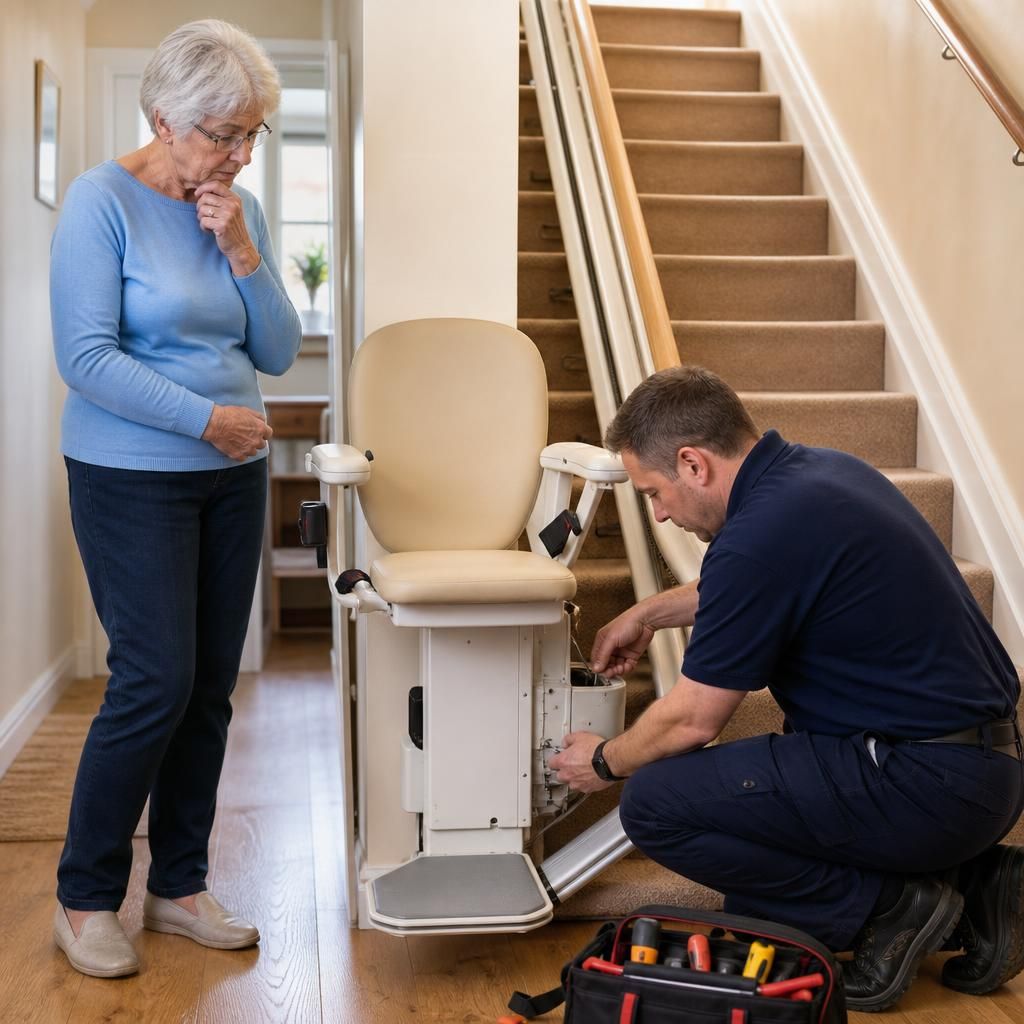
Need Help With a Noisy or Faulty Stairlift?
If your stairlift is making an unusual noise or has stopped working, stop using it safely and contact Independent Stairlifts for expert advice. We can arrange an inspection to identify the fault and advise on the appropriate repair or servicing.