
What does a typical stairlift servicing involve, and how long does it take?
A typical stairlift service includes inspecting, cleaning and testing the rail, carriage, seat, controls, safety features, batteries and charging points, followed by adjustments or minor repairs where needed. Most routine services are completed during a single visit and take around an hour, although the time can vary depending on the stairlift’s condition, type and any faults found.
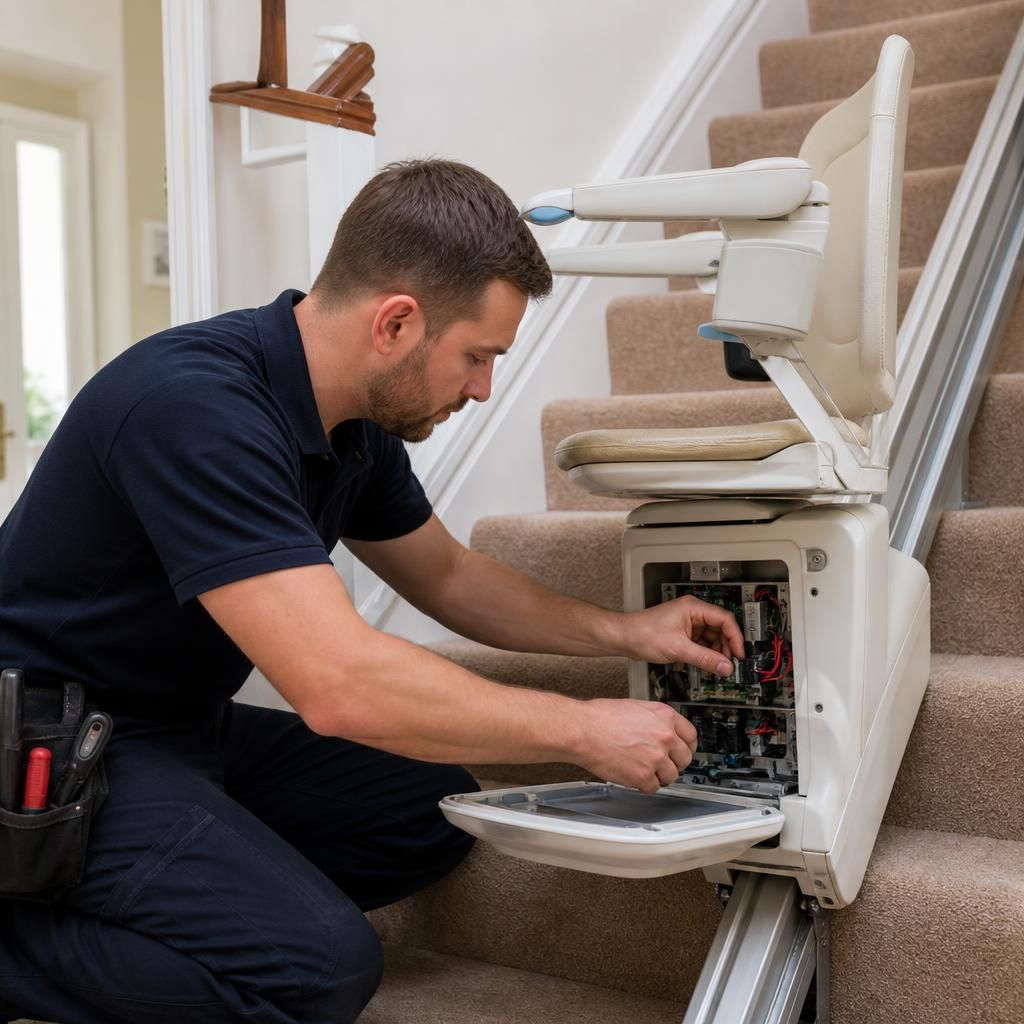
A typical stairlift service involves a systematic inspection, clean, safety check and performance test of the complete lift. The engineer will usually examine the rail, carriage, seat, controls, safety sensors, batteries and charging points, then make adjustments or carry out minor repairs where appropriate. Most routine services are completed during a single visit and take around an hour, although the exact time depends on the stairlift type, its condition and whether a fault needs further investigation.
The service normally begins with a discussion about the stairlift’s recent performance. Tell the engineer about any changes you have noticed, such as unusual noises, jerky movement, slow travel, difficulty charging, intermittent controls or the lift stopping in an unexpected position. These details can help identify issues that may not be apparent during a brief operational test.
The engineer will then carry out checks including:
- Rail and fixing points: The rail is inspected for damage, obstruction, movement or loose fixings. Its alignment and condition are checked so the carriage can travel smoothly and securely.
- Carriage and drive system: The motor, drive mechanism, rollers and other moving parts are examined for wear, contamination or signs of strain. The engineer may clean and lubricate components where this is suitable for the model.
- Seat and safety equipment: The seat, swivel mechanism, armrests, footrest, seat belt and any interlocks are checked for secure operation. The engineer will confirm that the lift cannot travel unless the relevant safety conditions are met.
- Controls: The armrest controls, call-and-send controls and any remote controls are tested. Batteries in wireless controls may also be checked if performance has been inconsistent.
- Safety sensors: Sensors on the footrest, carriage and other protective areas are tested to ensure the stairlift stops or responds correctly when an obstruction is detected.
- Electrical system: Wiring, connections, isolation points and charging contacts are inspected for damage or poor connections. The engineer will also check that the stairlift charges correctly at its designated charging point or points.
- Batteries: The batteries are assessed for condition and charging performance. Batteries are consumable components, so replacement may be recommended if they are no longer holding charge or are approaching the end of their useful service life.
- Overall operation: The stairlift is run through its normal travel cycle, including starting, stopping, changes in direction where applicable, parking and operation at the top and bottom of the stairs.
Cleaning is an important part of the visit, but servicing is more than simply wiping the lift down. Dust and debris can affect sensors, charging contacts and moving parts, particularly on staircases that are regularly used or where the lift is close to household activity. The engineer will clean relevant accessible components and remove material that could interfere with safe operation.
Following the inspection and testing, the engineer may tighten fixings, adjust settings, clean contacts, lubricate suitable components or replace a minor worn part. Any work should be explained to you, along with advice about parts that may need replacement later. A routine service does not automatically include every repair or replacement, so if a larger fault is found, you should be told what is required and whether additional time, parts or a further visit will be needed.
The time required can vary for several reasons:
- Stairlift design: Straight, curved and outdoor stairlifts have different rails, drive systems and safety arrangements. A curved stairlift may require more detailed checks because of its bespoke rail and more complex route.
- Age and condition: A well-maintained lift that is operating normally is generally quicker to service than one showing wear, corrosion, repeated error messages or charging problems.
- Access and cleanliness: The engineer needs safe access to the rail, charging points and controls. Household items or debris around the staircase may need to be moved before testing can be completed safely.
- Faults discovered during the visit: Diagnosis, adjustments and minor repairs can extend the appointment. A service that identifies a problem requiring specialist parts may need to be followed by a separate repair visit.
- Additional equipment: Outdoor installations may need checks for weather-related wear and corrosion, while reconditioned stairlifts may require particular attention to the condition of replaced or retained components.
Before the appointment, keep the staircase and the area around the charging point clear. Make sure the engineer can access the lift, its controls and any relevant isolation switch. It is also useful to have the stairlift available for testing rather than leaving it parked where it cannot complete its normal journey. If the lift is currently unsafe, has stopped working or is making a serious noise, do not continue using it simply to demonstrate the problem; describe the symptoms when arranging the visit.
At the end of a typical service, the engineer should explain the condition of the stairlift, identify any work completed and advise you about recommended repairs or future attention. You may also receive service documentation recording the checks carried out. Keep this information with your stairlift records, particularly if the lift is used by more than one person or has had previous repairs.
Routine servicing is intended to identify wear and developing faults before they cause a breakdown, but it cannot prevent every failure. Contact Independent Stairlifts promptly if the stairlift becomes unreliable, will not charge, stops repeatedly, shows a warning indicator or develops unusual movement or noise. For immediate safety, stop using it if a safety feature appears not to work, the seat or rail feels loose, or the lift cannot stop correctly.
A routine stairlift service usually takes around an hour during a single visit. The engineer will inspect, clean and test the rail, carriage, seat, controls, safety features, batteries and charging points, then make suitable adjustments or minor repairs.
The appointment may take longer if the stairlift is curved or outdoors, has signs of wear, needs fault diagnosis or requires parts to be replaced. If a larger repair is identified, the engineer should explain what is needed and whether additional time, parts or a follow-up visit will be required.
Book Your Stairlift Service Today
Book your stairlift service with Independent Stairlifts to arrange a professional inspection, safety check and performance test. Contact us to discuss your requirements and arrange a convenient appointment.