
What are the key components checked during a stairlift maintenance service?
During a stairlift maintenance service, a technician checks the batteries and charging system, drive mechanism, rail, seat, controls, sensors, and safety features. They also inspect fixings and moving parts, test the lift under operation, and identify any wear or faults that could affect safe, reliable use.
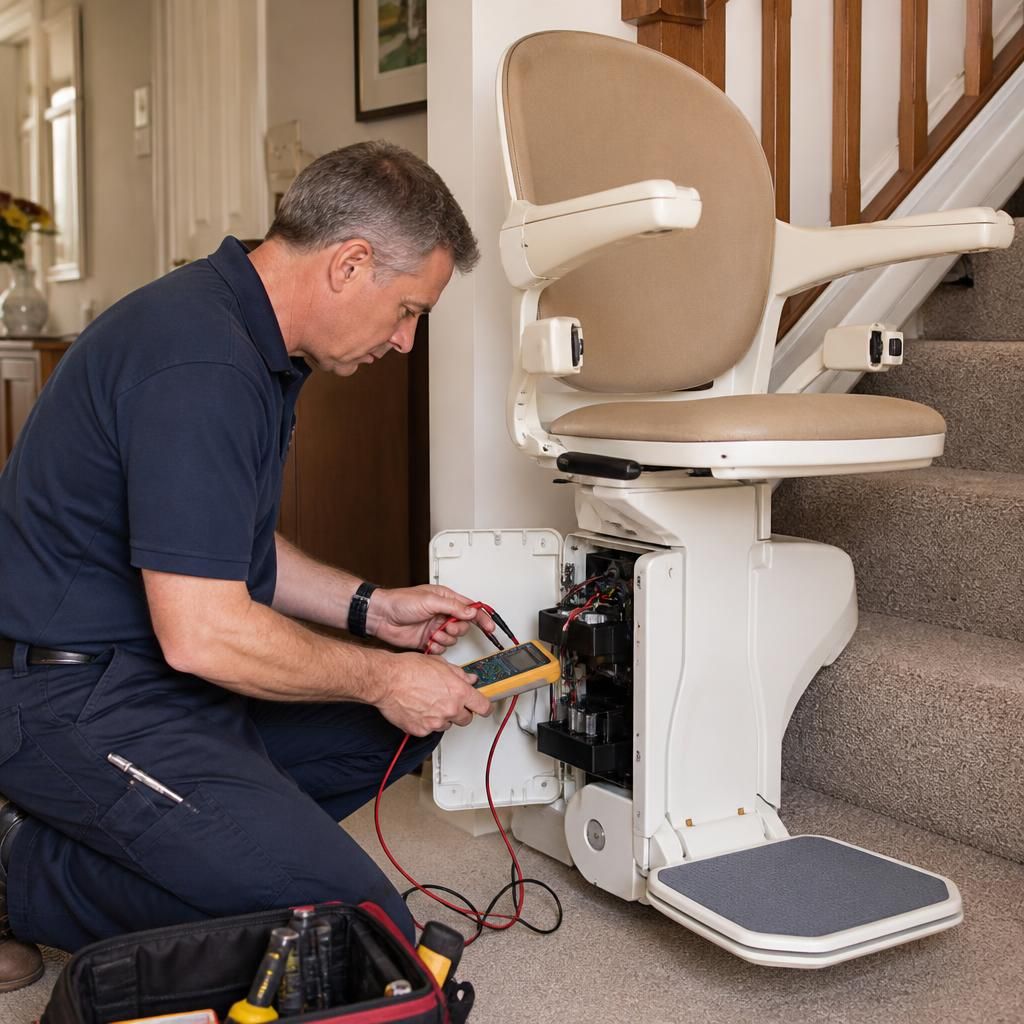
A professional stairlift maintenance service checks the complete system, not just whether the carriage moves. The technician normally examines the batteries and charging system, rail, drive mechanism, seat, controls, sensors, safety equipment, electrical connections, fixings and moving parts, then tests the stairlift through its operating cycle. The purpose is to identify wear, damage or developing faults before they affect safe and reliable use.
Batteries and charging system
The engineer checks the condition and performance of the batteries, including whether they hold charge correctly and provide sufficient power during travel. Charging contacts, the charger, power supply and connections are inspected for damage, contamination or poor contact. The stairlift may also be tested at its charging points to confirm that it charges correctly when parked. Batteries are affected by age and usage, so a visual inspection alone may not reveal a developing problem.
Rail, brackets and fixings
The rail is inspected for damage, obstruction, unusual movement and signs that it is not securely supported. Brackets, clamps and other fixings are checked to ensure they remain tight and correctly positioned. On a curved stairlift, the engineer also considers the condition of bends, joints and transition areas. The rail and surrounding staircase are checked together because loose items, new obstructions or changes to the environment can interfere with safe travel.
Drive mechanism and carriage
The drive unit, motor, gearbox and rollers or wheels are examined for wear, damage and abnormal noise. The technician checks that the carriage engages with the rail properly and travels smoothly without hesitation, excessive vibration or unexpected stopping. Where lubrication is required, it is applied only in accordance with the manufacturer’s guidance. Incorrect or excessive lubrication can attract dirt or affect components, so it should not be treated as a general-purpose maintenance task.
Seat, swivel mechanism and footrest
The seat, armrests, seat belt, swivel mechanism, footrest and associated hinges are checked for security and correct operation. The engineer confirms that the seat locks in the intended position and that the swivel function works safely at the top or bottom of the stairs, depending on the model. The footrest is inspected for damage, obstruction and movement, while folding parts are checked to ensure they do not catch against the staircase or surrounding furniture.
Controls and operating switches
The controls on the armrest, remote controls and any direction or stop switches are tested. The engineer checks that commands are recognised promptly and that the stairlift stops when the control is released, where this is how the model is designed to operate. Remote controls may also be checked for damaged casings, weak batteries or pairing problems. Controls should be easy to use and should not require excessive pressure or repeated operation.
Safety sensors and protective systems
Safety edges and obstruction sensors around the carriage, footrest and other protected areas are tested to confirm that they stop or prevent movement when an obstruction is detected. The engineer may also check limit switches, overspeed protection, braking systems and other model-specific safety devices. These checks are important because a stairlift can appear to operate normally while a sensor or protective feature is not responding as intended.
Electrical connections and visible condition
Wiring, plugs, terminals, connectors and accessible electrical components are inspected for looseness, damage, heat marks or signs of wear. Covers and protective panels are checked where appropriate. The technician also looks for corrosion, fluid contamination or physical damage that could affect operation. Any electrical testing is carried out using suitable procedures and equipment rather than by relying solely on the stairlift’s normal movement.
Operational testing
After the individual components have been inspected, the stairlift is operated under normal conditions. The engineer checks starting and stopping, travel speed, changes in direction, parking and charging positions, and operation at the top and bottom of the stairs. They listen for unusual sounds and look for uneven movement, jolting, delays or error indications. On a curved, outdoor or unusual installation, the test also takes account of the particular rail layout and environmental conditions.
Cleaning and minor adjustments
Where appropriate, the technician may remove dust or debris from accessible parts, clean charging contacts and make approved adjustments to fixings, sensors or moving components. This does not replace the need to repair worn or damaged parts. If a component is outside its safe working condition, the engineer should explain the issue and recommend the appropriate repair or replacement rather than simply adjusting it temporarily.
At the end of the service, you should be told about any faults found, parts that are showing wear and work that may be needed. A service record can also identify recurring issues and help establish when batteries or other consumable components may need attention. If the stairlift makes a new noise, stops unexpectedly, moves unevenly, fails to charge or displays a fault indication after servicing, stop using it if it is safe to do so and contact a qualified stairlift technician. Do not remove covers or attempt to bypass sensors, switches or other safety devices.
A stairlift maintenance service checks safety sensors and protective systems to confirm that the lift responds correctly to obstructions and operating faults. The technician tests the safety edges, limit switches, braking system and other model-specific controls, then checks that the stairlift stops or prevents movement when a problem is detected.
These checks are important because a stairlift may appear to travel normally even when a sensor or safety device is not working correctly. The engineer also operates the lift through its full route, checking starting, stopping, speed, direction changes, parking and charging. Any unusual noise, jolting, delay or error indication can then be investigated before it affects everyday use.
Arrange a Professional Stairlift Maintenance Service
Arrange a professional stairlift maintenance service with Independent Stairlifts to check your lift’s key components and identify any developing faults. Contact us to book an inspection tailored to your stairlift and home.