
How often should I schedule routine stairlift servicing to ensure optimal performance?
For most stairlifts, schedule a professional service every 12 months, or sooner if the manufacturer’s guidance, usage level or home environment requires it. Arrange an earlier inspection if you notice unusual noises, jerky movement, reduced battery performance or any change in safe operation.
For most domestic stairlifts, arrange a professional service every 12 months. This interval provides a sensible baseline for checking safety-critical components, batteries, charging equipment and drive systems before wear develops into a fault. Always follow the manufacturer’s servicing recommendations and arrange an earlier inspection if the stairlift is heavily used, installed outdoors or shows any change in performance.
Annual servicing is a routine recommendation, not a guarantee that a stairlift will remain fault-free between appointments. A service should be brought forward when there are unusual noises, jerky or hesitant movement, stopping during travel, reduced battery performance, inaccurate stopping at the top or bottom of the stairs, or difficulty using the controls. A lift that moves differently from normal should not be ignored, even if it is still completing the journey.
Factors that may require more frequent servicing
- High usage: A stairlift used several times a day experiences more charging cycles and mechanical wear than one used occasionally.
- More than one user: Different weights, transfer methods and operating habits can place varying demands on the seat, armrests, safety belt and drive system.
- Outdoor installation: Moisture, temperature changes, dust and debris can affect electrical connections, batteries, rails and exposed moving parts. Outdoor stairlifts may need inspections in line with the manufacturer’s environmental guidance.
- Demanding stair layouts: Curved systems contain more moving and mechanical components than straight systems, so the servicing requirements may differ.
- Age and condition: Older or reconditioned stairlifts can benefit from closer monitoring, particularly where batteries, rollers, switches or other wear items have previously been replaced.
- Changes in the home: Building work, flooring changes or objects placed near the rail can affect clearances and safe operation.
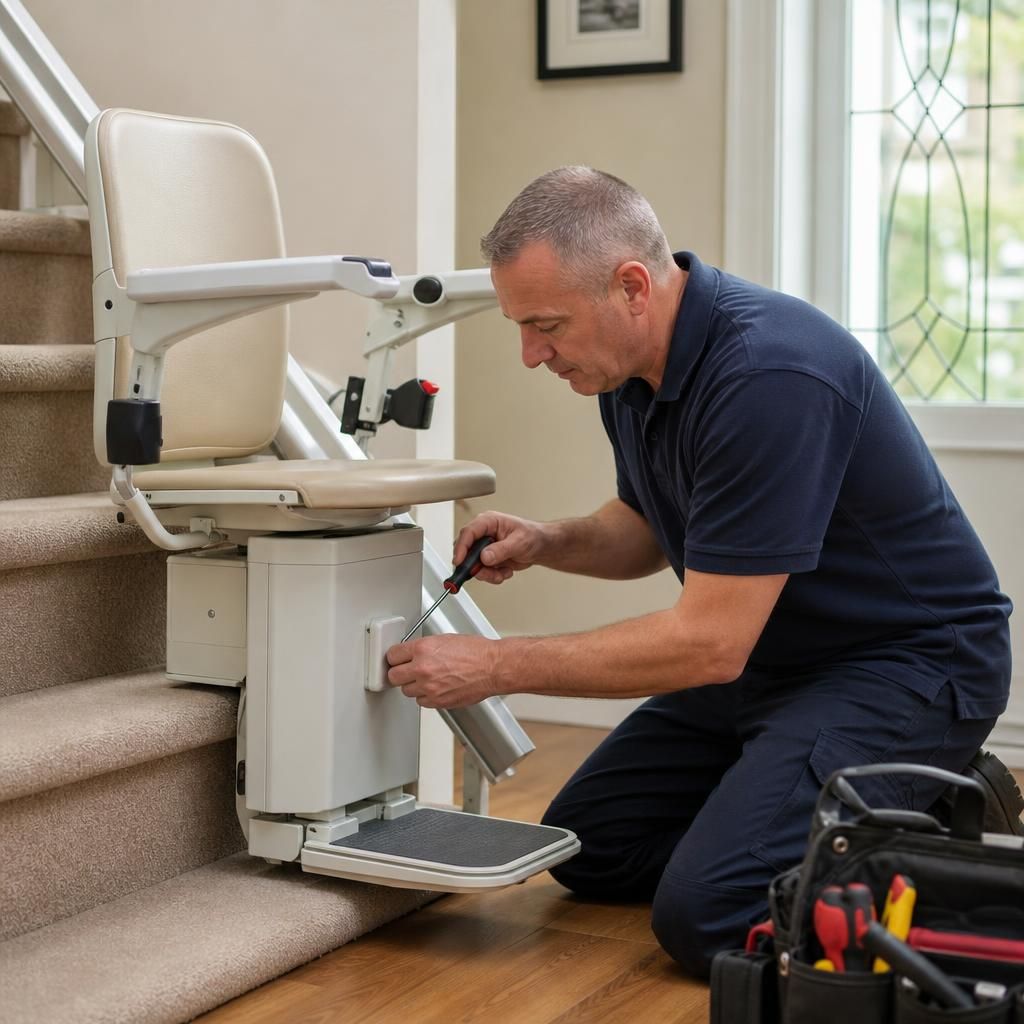
A professional service normally includes a functional safety check, inspection of the rail and drive mechanism, examination of the seat, armrests, footrest, swivel and safety belt, and testing of controls, sensors, safety edges and limit switches. The engineer will also assess the batteries and charger, check for abnormal wear or loose connections, clean appropriate components and confirm that the stairlift stops and travels correctly. The precise checks depend on the make, model, installation and condition of the lift.
Between services, keep the rail and surrounding staircase clear, leave the stairlift on its charger when recommended, and use the controls and safety belt as instructed. Wipe accessible surfaces with a suitable dry or slightly damp cloth, but do not apply oil, grease or cleaning products to the rail or internal components unless the manufacturer specifically permits this. Do not remove covers, alter safety switches or attempt electrical or battery repairs yourself.
If the stairlift stops unexpectedly, gives a fault indication, smells of burning, becomes unusually hot, or makes a loud grinding or cracking noise, stop using it and contact a qualified stairlift engineer. If it stops on the stairs, follow the user instructions for the safe procedure and do not attempt to climb past it or force the mechanism. An urgent inspection is more appropriate than waiting for the next annual appointment.
After a period when the stairlift has not been used, check that the charger is connected and that the lift completes a short, supervised journey normally before relying on it. If the batteries have discharged, the lift has been exposed to damp conditions or its operation is uncertain, arrange a service or safety check first. Keeping a record of servicing, repairs and battery replacement dates also makes it easier to identify changes in performance and plan future maintenance.
In practical terms, book routine servicing every 12 months unless the manufacturer or engineer recommends a different interval, and treat any new symptom as a reason for earlier attention. Regular servicing complements, but does not replace, the basic checks you make each time the stairlift is used.
For most domestic stairlifts, routine professional servicing should be scheduled every 12 months, unless the manufacturer or engineer recommends a different interval. Annual servicing allows safety-critical parts, batteries, charging equipment, controls and the drive system to be checked before normal wear develops into a fault.
Arrange an earlier inspection if the lift is used heavily, installed outdoors, is an older or reconditioned model, or shows any change in performance. Warning signs include unusual noises, jerky movement, stopping during travel, reduced battery performance, inaccurate stopping or difficulty using the controls. Do not wait for the next scheduled service if the stairlift smells of burning, becomes unusually hot or makes a loud grinding or cracking noise; stop using it and contact a qualified engineer.
Book Your Stairlift Service Today
Arrange your routine stairlift service with Independent Stairlifts to help keep your lift operating safely and reliably. Contact our team to book an assessment or discuss any changes in performance.