
How often should I have my stairlift serviced to ensure it remains in top working condition?
Most stairlifts should have a professional service at least once a year, or as often as the manufacturer recommends. A stairlift used heavily, exposed to outdoor conditions or showing signs of wear may need servicing sooner.
A stairlift should usually receive a professional service at least once every 12 months, or at the interval specified by its manufacturer. This allows a qualified engineer to inspect safety-critical parts, test the lift under operating conditions and identify wear before it develops into a breakdown. A stairlift that is used frequently, installed outdoors, exposed to dust or damp, or showing signs of deterioration may need attention sooner.
The manufacturer’s guidance should take priority. Different stairlift models have different service requirements, and the recommended interval may be set out in the operating manual, warranty information or installation documentation. If you are unsure when your next service is due, check the service record or contact Independent Stairlifts for advice based on your model and usage.
Annual servicing is a minimum rather than a guarantee that every stairlift will need attention only once a year. The appropriate schedule depends on several factors:
- Frequency of use: A lift used several times every day experiences more operating cycles than one used occasionally. Regular use can increase wear on the drive system, carriage wheels, seat mechanism and charging contacts.
- Environment: Outdoor stairlifts are exposed to rain, temperature changes, dirt and sunlight, even when protected by a cover. They may require more frequent inspections and cleaning than an indoor model. Indoor lifts can also be affected by dust, moisture and building work.
- Staircase design: Curved stairlifts contain a bespoke rail and may have more complex movement and charging arrangements. Correct alignment and smooth travel should be checked as part of routine servicing.
- Age and condition: Older equipment or a stairlift that has required previous repairs may benefit from closer monitoring and a shorter interval between services.
- Changes in use: If the main user’s mobility, weight, transfer technique or level of assistance has changed, arrange an assessment rather than relying solely on the existing service schedule.
During a professional service, the engineer will normally inspect and test the stairlift’s key safety and operating components. This can include the seat belt, swivel seat and armrests, sensors, footrest, carriage, rail, drive mechanism, battery condition, charging points, controls and safety cut-off systems. The engineer should also check that the lift starts, stops and travels smoothly, reaches its charging points correctly and remains secure throughout its movement. Any relevant adjustments, lubrication or replacement of worn parts should be explained before work is completed.
Do not wait for the annual service if the stairlift’s behaviour changes. Arrange an inspection promptly if you notice unusual noises, juddering, slower movement, repeated stopping, difficulty charging, warning lights, error messages, a loose seat or footrest, damaged wiring, or a safety belt or sensor that does not operate correctly. A burning smell, smoke, visible damage or a lift that moves unexpectedly requires immediate attention. Stop using the stairlift if it is unsafe, switch it off where appropriate and contact a qualified service provider. Do not attempt to bypass a safety feature or continue using the lift to see whether the problem clears.
Between professional services, you can help maintain reliable operation by keeping the rail, steps and charging area clear, wiping accessible surfaces with a suitable dry or slightly damp cloth, checking that the lift is parked on its charging point when not in use and reporting changes promptly. Outdoor users should use the supplied protective cover correctly and check for signs of water ingress or corrosion. Follow the operating manual for any battery or cleaning instructions, and never remove covers, work on electrical components or apply lubricant unless the manufacturer specifically permits it.
Keep the service report and note any repairs, warning messages or changes in performance. This gives the engineer useful information and helps establish whether the stairlift needs a revised servicing interval. A planned annual service, combined with sensible checks and prompt reporting of faults, is the most reliable way to keep the lift safe and dependable. It also reduces the likelihood that a small, manageable issue will develop into an avoidable loss of use.
Most stairlifts should receive a professional service at least once every 12 months, unless the manufacturer specifies a different interval. This inspection allows a qualified engineer to check safety systems, batteries, charging points, the rail, drive mechanism, seat and controls, then test the lift in operation.
Do not wait for the scheduled service if the stairlift becomes noisy, jerky, slower than usual, difficult to charge or prone to stopping. Outdoor models, heavily used lifts and older equipment may also need more frequent inspections. Stop using the stairlift if it moves unexpectedly, gives off a burning smell or shows visible damage, and arrange qualified assistance promptly.
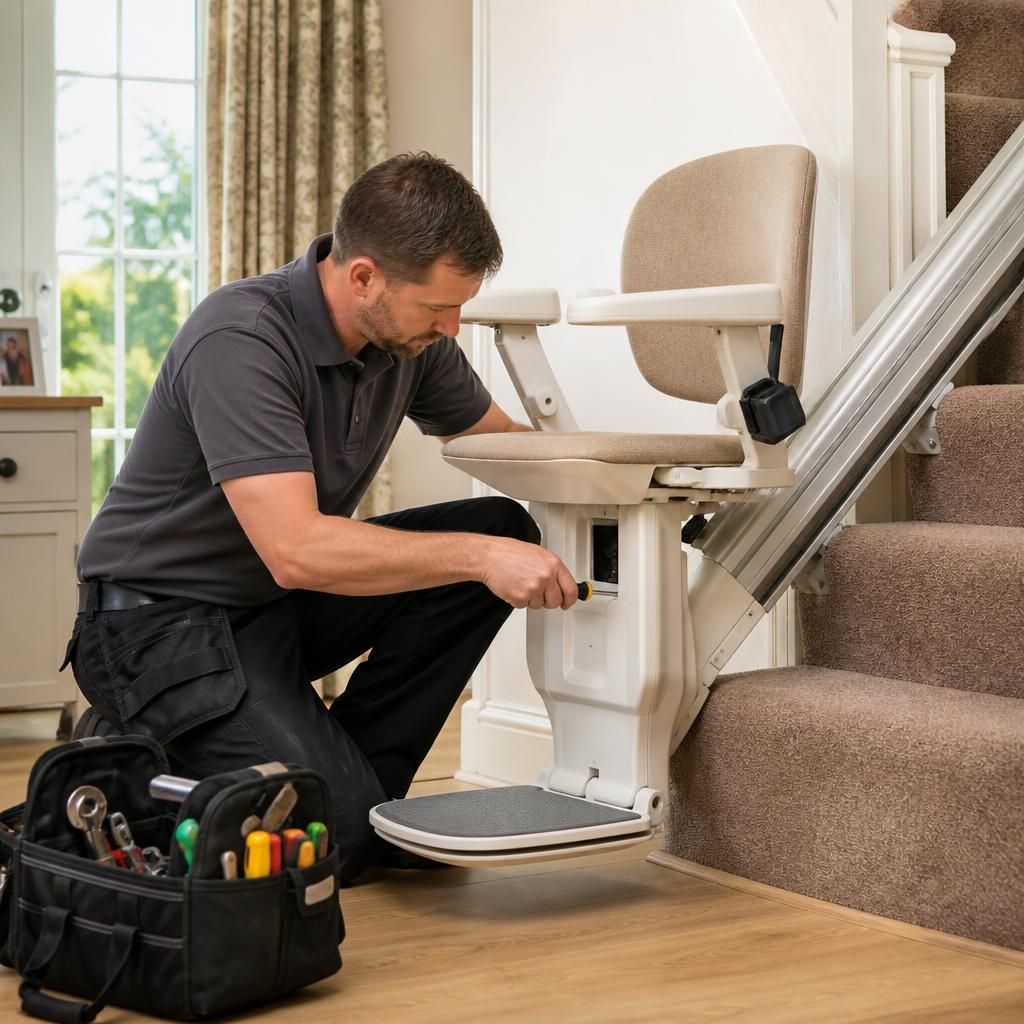
Arrange your stairlift service with Independent Stairlifts
Contact Independent Stairlifts to arrange a professional service or confirm when your next inspection is due. Our team can advise on the appropriate servicing interval for your stairlift and usage.