
Can I perform any basic maintenance tasks myself to keep my stairlift in good condition between professional services?
Yes. Between professional services, you can safely keep the stairlift clean, check the seat belt and safety features, clear the track and charging points of dust or obstructions, and follow the manufacturer’s operating guidance, but do not remove covers, adjust components or attempt electrical repairs.
Yes. You can carry out a small number of safe, user-level checks between professional stairlift services to help keep your lift clean, reliable and comfortable to use. These include cleaning accessible surfaces, keeping the track and charging points free from obstructions, checking the seat belt and observing the lift during normal operation. Do not remove covers, alter settings, lubricate components, work on the batteries or attempt electrical or mechanical repairs yourself.
Keep the stairlift clean and dry. Wipe the seat, armrests, footrest, control surfaces and other accessible areas with a soft, slightly damp cloth. Follow the cleaning guidance in your user manual and use only suitable, non-abrasive products. Do not pour or spray liquid directly onto the stairlift, joystick, switches, charging points or motor housing. Avoid furniture polish, solvents and strong chemicals, as these can damage surfaces or affect controls.
Check the track for dust and obstructions. Look along the visible rail and around the footrest for loose items, toys, clothing, pet hair or accumulated dust. Remove anything that can be picked up safely without tools. Keep the stairs and the area around the top and bottom parking positions clear, particularly if the stairlift has a swivelling seat, folding rail or powered footrest. Never reach into moving parts or try to straighten, adjust or lubricate the track.
Inspect the charging points. Make sure the stairlift is parked in its designated charging position when it is not in use, as described in the operating instructions. Check that the charging contacts are not visibly blocked by dust or debris and that the charger cable and plug are not damaged. Do not touch exposed wiring or attempt to test, repair or replace electrical parts. If the lift does not charge, contact us or your service provider rather than repeatedly operating it until the battery is flat.
Check the seat belt and safety features.
- Fasten the seat belt and confirm that it closes securely and releases normally.
- Look for fraying, cuts, looseness or other visible damage to the belt and buckle.
- Check that the seat, armrests, footrest and swivel mechanism appear secure, without forcing any component.
- Keep the lift’s sensors, switches and controls clean and unobstructed.
- Make sure hinged or folding parts move only as intended and do not catch on the stairs or nearby furnishings.
Do not bypass a safety switch, hold down a control to overcome a fault or continue using the lift if a safety feature is not working correctly. A stairlift should not move when its operating conditions are not met; unusual behaviour needs professional attention.
Observe its normal operation. During ordinary use, listen for changes such as grinding, scraping, repeated clicking or loud humming. Also look for hesitation, jolting, unusual movement, loss of power, inaccurate stopping or difficulty reaching the charging position. Stop using the stairlift if the change is significant, if it stops unexpectedly or if you smell burning. Note what happened and any message shown on the display, then contact us for advice. Do not repeatedly reset the lift or continue testing it if doing so could put you at risk.
Follow the manufacturer’s operating guidance. Use the correct control, sit fully back in the seat, keep the belt fastened and keep hands, feet and clothing away from the track and moving parts. Do not carry loads that are not permitted in the manual, allow another person to ride with you, or use the stairlift if the stairs are obstructed. If the lift is shared by several people, make sure everyone understands the basic controls and safety precautions.
Some tasks should remain with a trained stairlift engineer. These include removing covers, adjusting the rail or seat, replacing batteries or other internal components, repairing wiring, changing safety switches, investigating faults and applying lubricant. Lubricating the rail without the manufacturer’s instructions can attract dirt or affect braking and drive components, so a quiet or stiff lift should be reported rather than treated with household oil or spray.
Simple checks do not replace scheduled servicing. A professional service includes inspection and testing of parts that are not accessible to the user, including drive components, batteries, electrical connections, safety systems and fixings. If you are unsure whether a task is safe, leave it undone and ask us before proceeding. Keeping a note of cleaning, charging or operating issues can also help the engineer identify developing problems at the next visit.
Between professional services, the safest maintenance is a visual and user-level check rather than repair work. Keep accessible surfaces clean and dry, remove loose obstructions from the visible track and footrest area, and make sure the stairlift is left in its designated charging position.
- Use a soft, slightly damp cloth on the seat, armrests, footrest and controls.
- Check the seat belt, buckle and visible charging contacts for damage or debris.
- Listen for unusual scraping, grinding, clicking or hesitation during normal use.
- Stop using the stairlift and contact a trained engineer if it fails to charge, behaves unexpectedly, smells of burning or has a damaged safety feature.
Do not remove covers, lubricate the rail, alter settings or work on batteries and wiring. These components require professional inspection, and household oils or sprays can interfere with the drive or braking system.
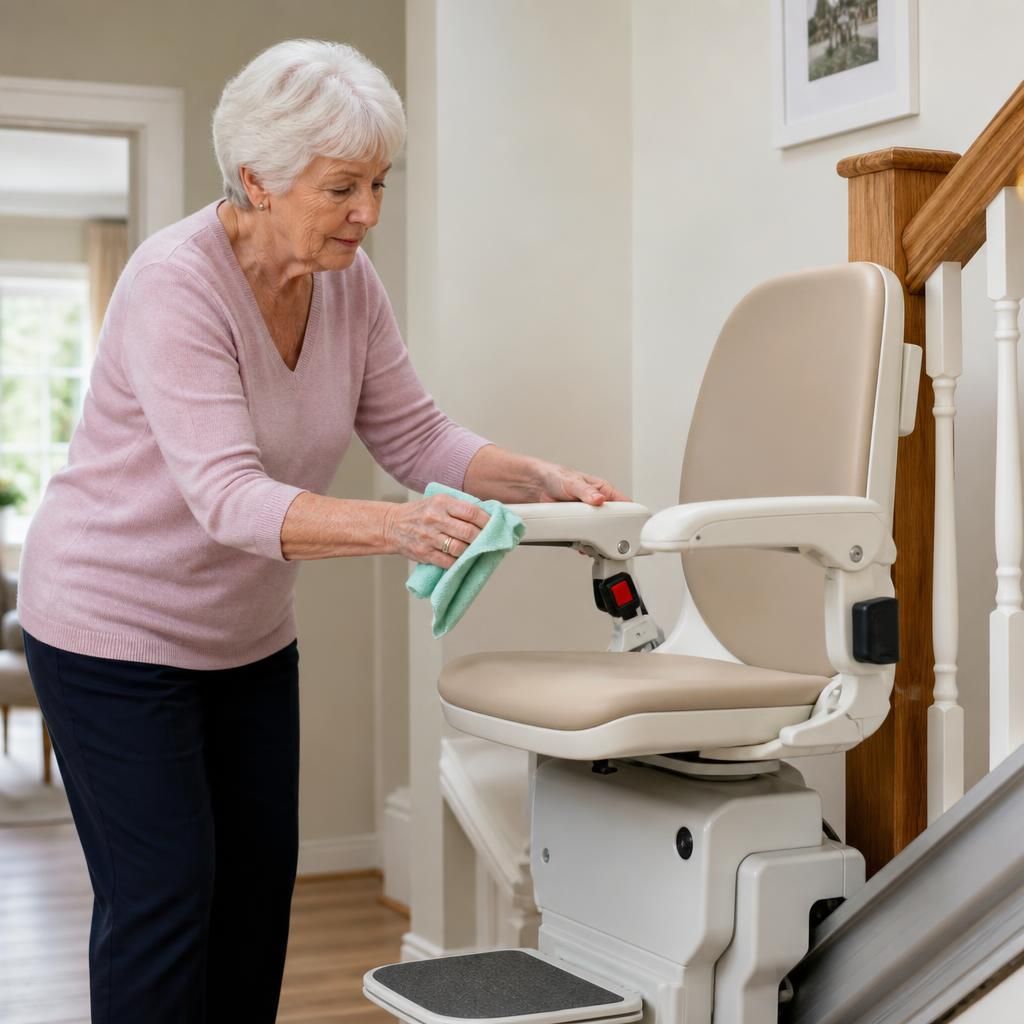
Contact us for safe stairlift maintenance advice
If you are unsure whether a maintenance task is safe, contact Independent Stairlifts for advice before attempting it. We can help you identify the appropriate next step and arrange professional assistance where needed.