
Are there specific signs that indicate my stairlift may require immediate servicing?
Your stairlift may require immediate servicing if it stops unexpectedly, moves unevenly, struggles to start, makes new or worsening noises, or shows warning lights or fault messages. Stop using it if it feels unsafe, emits a burning smell, has visible damage, or its seat, swivel, armrests or safety belt do not operate correctly, and contact Independent Stairlifts for professional advice.
Immediate servicing or repair is advisable if your stairlift stops unexpectedly, moves unevenly, struggles to start, develops a new or worsening noise, displays a fault warning, or no longer operates its safety features correctly. Stop using the stairlift straight away if it feels unsafe, gives off a burning smell, has visible damage, or behaves unpredictably, and contact Independent Stairlifts for professional advice.
Some changes can indicate a developing fault rather than a complete breakdown. Arrange a service promptly if you notice any of the following:
- The stairlift starts slowly, hesitates, cuts out or requires repeated attempts to operate.
- It travels more slowly than usual, judders, stops between floors or fails to complete its journey.
- The lift moves unevenly, rocks excessively or feels less stable when travelling around a bend or over a change in gradient.
- You hear repeated clicking, grinding, scraping, rattling, squeaking or other sounds that were not present previously.
- The stairlift makes a noise that is becoming louder or occurs throughout the journey rather than briefly during normal operation.
- Warning lights, audible alerts or fault messages appear and do not clear after checking that the lift is correctly parked and charged.
- The batteries do not appear to hold their charge, the lift repeatedly reports low power or it will only operate when connected to the charging point.
- The stairlift does not charge correctly, or the charging point, plug or visible wiring appears damaged.
- The seat, swivel mechanism, footrest, armrests or safety belt is stiff, loose, misaligned or difficult to operate.
- The controls on the armrest, remote control or charging station respond inconsistently.
- The stairlift has been struck, overloaded, exposed to water or affected by another event that could have caused damage.
Safety-related problems require particular care. Do not use the stairlift if the seat will not lock securely, the swivel seat does not return to its correct travelling position, an armrest does not stay in place, the safety belt will not fasten properly, or the footrest is loose or obstructs the stairs. These components help keep the user correctly positioned during travel, so a fault should be assessed by a trained engineer rather than worked around.
A burning smell, smoke, sparking, melted plastic, unusual heat from the controls or charging equipment, or visible damage to electrical parts should be treated as an urgent fault. Switch off the stairlift if it is safe to do so, keep away from damaged components and contact Independent Stairlifts for instructions. If there is smoke or an active fire risk, leave the area and follow the appropriate emergency procedure.
If the stairlift stops unexpectedly, remain seated if it is safe and stable to do so, keep the safety belt fastened and use the normal emergency or lowering procedure explained during installation. Do not try to climb off on the stairs unless remaining on the lift presents a greater immediate danger. If the lift cannot be moved safely, contact Independent Stairlifts or the relevant service team for assistance. Avoid forcing the controls, pushing the chair along the rail or attempting to bypass a safety switch.
Before reporting the problem, note what happened and whether the fault occurs when starting, stopping, turning, charging or using a particular control. You can also check simple external causes, such as an obstruction on the stairs, an incorrectly positioned swivel seat or whether the lift is parked at its charging point. Only carry out checks described in your user instructions. Do not remove covers, adjust the rail, lubricate internal parts or work on the batteries and wiring yourself.
A single minor sound or an isolated operating interruption may not always indicate a serious mechanical failure, but a new symptom should not be ignored, particularly if the user relies on the stairlift every day. Prompt servicing can identify issues with the batteries, drive system, rail, sensors, charging equipment or safety mechanisms before the lift becomes unusable. Where the stairlift is safe to use but performance has changed, arrange an inspection soon; where there is a safety, electrical or structural concern, stop using it until a qualified engineer has advised that it is safe.
A stairlift needs immediate servicing when it shows signs of an electrical, mechanical or safety-related fault. Stop using it and contact Independent Stairlifts if you notice smoke, a burning smell, sparking, unusual heat, visible damage or repeated fault warnings.
Do not continue using the lift if the seat will not lock, the swivel mechanism does not return correctly, the safety belt will not fasten, or the armrests or footrest are loose. These features help keep you secure during travel and should be checked by a qualified engineer rather than adjusted or bypassed. If the stairlift stops unexpectedly, remain seated with the belt fastened where it is safe to do so, and follow the emergency procedure in your user instructions.
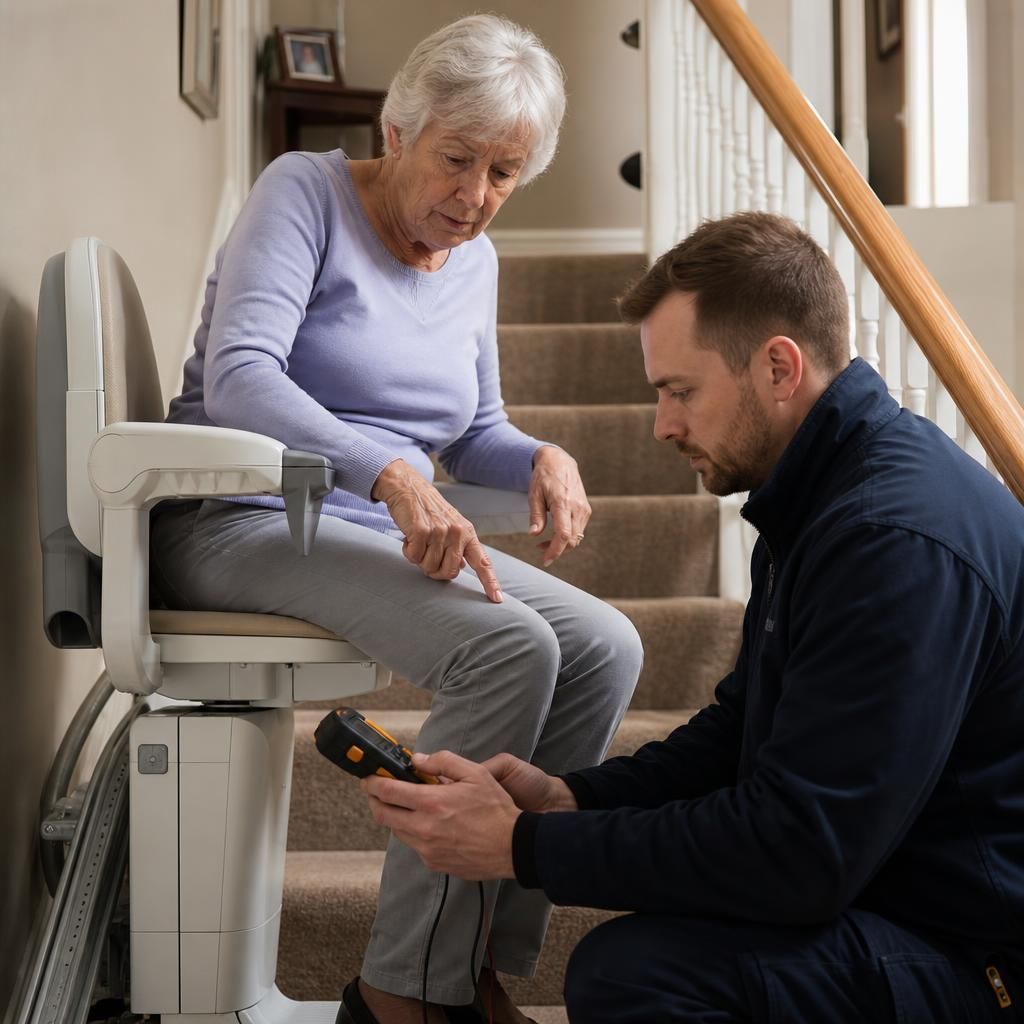
Contact Independent Stairlifts for Urgent Servicing Advice
If your stairlift shows a safety, electrical or mechanical fault, stop using it where necessary and contact Independent Stairlifts for urgent servicing advice. Our team can help you decide the safest next step and arrange professional assistance.