
How often should I schedule maintenance for my stairlift?
Arrange a professional stairlift service at least once a year, or as often as the manufacturer recommends. Older, heavily used or frequently faulting stairlifts may need more frequent checks, and any unusual noise, movement or loss of performance should be assessed without waiting for the next scheduled service.
Arrange a professional stairlift service at least once a year, or in line with the interval specified by the manufacturer. A stairlift that is older, used several times each day, installed outdoors or experiencing faults may need more frequent attention. Do not wait for the next scheduled service if you notice unusual noise, jerky movement, reduced battery performance, difficulty starting or stopping, or any other change in operation.
Regular servicing is a preventive measure rather than a substitute for repairs. During a professional visit, the engineer should inspect the stairlift’s mechanical, electrical and safety systems, identify wear and adjust or replace components where necessary. The exact checks depend on the model, its age, how it is used and the environment in which it is installed.
Follow the manufacturer’s servicing guidance
The manufacturer’s instructions should be the starting point for deciding how often your stairlift needs maintenance. The recommended interval may vary between models and can also be affected by the terms of a warranty, service agreement or insurance policy. Keeping to the specified schedule can help ensure that any cover remains valid.
If you are unsure when the next service is due, check the service record, installation paperwork or the date shown on the engineer’s report. You can also ask for the recommended interval to be confirmed when arranging an appointment.
When more frequent servicing may be appropriate
An annual service may not be sufficient for every stairlift. Ask for a review of the servicing frequency if:
- the stairlift is used heavily or by more than one person;
- it is installed outside or exposed to damp, dust, temperature changes or other harsh conditions;
- the stairlift is older or has required repeated repairs;
- the batteries are regularly running low or failing to hold their charge;
- the stairlift has been unused for a prolonged period and is being returned to service;
- the user’s mobility needs or method of operating the stairlift have changed; or
- the engineer has identified a component that requires closer monitoring.
Reconditioned stairlifts should also have a clear service history and an appropriate maintenance plan. Their age, previous use and the condition of key components should be considered when deciding how often they need to be checked.
What a routine service should cover
A competent engineer will normally assess the stairlift as a complete system rather than only looking at the most visible parts. Checks may include:
- the seat, armrests, footplate, swivel mechanism and safety belt;
- the rail, carriage, drive system, rollers and fixings;
- the motor, gears, charging points and batteries;
- sensors, limit switches, controls and safety edges;
- the operation of the stairlift at different points on the stairs;
- unusual vibration, noise, movement or signs of wear; and
- the condition of wiring, plugs and accessible electrical connections.
The engineer should test the stairlift after any adjustment or repair and explain any recommended follow-up work. A service report should record the work completed, defects found, parts replaced and any action that remains outstanding. Keep this information with your other stairlift documents, particularly if different engineers may attend in the future.
Checks between professional services
Routine user checks can help identify a problem early, but they do not replace professional maintenance. Keep the rail and surrounding stair area clear, use the charging points as instructed and avoid placing items on the footplate or around the carriage. Check that the seat, belt and controls appear secure before use, and report anything that feels different from normal.
Do not remove covers, interfere with electrical components or attempt to adjust the drive system yourself. Stairlift batteries and moving parts can present safety risks, and an unsuitable adjustment may create a further fault or affect the warranty.
When to request attention before the scheduled service
Contact the service team promptly if the stairlift stops unexpectedly, moves unevenly, makes grinding or repeated clicking sounds, fails to charge, shows a fault indicator, or has a loose seat, belt, armrest or footplate. Stop using it if continued operation could be unsafe. A stairlift that still moves does not necessarily have a minor fault; a developing issue with the drive, batteries or safety system can worsen if it is ignored.
If the stairlift is completely inoperative, check only the basic user-accessible points described in its instructions, such as whether it is correctly parked on a charging point and whether the power supply appears to be on. Do not repeatedly reset it or bypass a safety feature. Arrange a repair assessment if the problem remains.
In practical terms, keep to the planned professional service interval, review that interval when usage or conditions change, and report symptoms as soon as they appear. This approach helps maintain safe operation and can reduce avoidable disruption between services.
Most stairlifts should receive a professional maintenance service at least once a year, unless the manufacturer specifies a different interval. This timetable may need reviewing if the stairlift is used heavily, installed outdoors, exposed to damp or dust, or has become older or less reliable.
Do not wait for the next planned service if you notice jerky movement, unusual noise, reduced battery performance, charging problems or difficulty starting and stopping. Arrange an assessment promptly, as these symptoms can indicate wear or a developing fault. Routine checks between services can identify changes early, but they do not replace a professional inspection of the stairlift’s mechanical, electrical and safety systems.
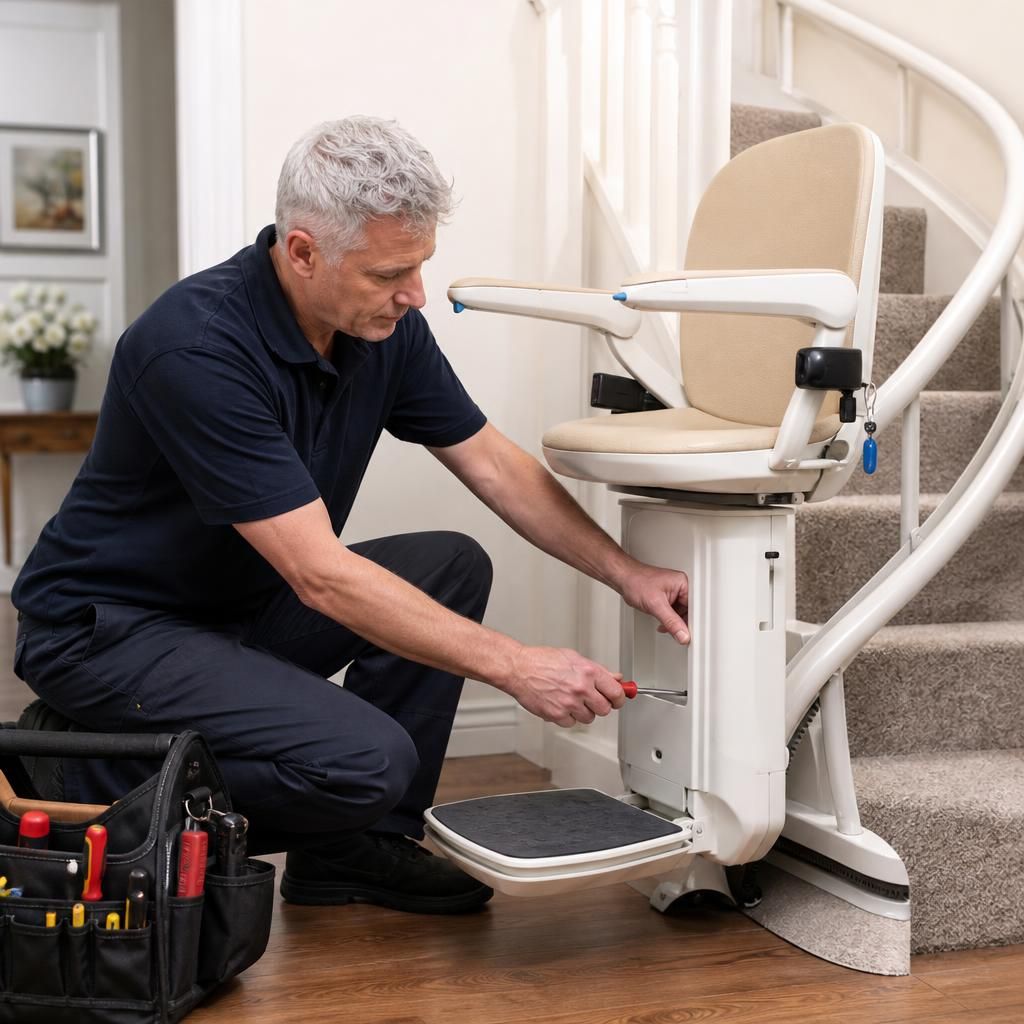
Book Your Stairlift Maintenance Service
Contact Independent Stairlifts to arrange your next professional stairlift maintenance service or confirm when it is due. We can advise on the appropriate servicing interval and discuss any changes in performance or reliability.