
How can I ensure that my stairlift service provider offers comprehensive aftercare support, and what does this support typically include?
Ensure your stairlift provider explains its aftercare arrangements before installation, including routine servicing, fault repairs, emergency response, replacement parts, warranty cover and clear contact procedures. Comprehensive support should provide practical user guidance, transparent costs and prompt access to qualified technicians who can keep the stairlift safe, reliable and suited to your changing needs.
Comprehensive stairlift aftercare is the ongoing support provided after installation to keep the lift safe, reliable and suitable for the user. It should cover routine servicing, fault diagnosis and repairs, emergency contact arrangements, replacement parts, warranty administration, user guidance and clear information about costs. Before relying on the service, check exactly what is included, how support is requested and which parts of the arrangement are covered by the warranty.
Start by confirming the aftercare arrangements in writing. A reliable provider should explain the support available for your particular stairlift, rather than offering a generic promise of help. Ask for information about:
- How to contact the service team during normal opening hours and outside them.
- How faults are reported, including whether telephone diagnosis is available.
- Typical response arrangements for a stairlift that is unsafe or unusable.
- Whether servicing is arranged automatically or needs to be booked by you.
- Which engineers are qualified to work on your model and configuration.
- Whether genuine or approved replacement parts are available and how long supply may take.
- What labour, travel and parts costs apply once any warranty has ended.
Keep the service agreement, installation paperwork, warranty terms and user manual together. These documents make it easier to establish what support you should receive and provide useful details when you report a problem.
Routine servicing and preventative maintenance are central to effective aftercare. During a service, a suitably trained technician will normally inspect the stairlift’s operation and condition, including the track, carriage, seat, armrests, footrest, safety sensors, seat belt, controls, charging system and batteries. The exact checks depend on the make, model and installation. The technician should test the lift under normal operating conditions, identify wear or damage and explain any work that is recommended.
Servicing is not simply a cosmetic check. It can identify issues such as unusual noise, inconsistent movement, worn rollers, damaged wiring, poor battery performance or an obstruction affecting the safety edges. Ask whether the service includes cleaning relevant components, checking connections, testing safety features and recording the findings. A service record should state what was inspected, any defects found and whether further work is required.
Repair and emergency support should be clearly distinguished from routine servicing. Aftercare should give you a defined process for dealing with a sudden stoppage, repeated fault code, loss of power, unusual movement or a safety feature that does not work correctly. The first response may involve safe telephone checks, such as confirming that the lift is switched on, correctly parked and receiving power. You should never be encouraged to bypass a safety device, dismantle the lift or carry out electrical repairs yourself.
If the stairlift stops on the stairs, the provider should explain how to keep the user safe while help is arranged. Ask whether emergency call-outs are available, during which periods, and whether response times vary according to the seriousness of the fault. A clear process should also explain what happens if an engineer cannot complete the repair immediately, including whether temporary measures, a further visit or replacement equipment may be appropriate.
Replacement parts and batteries are another important part of aftercare. Batteries and some mechanical components have a finite working life, but replacement should follow a proper diagnosis rather than being recommended without explanation. The provider should identify the failed or worn component, explain whether a compatible approved part is being used and tell you whether the repair is covered by the warranty. If a part is unavailable or the stairlift is an older model, ask what alternatives exist and whether any proposed modification will affect safety, performance or future servicing.
Warranty support should be specific and easy to understand. Check when the warranty starts, how long it lasts, whether it covers parts and labour, and whether call-out or travel charges are excluded. Some warranties may treat batteries, accidental damage, misuse or poor maintenance differently from manufacturing defects. The terms may also require servicing by an approved or suitably qualified provider. Make sure you know how to make a claim and whether registration or proof of installation is required.
Do not assume that a warranty covers every visit. Ask for a written explanation of potential charges, including diagnostic fees, out-of-hours attendance, travel, replacement batteries, parts outside the warranty and work made necessary by damage or alterations. A transparent provider should explain the likely cost before chargeable work begins and seek your agreement where practical. If the repair is urgent and the final cost cannot be confirmed immediately, you should still be told the basis on which charges will be calculated.
User guidance is part of good aftercare. You should be shown how to operate the controls, use the seat belt, position the seat and footrest, charge the batteries, park the lift and respond to basic alerts. The provider should also explain safe use around children, pets, loose clothing and objects on the stairs. If the user’s mobility, posture or confidence changes, ask whether the seat, controls or other features can be reviewed. A change in circumstances may require additional advice or a reassessment of the configuration.
Aftercare should also allow for changes in the home. Staircases can become obstructed, flooring can be replaced, electrical arrangements can change and other household members may use the stairs differently. Tell the provider about any alteration that could affect the track, charging point, clearances or safe operation. Do not move, extend or modify any part of the installation without professional advice.
Check how the provider manages records and follow-up. Each service or repair should be linked to the stairlift’s model and serial details, with a record of the work completed and parts fitted. This information helps the technician diagnose recurring faults and confirms the maintenance history if the lift is later repaired, relocated or assessed for replacement. You should be told if further monitoring, a return visit or safety-related work is needed.
Signs that aftercare may be insufficient include unanswered calls, unclear warranty exclusions, repeated repairs without an explanation, pressure to approve work before costs are disclosed, missing service records or engineers who cannot demonstrate appropriate knowledge of the lift. If a fault affects a safety feature, stop using the stairlift and contact the service provider. If anyone is trapped or at immediate risk, follow the provider’s emergency guidance and seek appropriate emergency assistance rather than attempting to force the lift to move.
Before confirming that your aftercare is comprehensive, you should be able to answer these practical questions:
- Who do I contact if the lift stops working, and what information should I provide?
- What support is available outside normal working hours?
- How are routine services scheduled and documented?
- Which costs are included, and which could be charged separately?
- What does the warranty cover, and what exclusions apply?
- How are replacement parts and batteries sourced?
- Will I receive an explanation and estimate before chargeable repairs?
- Can the installation be reassessed if the user’s needs or home layout changes?
If you are unsure about any part of your current arrangement, contact the service team and ask for the aftercare terms to be explained in plain language. Keeping the lift serviced, reporting changes promptly and following the operating guidance will help maintain safe, dependable use throughout its working life.
Comprehensive stairlift aftercare means having a clear, documented process for servicing the lift, reporting faults and arranging repairs after installation. A key part of this support is knowing exactly who to contact and what will happen when the stairlift is not operating normally.
Keep your provider’s contact details, warranty information and service records together. The aftercare arrangements should explain:
- How to report a fault during normal opening hours and outside them.
- What initial checks you may be asked to complete safely, without dismantling or bypassing any safety feature.
- How urgent call-outs are prioritised and whether out-of-hours charges apply.
- Which parts, labour and travel costs are covered by the warranty.
- How service visits and repairs are recorded for future reference.
If the lift stops, moves unusually or develops a fault affecting a safety feature, stop using it and contact the service team. Do not attempt to force the lift to move or carry out electrical repairs yourself. Clear aftercare arrangements should give you practical guidance while qualified help is organised.
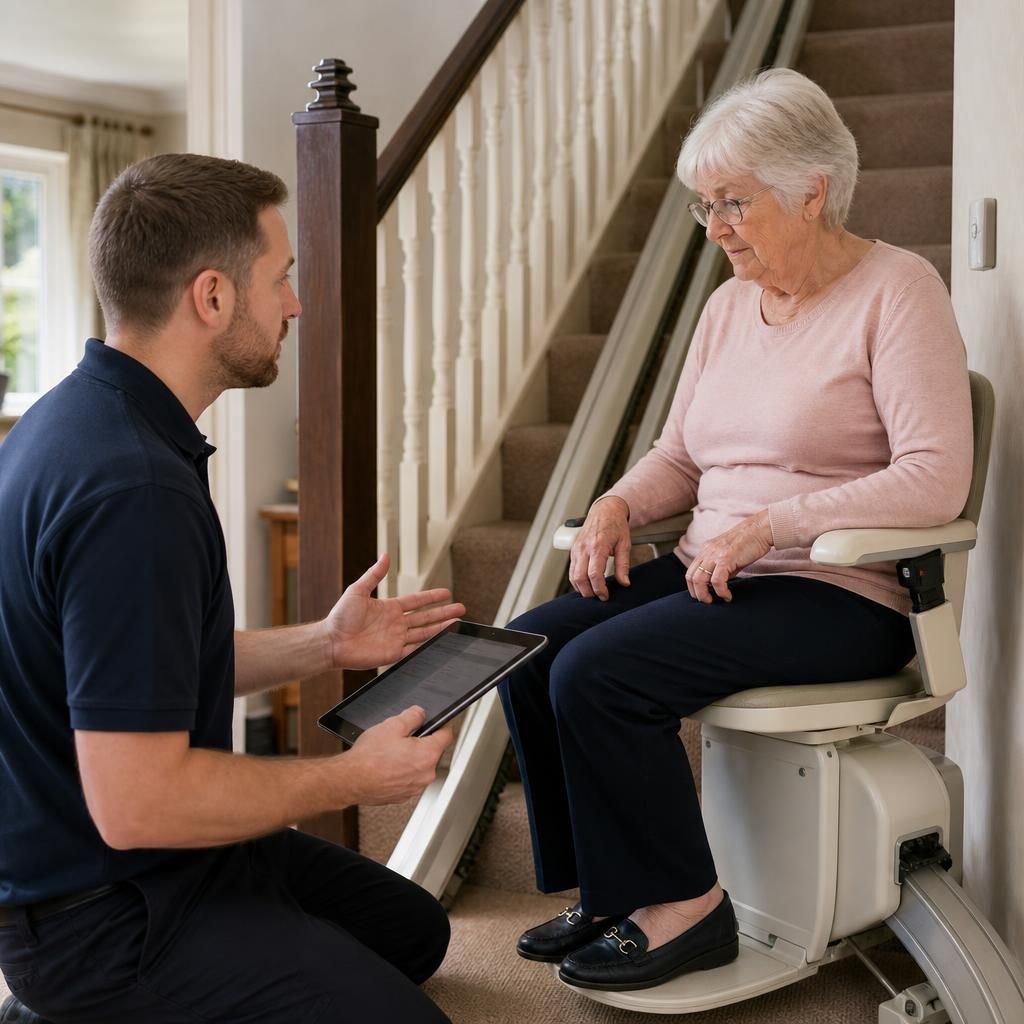
Review Your Stairlift Aftercare Arrangements
Review your stairlift aftercare arrangements and contact our service team if you are unsure about servicing, repairs, warranty cover or emergency support. We can clarify what is included and explain the correct process for reporting a fault.