
What are the safety features included in a mobile stairlift?
A mobile stairlift typically includes secure support or stabilising systems, safety brakes, a seat belt or harness, obstacle sensors and simple controls with emergency stop functions. Battery and alarm systems help support safe operation, but the exact features vary by model and a suitability assessment is essential before use.
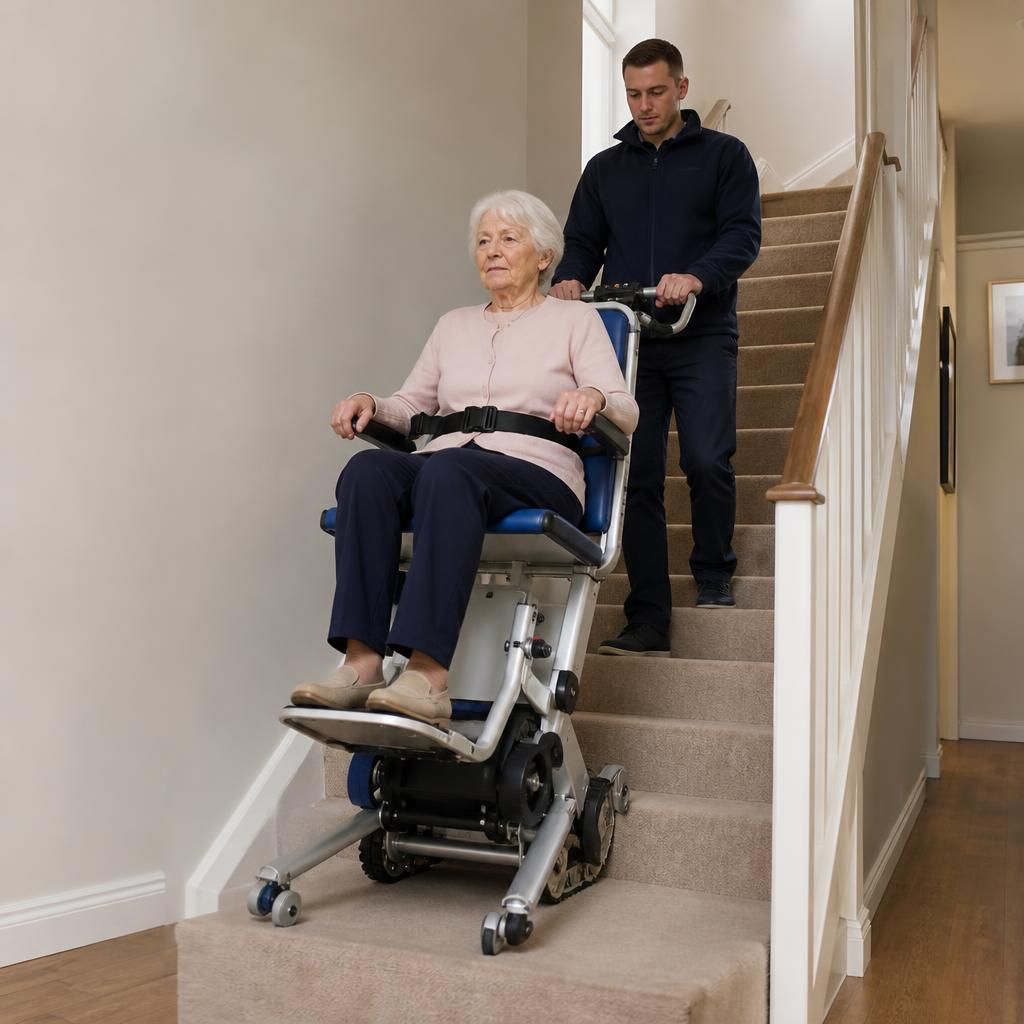
A mobile stairlift is designed to move a seated person up and down the stairs without permanent rails being fixed to the staircase. Its safety features generally include a secure seat and harness, stabilising supports or tracks, braking systems, simple operator controls, battery monitoring and protection against tipping or movement when the equipment is not correctly positioned. The exact specification varies between models, so the equipment must be assessed against the user, staircase and intended method of operation before hire.
Secure seating and occupant restraints
Most mobile stairlifts provide a supportive seat with a backrest, arm supports and a footrest. A seat belt or harness helps keep the user in a stable position during movement. The restraint should be fastened before the stairlift starts and remain fastened until the user has reached a safe position on the landing or floor.
Some models are intended for a seated transfer, while others may require the user to move from a wheelchair or another seat. The user should not be expected to stand on the stairlift or use it while carrying items. If the person has difficulty maintaining an upright posture, experiences involuntary movement or needs additional support, this must be discussed during the assessment.
Stabilising supports and anti-tip protection
Because a mobile stairlift is not attached to a permanent rail, it relies on its own support system to remain stable. Depending on the design, this may include powered tracks, stabilising wheels, outriggers, support arms or other anti-tip features. These components help distribute the equipment’s weight and keep it aligned with the stairs as it travels.
The stairlift must be placed and operated exactly as instructed. It should not be used if a support is folded incorrectly, a track is misaligned or the machine is not sitting securely on the stair surface. The operator should also keep the stairway clear and check that the stairlift is in the correct position before transferring the user on or off it.
Braking and controlled movement
Mobile stairlifts normally include a braking system that controls descent and prevents uncontrolled movement when the controls are released. The drive mechanism should stop when the operator lets go of the control, and the stairlift should remain stationary when parked, subject to the manufacturer’s instructions.
Controls are usually designed for gradual, controlled travel rather than sudden acceleration. Even so, the operator should travel at the recommended speed, keep the user properly positioned and stop immediately if the stairlift behaves unexpectedly. It should never be pushed, pulled or manually moved on the stairs while occupied unless the manufacturer specifically permits this procedure.
Obstacle detection and clearance protection
Some mobile stairlifts have sensors or other systems that detect an obstruction in the travel path and stop the equipment. Others rely more heavily on the operator checking the stairs before movement. Obstacle sensors should be treated as an additional safeguard, not as a replacement for a visual check.
Objects such as shoes, rugs, toys, walking aids, furniture or loose carpet edges can interfere with the stairlift. Check the full route, including the top and bottom landing, before every journey. The user should also ensure that clothing, blankets and footwear are kept clear of the track, wheels and moving parts.
Emergency stop and manual recovery controls
Many models include an emergency stop control that immediately interrupts travel. This can be useful if an obstruction appears, the user becomes unwell or the operator loses control of the equipment. The operator should know where this control is before the first journey and understand how to reset it safely.
Depending on the model, there may also be an emergency lowering procedure, manual release or recovery process if the battery becomes depleted or the equipment develops a fault. These procedures are model-specific. Do not attempt to dismantle, lift or force the stairlift on the stairs; contact the hire provider for instructions and assistance.
Battery and power safeguards
Portable stairlifts are usually battery-powered, allowing them to operate without a fixed electrical installation. Battery indicators, charging controls and low-charge warnings help the operator avoid starting a journey without sufficient power. Some equipment can be charged at the top or bottom of the stairs, while other models may need to be returned to a charging point after use.
Charge the battery in accordance with the supplied instructions and do not use damaged chargers, cables or connectors. A low-battery warning should be acted on promptly. If the battery does not appear to charge, the stairlift should be taken out of use until it has been checked.
Operator controls and alarms
Controls are commonly positioned on the stairlift or supplied as a handset, allowing a trained operator to control direction and movement. Some models include audible alarms, warning lights or fault indicators to show when the equipment is moving, incorrectly positioned or requiring attention.
The operator should be able to see the user and the route as far as possible throughout the journey. Clear communication is important, particularly where the stairway changes direction or visibility is restricted. Only the person who has received the operating guidance should control the stairlift.
What these safety features cannot prevent
Safety systems do not make every staircase or user suitable for a mobile stairlift. Steep, narrow, curved or spiral stairs, uneven surfaces, restricted landings and changes in floor level may affect safe operation. The available space may also be insufficient for transferring the user safely at the top or bottom of the stairs.
A mobile stairlift may not be appropriate where the user cannot sit securely, requires continuous medical support during movement, exceeds the equipment’s stated weight limit or cannot tolerate the movement involved. It may also require an attendant rather than being suitable for independent use. A stairlift should never be used to carry additional people, pets, heavy objects or mobility equipment unless the model is specifically designed and approved for that purpose.
Checks before each journey
- Make sure the stairway and landings are free from obstacles, loose mats and trailing cables.
- Check that the stairlift is correctly positioned, with its supports, seat, footrest and restraint ready for use.
- Confirm that the battery has enough charge for the planned journey.
- Fasten the seat belt or harness and keep hands, feet, clothing and walking aids clear of moving parts.
- Check that the user is comfortable, balanced and able to communicate with the operator.
- Use the controls gradually and stop if the stairlift makes an unusual noise, displays a fault or does not travel as expected.
The safety features are most effective when combined with a proper suitability assessment, clear operating guidance and regular visual checks. If the staircase, user or method of transfer changes during the hire period, contact Independent Stairlifts before continuing to use the equipment. Do not alter, repair or bypass any safety device yourself.
A mobile stairlift stays safe through a combination of secure seating and stabilising supports. Unlike a permanently installed stairlift, it relies on its own wheels, tracks, support arms or outriggers to remain correctly positioned on the stairs. These components help reduce unwanted movement and tipping while the lift is travelling.
Before each journey, check that the stairlift is fully supported, correctly aligned and stable on the stair surface. The user should sit well back in the seat, fasten the supplied seat belt or harness and keep hands, feet, clothing and walking aids clear of moving parts. Never use the stairlift if a support is folded incorrectly, the equipment is misaligned or the user cannot maintain a secure seated position. The exact stabilising system varies by model, so follow the operating guidance provided during installation and contact Independent Stairlifts if the staircase or user’s needs change.
Discuss your mobile stairlift safety requirements
Discuss your mobile stairlift safety requirements with Independent Stairlifts so we can confirm whether the equipment is suitable for the user, staircase and intended method of operation.