
What are the safety features and limitations of using a mobile stairlift?
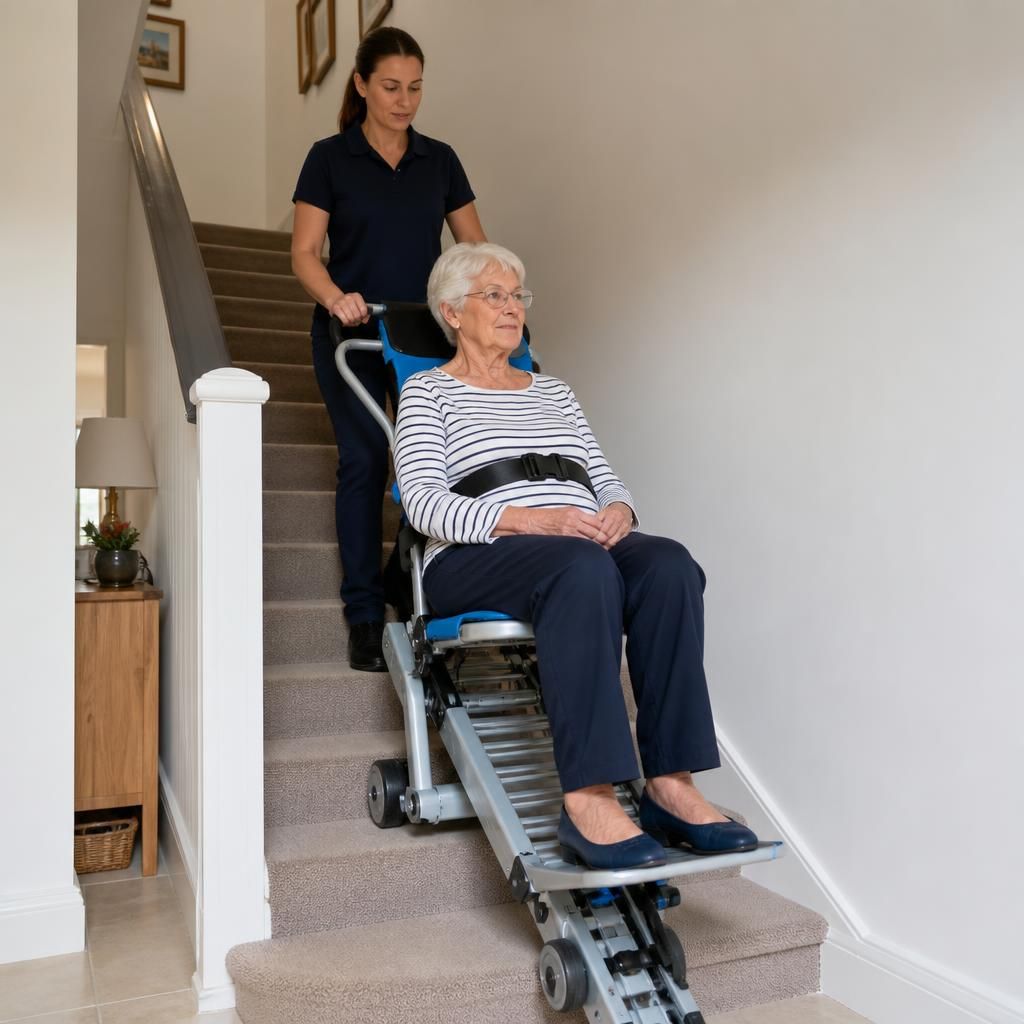
Mobile stairlifts typically include safety features such as a secure seat or platform, safety belts, brakes, sensors and controls designed to stop movement if an obstruction or unsafe condition is detected. Their main limitations are that they may not suit every staircase or user, usually need careful positioning rather than permanent installation, and can provide less stability or independence than a properly fitted fixed stairlift in some homes.
A mobile stairlift is a portable stair-climbing aid that is positioned on the staircase when required rather than fixed permanently to the steps or wall. Its safety depends on the equipment’s built-in controls and restraints, the condition and design of the staircase, correct positioning, and the user following the operating instructions. A mobile stairlift can be a practical temporary solution, but it does not provide exactly the same stability, independence or suitability as a professionally installed fixed stairlift in every home.
Although features vary between models, a mobile stairlift will usually include several safeguards designed to reduce the risk of movement, loss of balance or contact with an obstruction:
- Safety belt or harness: This helps keep the user seated or correctly positioned while the stairlift is moving. It should be fastened before travel and adjusted so that it is secure without being uncomfortably tight.
- Braking and anti-rollback systems: Brakes help control the equipment when it stops, while anti-rollback protection is intended to prevent uncontrolled movement on the staircase. These systems must not be treated as a substitute for correct operation.
- Stair and obstruction sensors: Some models use sensors or contact systems to detect an obstruction, an unsafe position or a problem with the equipment. The stairlift may stop or refuse to move until the issue has been resolved.
- Secure seat, platform or support points: Depending on the design, the user may sit on a seat, stand on a platform or use a mobility aid in a specified position. Footrests, armrests, handles and other supports help maintain the recommended posture.
- Swivel or locking mechanisms: A seat may lock during travel and allow the user to turn towards the landing when getting off. Where this feature is fitted, the seat must be locked in the travel position before movement begins.
- Controls and emergency stop: Controls are normally designed to allow movement only when the operator is holding or selecting the relevant control. An emergency stop or manual release may be provided, depending on the model.
- Battery and charging indicators: Rechargeable batteries allow the unit to operate without a mains cable running along the stairs. Indicators or audible warnings can show when charging is required. The equipment should not be used if its battery condition is uncertain.
- Non-slip contact surfaces: Tracks, wheels, platforms and foot supports are generally designed to maintain contact with the stairs. They must remain clean, dry and correctly positioned for the safety system to work as intended.
These features reduce foreseeable risks, but they cannot compensate for an unsuitable staircase, incorrect loading or a user who cannot safely transfer, sit or remain supported during travel. The exact safeguards should be confirmed against the model supplied for the hire, as a portable stair climber operated by an attendant may have different controls and safety arrangements from a self-operated mobile seated stairlift.
One of the main limitations is that a mobile stairlift is not usually a permanent installation. It must be placed correctly on the stairs before use and removed or stored when it is not required. This can make it useful for short-term mobility needs or occasional access, but it also means that correct setup is essential every time. A unit that is not centred, secured or configured as instructed should not be used.
Mobile stairlifts are not suitable for every staircase. Straight flights are often easier to accommodate, while narrow stairs, unusual step dimensions, tight turns, intermediate landings, winders, split-level layouts and changes in floor surface may create restrictions. The available space at the top and bottom of the stairs also matters. The user needs enough room to approach, transfer, turn and move away safely, without being obstructed by doors, furniture or other people.
Some mobile models can negotiate more complex staircases, but this depends on the specific equipment and may require an attendant to operate it. A staircase should therefore be assessed before hire rather than judged by its appearance alone. Measurements, step condition, landing space, access around the staircase and the proposed user’s mobility all form part of a safe suitability check.
User ability is another important limitation. The person using the stairlift may need to:
- transfer safely on and off the seat or platform;
- remain seated, standing or positioned as instructed throughout the journey;
- keep hands, feet, clothing and walking aids clear of moving parts;
- understand and respond to the controls or instructions from an attendant;
- maintain sufficient balance and postural control for the type of equipment supplied; and
- stay within the manufacturer’s specified weight and size limits.
If the user has significant weakness, involuntary movements, poor balance, confusion, difficulty following instructions or a condition that makes transfers unsafe, a mobile stairlift may not be appropriate without assistance. An attendant may be required, and in some cases a different type of stairlift or an alternative access arrangement will be safer.
A mobile stairlift should not be used to carry more than the permitted load, transport additional people, move bulky items or carry a person in an unapproved wheelchair or seating position. Walking sticks, frames and other equipment should be handled according to the manufacturer’s instructions; they must not be allowed to catch on the stairs or interfere with the controls. Pets and children should be kept away while the stairlift is being positioned or operated.
Safe use starts with the pre-use checks explained during delivery or demonstration. Check that the route is clear, the stairs are dry and in good condition, the equipment is correctly positioned, the restraint is available and the battery has sufficient charge. Confirm that doors, furniture and other hazards will not interfere with boarding or leaving the stairlift. If the equipment makes an unusual noise, moves unevenly, shows a warning, fails to stop correctly or appears damaged, stop using it and contact the hire provider.
Never attempt to bypass a sensor, defeat a safety switch, alter the braking system or repair the unit yourself. Do not move the equipment while somebody is seated on it unless the instructions specifically allow this. If the stairlift stops on the stairs, the user should remain in the instructed position, avoid climbing off without help and follow the emergency procedure supplied with the equipment. A responsible attendant or carer should know how to stop the unit and obtain assistance.
Mobile stairlifts can also offer less independence than fixed stairlifts. Some require another person to position, operate or supervise them, particularly on challenging staircases or where the user cannot manage the controls. Their portable design may mean a smaller seat, a different transfer method or less continuous support than a fixed stairlift tailored to the full staircase. They may also occupy part of the staircase when in use, which can affect other household members.
They are not normally intended as a general emergency escape device. In a fire, power failure or other emergency, follow the household’s emergency plan and any instructions provided by the equipment supplier. A mobile stairlift should not block an escape route, and the user should not rely on it where a safe evacuation procedure has not been established.
The most appropriate choice depends on the staircase, the reason for hire and the user’s physical and cognitive abilities. A mobile stairlift may be suitable when access is needed temporarily, permanent alterations are not wanted or the user can travel safely with the required level of support. A fixed stairlift may be more suitable when daily use, greater independence, a complex staircase or consistent seating and transfer support are priorities.
Before using the equipment, make sure you know how to position it, secure the user, operate the controls, charge it and respond to a stoppage. If the user’s condition, weight, balance or ability to transfer changes during the rental period, stop and request a reassessment. A member of the Independent Stairlifts team can confirm the model’s safety features and limitations and advise whether it remains suitable for the staircase and the person using it.
The safety of a mobile stairlift depends on correct positioning before every journey, as the equipment is not permanently fixed to the staircase. The unit must be placed on a suitable, clear and dry flight of stairs, with its supports, tracks or wheels aligned exactly as instructed by the hire provider.
Before use, check that:
- the staircase and landings are clear of furniture, doors and other obstructions;
- the stairlift is stable, correctly centred and secured;
- the user can transfer safely and fasten the supplied restraint;
- the battery has sufficient charge; and
- no warning light, unusual noise or visible damage is present.
Do not use the stairlift if it has moved out of position or does not operate as expected. Never bypass a sensor or safety switch. If the user’s balance, strength or ability to follow instructions changes, stop using the equipment and contact Independent Stairlifts for a reassessment.
Check whether a mobile stairlift is suitable for you
Ask Independent Stairlifts to assess the staircase, equipment and user’s needs before hiring or using a mobile stairlift. We can confirm whether it is suitable and explain the correct safety checks and operating procedure.