
What are the benefits of hiring a mobile and portable stairlift over purchasing one?
Hiring a mobile or portable stairlift provides temporary, flexible access to the stairs without the upfront cost or long-term commitment of purchasing one. It can be a practical option during recovery, while awaiting a permanent lift, or when you are unsure how long the equipment will be needed.
Hiring a mobile or portable stairlift can be more suitable than purchasing one when you need temporary access, are recovering from an injury or operation, are waiting for a permanent solution, or are uncertain how long the equipment will be required. The main benefits are lower initial expenditure, greater flexibility and no need to commit to owning equipment that may later be unsuitable or no longer needed.
Lower upfront cost
Purchasing a stairlift involves paying for the equipment, assessment, installation and, depending on the agreement, future servicing or repairs. Hiring spreads the cost across the rental period and avoids a large initial payment. This can make a portable solution more manageable when the need for stair access is temporary or when other care and accessibility costs are already being considered.
Hiring is not automatically cheaper in every situation. If a stairlift is likely to be needed for a long period, purchasing may offer better overall value. The comparison should include the expected hire duration, delivery, collection, servicing, insurance or damage terms, and any additional charges. A like-for-like quotation makes the options easier to assess.
Useful for temporary or changing circumstances
A mobile stairlift may be appropriate while someone:
- recovers after surgery, illness or an injury;
- waits for a permanent stairlift or another adaptation;
- has short-term accommodation needs, such as staying with family;
- needs support during a period of changing mobility; or
- wants to assess whether stairlift use is practical before committing to a purchase.
Because the equipment is hired for an agreed period, it can usually be returned when it is no longer required, subject to the rental agreement. This avoids arranging a later resale, removal or disposal of equipment that has been purchased.
More flexibility if your needs change
Hiring can be helpful when the expected duration is uncertain. Depending on the agreement and equipment availability, the hire period may be extended or ended when circumstances change. Discuss this before the rental begins so that you understand notice requirements, extension terms and collection arrangements.
This flexibility is particularly relevant if a person’s mobility is improving, deteriorating or being reassessed. It also avoids making a long-term equipment decision based only on a short-term condition.
Less permanent alteration to the property
Many mobile and portable stairlift systems are designed to operate without a permanently fitted rail. They can therefore be useful in rented homes, shared accommodation or properties where building work is not desirable. They may also be moved between suitable locations, although this depends on the model, the staircase and the terms of the hire.
Not requiring a permanent installation does not mean that every staircase is suitable. The provider still needs to assess the stairs, landings, available space and the user’s ability to transfer, sit or be supported safely. A portable device may not be appropriate for narrow, unusually shaped, steep or obstructed stairs.
Quicker access to a temporary solution
A portable stairlift may be arranged more quickly than a bespoke permanently installed lift because it does not require a rail to be manufactured for the staircase. The actual timescale depends on equipment availability, the assessment, delivery and the complexity of the home. It should not be assumed that a same-day service will always be possible.
Servicing and equipment support may be included
Hire arrangements commonly include support for the equipment during the rental period, although the exact cover varies. Confirm who is responsible for routine checks, charging, cleaning, faults, accidental damage and emergency assistance. Follow the operating instructions and report any change in performance rather than continuing to use equipment that appears unsafe.
Avoiding ownership responsibilities
With a purchase, the owner is responsible for deciding when servicing, repairs, upgrades or removal are needed. Hiring can reduce these administrative responsibilities because the supplier manages the equipment under the rental agreement. You should still check what is included and whether damage caused by misuse, neglect or unauthorised movement falls outside the agreement.
When purchasing may be more appropriate
Buying may be preferable when stairlift use is expected to be long term, the staircase requires a bespoke permanent installation, or the user needs a particular seating position, rail design or set of features that a portable model cannot provide. A purchased lift can also be selected specifically for the user and the staircase rather than relying on the features and limitations of available hire equipment.
Portable stairlifts also have practical limitations. Some require the user to transfer onto a seat or be assisted by another person, and some are operated with support from a trained attendant. They may have restrictions relating to user weight, balance, stair width, landing space or the number of steps. They are not a substitute for a full assessment of falls risk or personal mobility needs.
Before choosing to hire, consider how often the stairs will be used, how long support is likely to be needed, whether the user can operate or transfer onto the equipment safely, and whether another person will be available to assist. An assessment can then establish whether a mobile stairlift is suitable and whether hiring genuinely offers better value than purchasing for your circumstances.
Hiring a mobile or portable stairlift can be a practical choice when stair access is needed temporarily or the duration of use is uncertain. Instead of purchasing equipment that may no longer be suitable later, you hire the stairlift for an agreed period and return it when it is no longer required, subject to the rental terms.
This flexibility can be useful during recovery from an operation or injury, while waiting for a permanent stairlift, or when staying in a different property. It may also avoid arranging resale, removal or storage after purchase. Before hiring, check the agreement for minimum hire periods, notice requirements, extension options, delivery and collection arrangements, and responsibility for damage or repairs.
Hiring is not automatically the lowest-cost option over a long period. Compare the total expected rental cost with a purchase quotation, while also considering whether the portable model provides the required support and is suitable for the staircase and the user.
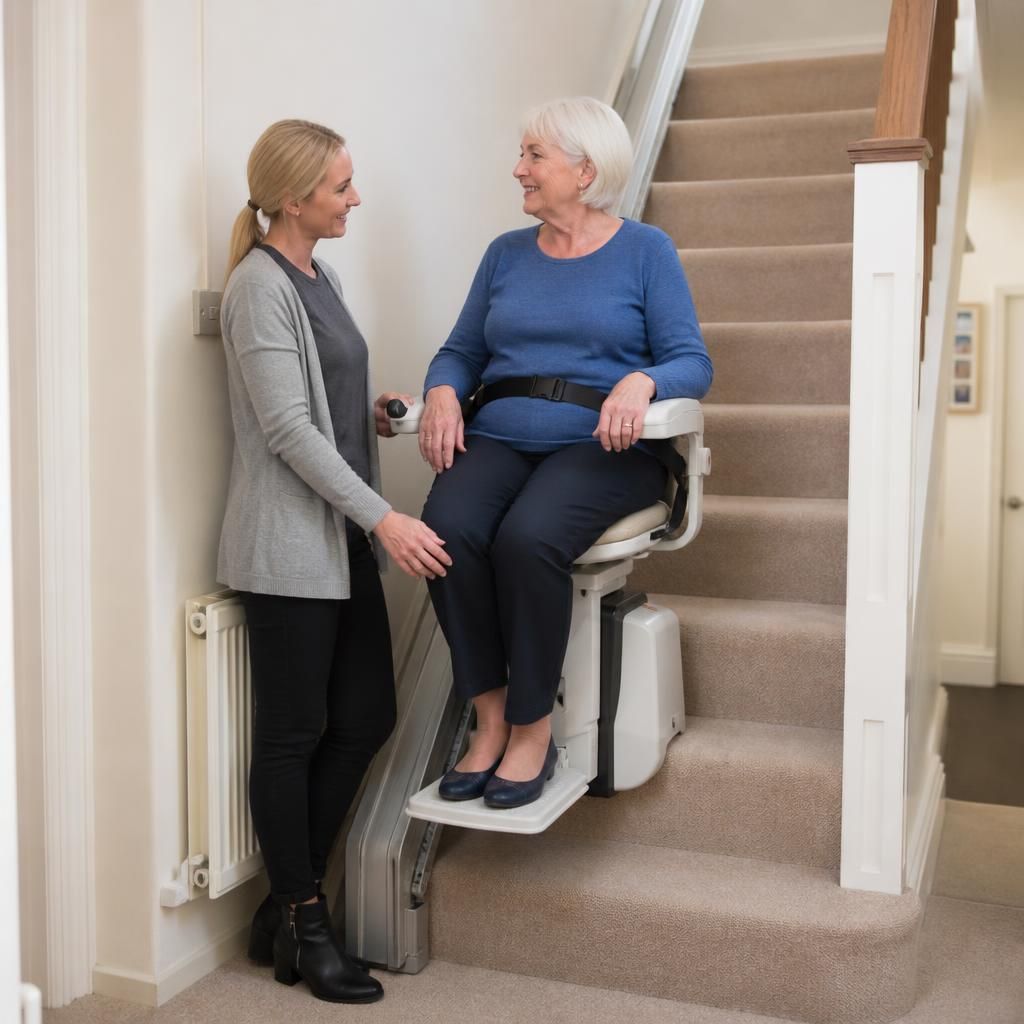
Discuss your mobile stairlift hire options
Contact us to discuss your mobile stairlift hire options and find out whether a portable solution is suitable for your staircase and circumstances. We can explain the hire terms, costs and support included before you decide.