
How does the stairlift rental process work to ensure a quick and efficient setup?
The stairlift rental process usually starts with a free home assessment to check your staircase, access needs and the most suitable rental model. Once the arrangement is confirmed, the stairlift is prepared, installed by a qualified technician, tested for safe operation and explained to you before use.
The stairlift rental process is designed to move from an initial assessment to a safe, usable installation with as little delay as possible. It normally involves discussing your requirements, carrying out a home assessment, confirming the suitable stairlift and rental terms, preparing the equipment, installing and testing it, and showing you how to use it safely.
1. Discuss your requirements
The process begins with a conversation about why you need a stairlift, how long you expect to use it and who will be using it. This helps establish whether a rental is appropriate and whether a straight, curved, outdoor, mobile or other suitable model should be considered. Relevant details may include:
- The staircase layout and number of levels
- Whether the need is temporary, for example during recovery or while adapting a home
- The user’s mobility, balance, weight capacity requirements and ability to transfer on and off the seat
- Whether other people need to continue using the stairs
- Any access requirements at the top or bottom of the staircase
Providing accurate information at this stage helps avoid recommending equipment that is unsuitable for the user or the property.
2. Arrange a home assessment
A home assessment is used to check the staircase and the surrounding space in person or, where appropriate, through information supplied in advance. The assessor considers the stair width, turns, landings, doors, radiators, bannisters, obstructions and available space for getting on and off the lift. They will also discuss the most practical parking position when the stairlift is not in use.
The assessment is important because a stairlift that appears suitable from a general description may not work safely with a particular landing, doorway or staircase shape. For a curved staircase, measurements and the route of the rail are especially important. Outdoor installations require additional consideration of weather exposure, surface conditions and power access.
3. Confirm the recommendation and rental arrangement
After the assessment, you should receive clear information about the recommended stairlift, its suitability, the installation arrangements and the rental terms. Check what is included, such as delivery, fitting, servicing, repairs, removal and any charges that may apply if the rental period changes or the equipment is returned.
Before agreeing to proceed, make sure the person who will use the stairlift understands the proposed model and that any family member or carer involved in the decision has had an opportunity to ask questions. If the recommended equipment is reconditioned or previously used, ask how it has been checked and prepared for rental.
4. Prepare the stairlift for installation
Once the rental has been agreed, the stairlift is selected and prepared for the installation. Straight stairlifts can often be matched to standard rail configurations, while curved stairlifts require a rail made for the particular staircase. A mobile or removable model may follow a different preparation process and may not require a permanent rail installation.
To help prevent delays, tell the installer about any access restrictions, parking limitations, building rules or changes to the property. If the stairlift is needed by a particular date, discuss this as early as possible. Availability, the staircase design, the model required and the need for additional work can all affect the installation date.
5. Complete the installation
A qualified installer positions the stairlift and secures the rail to the stairs or installs the equipment according to its design. Most stairlift rails are fixed to the stair treads rather than the wall, although the exact method depends on the equipment and the property. The installer aims to keep the staircase usable by others and will check that doors, walkways and landing areas remain clear.
For a portable or removable stairlift, the installer will explain how it is positioned, secured and moved when required. These models can be useful where permanent alterations are not wanted, but they still need to be appropriate for the user, staircase and transfer points.
6. Test the equipment and complete the handover
After fitting, the installer checks the controls, charging system, seat or platform, safety sensors, seat belt and movement of the stairlift. They should also confirm that the lift starts, stops and parks correctly at the relevant points. Any protective materials and installation debris should be removed, leaving the route ready for use.
The handover includes practical instruction for the user and, where appropriate, a family member or carer. This normally covers:
- How to use the controls and remote controls
- How to fasten and release the seat belt
- How to swivel, fold or position the seat safely
- How to use the stairlift on stairs shared with other people
- What to do if the lift stops or displays a fault
- How and where to charge the equipment
- How to contact the support team for assistance
Do not use the stairlift independently until you are comfortable with these instructions. A user who has difficulty judging the controls, transferring to the seat or managing the belt may need assistance from a carer.
7. Support during the rental and removal afterwards
During the rental period, keep the stairlift clean and use it only as instructed. Do not place objects on the steps, seat or footrest, and report unusual noises, jerky movement, charging problems or repeated stoppages rather than attempting a repair yourself. The rental agreement should explain how maintenance and breakdown support are provided.
When the stairlift is no longer required, contact Independent Stairlifts to arrange collection or removal in line with the agreement. The equipment should not be dismantled or moved by the customer unless it is specifically designed for this and you have been shown how to do it safely. A professional removal helps prevent damage to the stairlift, staircase and surrounding property.
How to help keep the setup quick and efficient
- Explain the user’s needs and expected rental duration accurately at the first contact.
- Provide photographs or measurements only as supporting information; they do not always replace a full assessment.
- Make sure the stairs, landings and access route are clear before the installer arrives.
- Arrange access to the property and ensure any decision-maker is available to approve the installation.
- Tell the installer about pets, other occupants, parking restrictions and relevant health or transfer concerns.
- Ask in advance about power requirements, cancellation terms, repairs, extensions and removal.
Installation may take longer to arrange where the staircase is unusually narrow, highly curved, obstructed or outdoors, or where a specialist model is needed. Changes to the user’s condition or the property should also be reported before fitting so that the recommendation can be reviewed. A careful assessment and clear handover are what make a rental installation both efficient and safe, rather than simply arranging the fastest possible fitting.
A home assessment is the key step in making a stairlift rental quick and efficient. It allows the installer to check the staircase, access points and user’s mobility needs before recommending suitable equipment, reducing the risk of delays or an unsuitable installation.
Before the assessment, provide clear information about the expected rental period, the user’s ability to transfer on and off the seat, and any concerns about balance or weight capacity. Make sure the stairs, landings and access route are clear, and mention doors, radiators, narrow sections, parking restrictions or other possible obstructions. The assessor can then confirm the most practical stairlift, installation requirements and rental arrangements before fitting is scheduled.
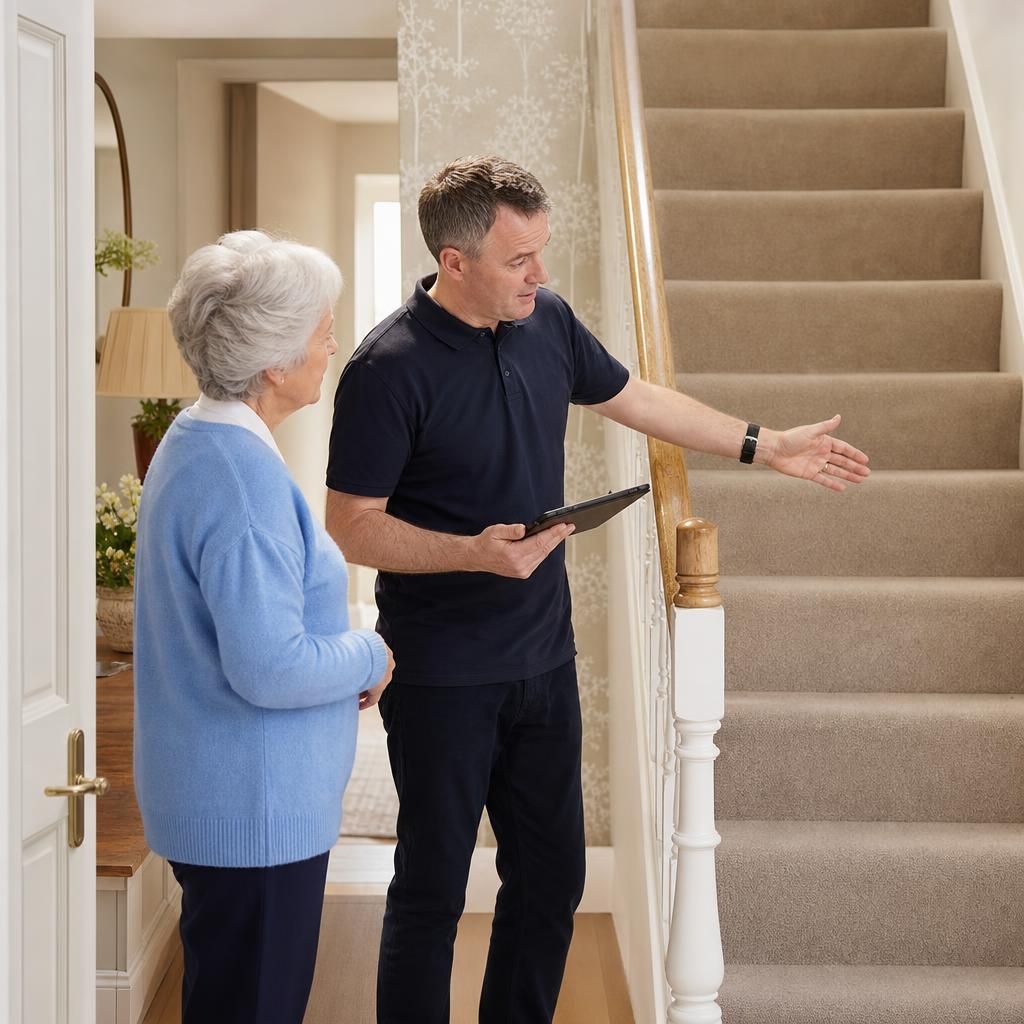
Arrange Your Stairlift Rental Assessment
Arrange your free home assessment with Independent Stairlifts so we can check your staircase, access needs and suitable rental options before installation is scheduled.