
How do I choose the right stairlift rental for my specific needs and home layout?
Choose a stairlift rental by considering the shape and width of your staircase, how long you need it, who will use it and any comfort or mobility requirements. An assessment of your home helps identify whether a straight, curved, outdoor, mobile or reconditioned stairlift is the safest and most practical option for your layout.
The right stairlift rental depends on the staircase layout, the user’s mobility and comfort requirements, how long the lift is needed and whether the property is indoors or outdoors. A home assessment is the most reliable way to confirm which model will fit safely, operate correctly and provide suitable support throughout the rental period.
Start with the staircase layout
Stairlifts are not selected by appearance alone. The shape, width and condition of the stairs determine which type can be installed.
- Straight staircases: A straight stairlift is generally suitable where the stairs run continuously between the floors without a bend, landing or intermediate turn.
- Curved staircases: A curved stairlift is designed for stairs with bends, half-landings, multiple flights or changes in direction. It is usually made to follow the specific route of the staircase.
- Narrow staircases: The available width, handrail position, radiator placement and nearby doorways must be checked. A compact design may be appropriate, but there must still be enough room for safe use and access.
- Outdoor stairs: An outdoor stairlift needs weather-resistant components and a suitable power supply. The exposure to rain, frost, direct sunlight and dirt should be considered when choosing the equipment and its location.
- Stairs with unusual features: Winders, very tight turns, uneven steps, limited headroom and restricted access at the top or bottom may affect the available options. These features should be assessed rather than assumed to be suitable.
Consider who will use the stairlift
The user’s physical needs are as important as the staircase itself. Consider whether the person can transfer safely from standing to sitting, remain seated during travel, operate a control and get on and off at the proposed landing points.
- A swivel seat can help the user turn towards the landing before standing, reducing the need to twist on the stairs.
- Adjustable seat, armrest and footrest positions can improve posture and comfort.
- A powered swivel or hinged rail may be useful where the user has limited strength or where a rail could obstruct a doorway or walkway.
- A higher-capacity or more supportive model may be needed if the user has particular weight, balance or posture requirements.
- Simple controls and a suitable remote control arrangement can help where dexterity, vision or memory is limited.
If the user has recently experienced a fall, has significant weakness or cannot transfer independently, tell the assessor before a model is recommended. A stairlift supports movement between levels but does not replace suitable assistance where a person cannot use it safely without help.
Match the lift to the rental period
Rental is often considered for recovery after an operation or injury, a temporary change in mobility, a short-term stay or while a permanent accessibility decision is being made. The expected duration affects whether a standard rental, a removable or foldable option, a mobile stairlift or a reconditioned stairlift is most practical.
For a short and clearly defined period, minimise unnecessary installation changes and confirm how quickly the equipment can be removed. If the end date is uncertain, check the process for extending the agreement before installation. Ask what happens if the lift is no longer required earlier than expected, and whether collection, removal or other charges apply under the rental agreement.
For a longer or open-ended need, compare the total rental cost and conditions with purchasing a stairlift. The most suitable choice may depend on the expected duration, the type of staircase and whether the equipment needs to remain available for future use.
Understand the different rental options
- Standard stairlift rental: Suitable when the staircase and user requirements can be matched to an available lift, particularly for a straightforward temporary need.
- Mobile or portable stairlift hire: This can be useful where a fixed installation is unsuitable or where the equipment needs to be moved between locations. It may require the user to be able to maintain a stable seated position and may not suit every staircase.
- Removable or foldable stairlifts: These may help preserve access to the stairs or reduce obstruction when other household members need to use them. The folded dimensions and transfer requirements still need to be checked.
- Reconditioned stairlifts: A reconditioned model can provide a practical rental solution when it has been properly inspected, serviced and matched to the staircase and user.
Not every option is interchangeable. A mobile lift may have different balance and transfer requirements from a fixed stairlift, while a foldable design may not provide the same seating position or support as a conventional model.
Check the practical details of the home
The assessment should include more than the stairs. The installer needs to consider where the user will approach the lift, where they will get off, whether doors can open fully and whether other people can pass safely. Check for:
- available space at the top and bottom of the staircase;
- doorways, cupboards, radiators and furniture near the rail;
- the position of existing handrails and whether they need to be retained;
- power socket access and the proposed charging position;
- uneven flooring, thresholds or trip hazards at the transfer points;
- shared access routes and the effect of the folded seat or rail on other users;
- the position of the lift when parked, particularly on a narrow landing; and
- any outdoor exposure, drainage or shelter requirements for an external installation.
Photographs can help with an initial discussion, but they may not show critical measurements, obstructions or transfer risks. An in-person survey is preferable where the staircase is curved, narrow, unusual or difficult to access.
Prioritise safe operation and comfort
A suitable rental stairlift should allow the user to sit securely, keep their feet supported and operate the controls without stretching or twisting. Safety features may include a seat belt, obstruction sensors, swivel seating, a braking system and battery backup, depending on the model. Confirm how the lift behaves if the electricity supply fails and where it should be parked for charging.
Comfort matters during every journey. Check the seat width and depth, back support, armrest position, footrest height and the ease of using the belt. If the user has swollen legs, joint pain or difficulty bending their knees, mention this during the assessment so the seating position can be considered properly.
Ask what is included in the rental
Before agreeing to the rental, confirm the installation arrangements, servicing, breakdown support and removal process. The agreement should make clear:
- which stairlift model and specification are being supplied;
- the rental term, payment arrangements and extension procedure;
- what maintenance and repair support is included;
- how faults should be reported and what support is available outside normal working hours;
- who is responsible for damage, misuse or accidental loss;
- whether installation, collection, removal or replacement batteries incur separate charges; and
- what happens if the lift becomes unsuitable because the user’s mobility changes.
Ask for the operating instructions and make sure the user and any regular carers understand the controls, charging routine, safe transfer method and emergency procedure. Do not allow anyone to use the stairlift until they have received appropriate instruction.
Use the assessment to make the final choice
Provide details of the user’s mobility, the expected rental period and any planned changes to the home. Tell the assessor about falls, difficulty standing, arthritis, reduced grip, wheelchair use or assistance from carers. These details can change the recommendation even where two staircases appear similar.
The best stairlift rental is therefore the one that fits the actual route, supports the user’s transfer and seating needs, leaves the home reasonably accessible to others and comes with clear maintenance and rental terms. Independent Stairlifts can assess the staircase and discuss straight, curved, outdoor, mobile, removable, foldable or reconditioned options according to the requirements of the home and the person using the lift.
A home assessment is the most reliable way to choose a stairlift rental because it checks both the staircase and the user’s ability to transfer, sit and operate the lift safely. The assessor will consider bends, landings, narrow sections, doorways, handrails, radiators and the space available at the top and bottom of the stairs.
Tell the assessor about balance problems, reduced grip, arthritis, recent falls or difficulty standing. These details may affect the recommended seat, controls, swivel function or footrest. The assessment can then identify whether a straight, curved, outdoor, mobile, removable, foldable or reconditioned stairlift is appropriate for the home and rental period.
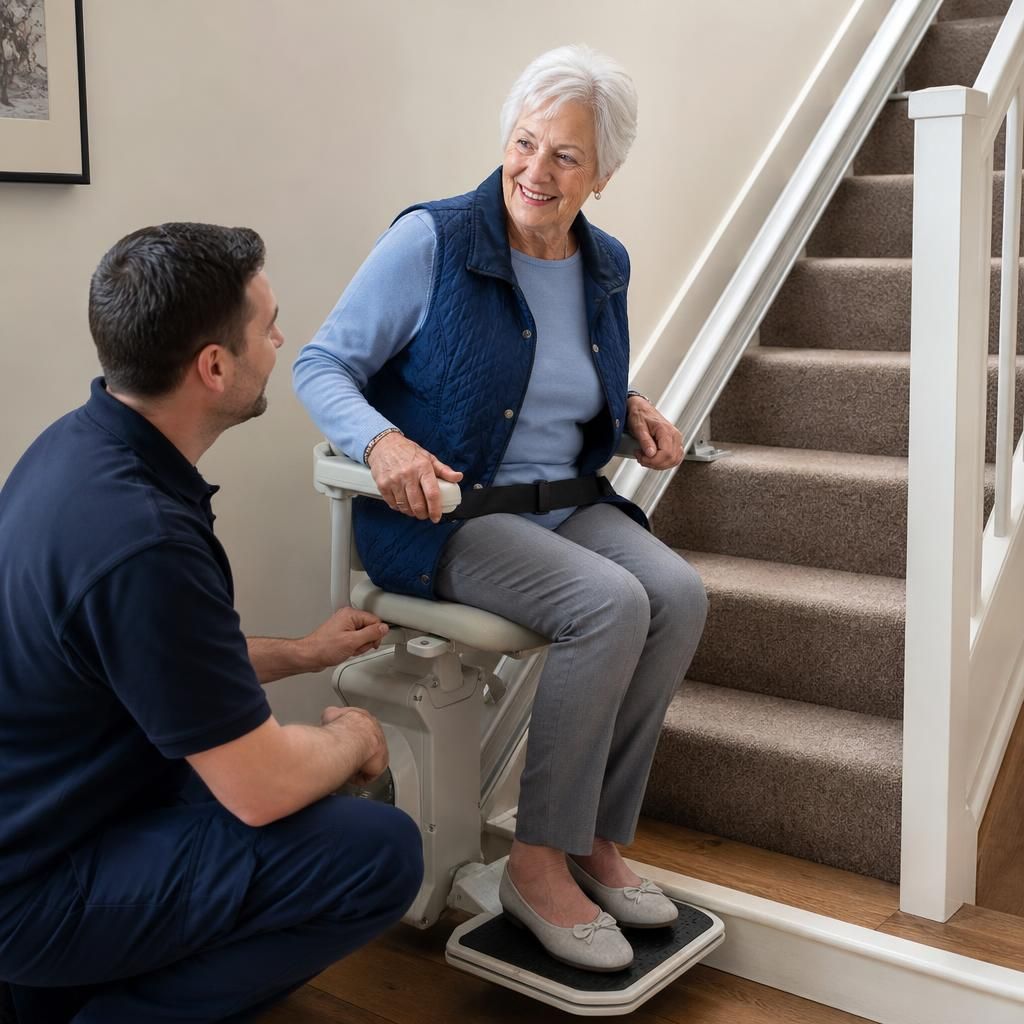
Arrange Your Stairlift Rental Assessment
Arrange your stairlift rental assessment with Independent Stairlifts to discuss your home layout, mobility requirements and expected rental period. We can help identify the most suitable option and explain the installation, support and removal arrangements.