
What is the refurbishment process for a reconditioned stairlift and how does it ensure safety and reliability?
A reconditioned stairlift is carefully inspected, cleaned, serviced and tested, with worn or faulty components replaced before it is installed. A qualified engineer then checks its operation, safety features and fit for the staircase, helping ensure reliable performance in your home.
A reconditioned stairlift is prepared for reuse through a controlled process of inspection, cleaning, servicing, component replacement, safety testing and professional installation. The aim is to confirm that the lift is suitable for its intended staircase and user, and that its mechanical, electrical and safety systems operate reliably before it is fitted in your home.
Reconditioning is more than cleaning a previously installed stairlift. Each lift should be assessed individually, with attention given to its age, condition, usage history where available, model-specific requirements and the environment in which it will be installed. Parts that are worn, damaged or outside the required operating condition are repaired or replaced before the stairlift is offered for reuse.
Initial inspection and assessment
The process begins with a detailed inspection of the stairlift. The engineer or refurbishment team checks the main components, including the rail, carriage, seat, armrests, footrest, drive system, batteries, controls, wiring and charging equipment. They also look for signs of impact, corrosion, unusual wear, fluid damage or previous repairs that could affect performance.
The lift is assessed for its intended application. A straight stairlift and a curved stairlift have different rail and drive arrangements, while an outdoor model must be able to withstand conditions such as moisture and temperature changes. A component that is acceptable for one use may not be appropriate for another, so suitability is considered alongside general condition.
Cleaning and preparation
All accessible parts are cleaned to remove dust, dirt and residue that can interfere with moving components or obscure damage. Upholstery, controls, armrests and the footrest are checked and cleaned appropriately. The rail and carriage are prepared for inspection and servicing, and any removable parts are handled in accordance with the manufacturer’s procedures.
Cleaning also allows technicians to identify issues that may not be immediately visible on a dirty or poorly maintained lift. It does not, however, replace mechanical inspection or testing.
Servicing and component replacement
Following inspection, the stairlift is serviced according to the requirements of its design. This may include checking and adjusting the drive mechanism, inspecting the rail and fixing points, examining electrical connections, testing the charging system and assessing the condition of the batteries and other consumable components.
Worn or defective parts are replaced rather than left in service simply because the stairlift is being reconditioned. Depending on the model and assessment, this can include batteries, switches, sensors, rollers, covers, wiring or other mechanical and electrical parts. Replacement components must be suitable for the specific stairlift and fitted correctly; using an inappropriate part can affect both safety and reliability.
Safety checks and functional testing
Safety testing is a central part of refurbishment. The stairlift is operated through its functions to check that it starts, stops and travels smoothly, responds correctly to the controls and charges as intended. The engineer also checks the protective systems designed to reduce risk during use.
These checks can include the seat belt, swivel or interlock mechanisms, obstruction sensors, overspeed or braking systems, limit switches, emergency stop controls and indicators. The exact checks depend on the model. Safety features must work consistently, not only during a single normal journey, so the lift is tested under appropriate operating conditions and any faults are investigated before installation.
The rail, fixings and carriage are also checked for secure movement and correct alignment. Unusual noise, hesitation, vibration or inconsistent stopping can indicate an issue requiring further adjustment or repair. A stairlift should not be treated as ready for installation until the inspection and test results are satisfactory.
Assessment of your staircase and requirements
Before fitting, a qualified engineer assesses the staircase and the way the stairlift will be used. This includes the available width, landings, turns, steps, access at the top and bottom, nearby doors and any potential obstructions. For a curved stairlift, the rail must correspond accurately with the shape and dimensions of the staircase. For a straight stairlift, the rail length and end positions must be suitable for safe entry and exit.
The assessment also considers the user’s mobility, posture, transfer ability and preferred controls. Seat position, swivel operation, footrest access and remote controls may all affect whether a particular reconditioned model is appropriate. If the available lift cannot be adapted safely to the staircase or the user’s needs, another solution should be considered rather than compromising the installation.
Professional installation and commissioning
During installation, the rail is secured to the staircase or supporting structure using the correct fixing method. The lift is then fitted, connected and checked in its installed position. The engineer confirms that the stairlift travels along the complete route without contacting walls, doors or other obstacles and that the user can get on and off safely.
Commissioning tests are carried out after installation because a lift can behave differently once fitted to a particular staircase. The engineer checks travel, stopping positions, charging points, controls, safety sensors and any folding or swivelling parts. The user should also receive an explanation of normal operation, charging, safe use, emergency procedures and basic care.
Records, warranty and ongoing maintenance
Details of the inspection, work completed, replaced parts and installation checks should be recorded as part of the handover process. You should also receive information about the warranty and who to contact if the stairlift develops a fault. The precise cover depends on the purchase and installation terms, so check what is included, including parts, labour and call-out arrangements where applicable.
Reconditioning reduces the risk associated with buying an unassessed used stairlift, but it does not make a used product maintenance-free. Keep the rail and surrounding area clear, use the lift as instructed and report unusual sounds, jerky movement, charging problems, warning lights or changes in braking promptly. Batteries and other wear items will eventually require attention, and regular servicing can help identify problems before they affect everyday use.
In practical terms, safety and reliability come from the complete chain of checks: selecting a suitable lift, inspecting every important system, replacing defective parts, testing the safety features, fitting the stairlift accurately and explaining its correct use. A reconditioned stairlift that has passed this process can provide dependable day-to-day assistance while being matched to the staircase and the person using it.
The final safety check confirms that a reconditioned stairlift works correctly after it has been installed on your staircase. An engineer tests the complete route, controls and protective features in the fitted position, rather than relying only on checks carried out during refurbishment.
This includes checking that the lift starts, stops and travels smoothly, charges correctly and responds to the handset and remote controls. The engineer also checks relevant safety features, such as the seat belt, swivel or interlock mechanisms, obstruction sensors, emergency stop and stopping positions. The rail, carriage and fixings are inspected to confirm that the lift is secure and does not contact walls, doors or other obstacles.
Any unusual noise, hesitation, vibration, warning light or inconsistent stopping should be investigated before handover. You should also be shown how to operate the stairlift, position it for safe transfers, charge it correctly and report a fault. This commissioning process helps confirm that the reconditioned stairlift is suitable for both the staircase and the person using it.
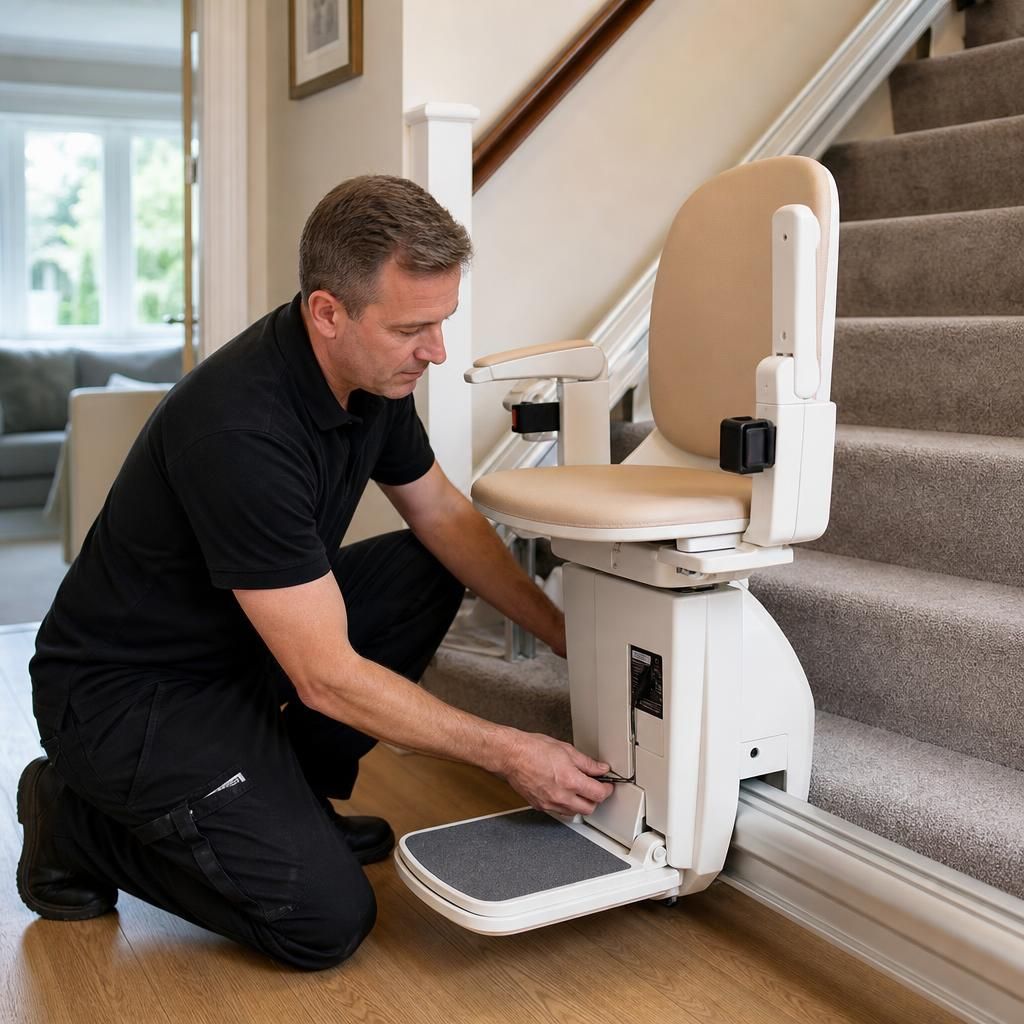
Ask Independent Stairlifts About Reconditioned Stairlift Refurbishment
Contact Independent Stairlifts to discuss your reconditioned stairlift requirements and arrange a professional assessment of your staircase and needs.