
What are the cost benefits of choosing a reconditioned stairlift over a new one, and how does this affect long-term investment and maintenance?
A reconditioned stairlift usually costs less upfront than a comparable new model, reducing the initial investment while still providing dependable access when it has been professionally inspected, refurbished and installed. Long-term value depends on the lift’s condition, warranty, battery and parts support, as lower purchase costs should be weighed against potential maintenance and replacement needs.
A reconditioned stairlift can reduce the initial cost of improving access between floors, often providing the essential features of a new lift at a lower purchase price. Its long-term value depends on more than the purchase price: the condition and age of the lift, the quality of the refurbishment, installation requirements, warranty, battery condition, availability of replacement parts and the level of aftercare all affect the total cost of ownership.
The main financial benefit is a lower upfront investment. A professionally reconditioned stairlift has normally been removed from a previous installation, inspected, cleaned, tested and fitted with replacement parts where required. This allows you to obtain a suitable lift without paying the full cost of a new model, while still receiving a system that has been assessed for safe operation. The saving can be particularly useful where a stairlift is needed quickly, where the expected period of use is uncertain, or where the household budget needs to cover other accessibility improvements.
However, the purchase price should not be considered in isolation. Ask whether the quotation includes the survey, delivery, fitting, removal of packaging, demonstration, warranty and any necessary alterations to the staircase or electrical supply. A lower advertised price may not represent a lower overall cost if important installation or support services are excluded. Comparing like-for-like quotations gives a more accurate picture of the investment.
Reconditioned stairlifts can offer good long-term value when the model is appropriate for the staircase and the refurbishment has been carried out properly. The lift should be checked for safe movement, braking, charging, seat operation, controls, sensors and other relevant safety features before it is installed. Components that show wear should be replaced or assessed, rather than relying only on the lift’s appearance. A professional assessment also helps confirm that the seat, controls and track position are suitable for the person using the lift.
Maintenance costs are influenced by condition and use rather than by the fact that a lift is reconditioned alone. Routine servicing can identify developing faults before they affect reliability. Batteries are wear items and may eventually need replacement on a reconditioned or new stairlift. Other possible costs include replacement rollers, charging components, switches, upholstery or remote controls, depending on the model and the extent of use. Keeping the track clear, following the operating instructions and reporting unusual noises, reduced travel or charging problems promptly can help prevent a minor issue becoming a more expensive repair.
Age is an important part of the long-term calculation. Older equipment may have a lower purchase price, but it can carry a greater risk of worn components or limited parts availability. Conversely, a recently reconditioned model with a well-supported design may provide dependable service for many years. The relevant questions are not simply how old the lift is, but what has been inspected or replaced, whether parts remain available and how the supplier will support it if a fault occurs.
The staircase itself also affects the investment. A reconditioned lift for a straight staircase is usually simpler to source and install because the track follows a standard run. Curved stairlifts use a track designed for the individual staircase, so the cost depends on the design, measurements, turns, landings and any parking position. A reconditioned curved lift may still reduce the cost compared with commissioning a completely new system, but it must be suitable for the specific staircase; a track from another property cannot normally be treated as a universal fit.
Warranty and aftercare are central to assessing value. Before agreeing to the purchase, check:
- how long the warranty lasts;
- which parts, labour and call-outs are covered;
- whether batteries and accidental damage are excluded;
- who to contact if the lift stops working;
- whether servicing or extended support is available; and
- how replacement parts will be sourced if the model becomes older.
A reconditioned stairlift is not automatically the better financial choice in every situation. A new model may be preferable where you need the latest controls or seating options, require a particular design, expect intensive use or want the longest available manufacturer support. A reconditioned model may be more suitable where the required configuration is straightforward, the lift has been thoroughly assessed and the warranty and support arrangements provide sufficient protection.
To compare the options fairly, consider the full expected cost rather than the initial quote. This includes installation, warranty cover, likely servicing, batteries and other consumables, possible repairs and eventual removal or replacement. It is also worth considering the cost of delaying installation if difficulty using the stairs is already affecting everyday access, care arrangements or the use of rooms upstairs.
Independent Stairlifts can assess the staircase, discuss how frequently the lift will be used and explain the condition, suitability and support arrangements for an available reconditioned model. This makes it possible to weigh the immediate saving against the likely maintenance requirements and choose a stairlift that represents practical long-term value, rather than simply selecting the lowest price.
The cost benefit of a reconditioned stairlift comes mainly from its lower purchase price, but the long-term saving depends on what is included and how well the lift has been prepared for continued use. A professionally inspected and refurbished stairlift can provide reliable access at a lower initial cost than a comparable new model, provided it is correctly fitted and supported.
When comparing quotations, check whether installation, warranty cover, servicing and call-outs are included. Ask about the condition of the batteries, the availability of replacement parts and any components replaced during refurbishment. These details help you assess the likely maintenance costs and avoid choosing a lift that appears inexpensive but offers limited support after installation.
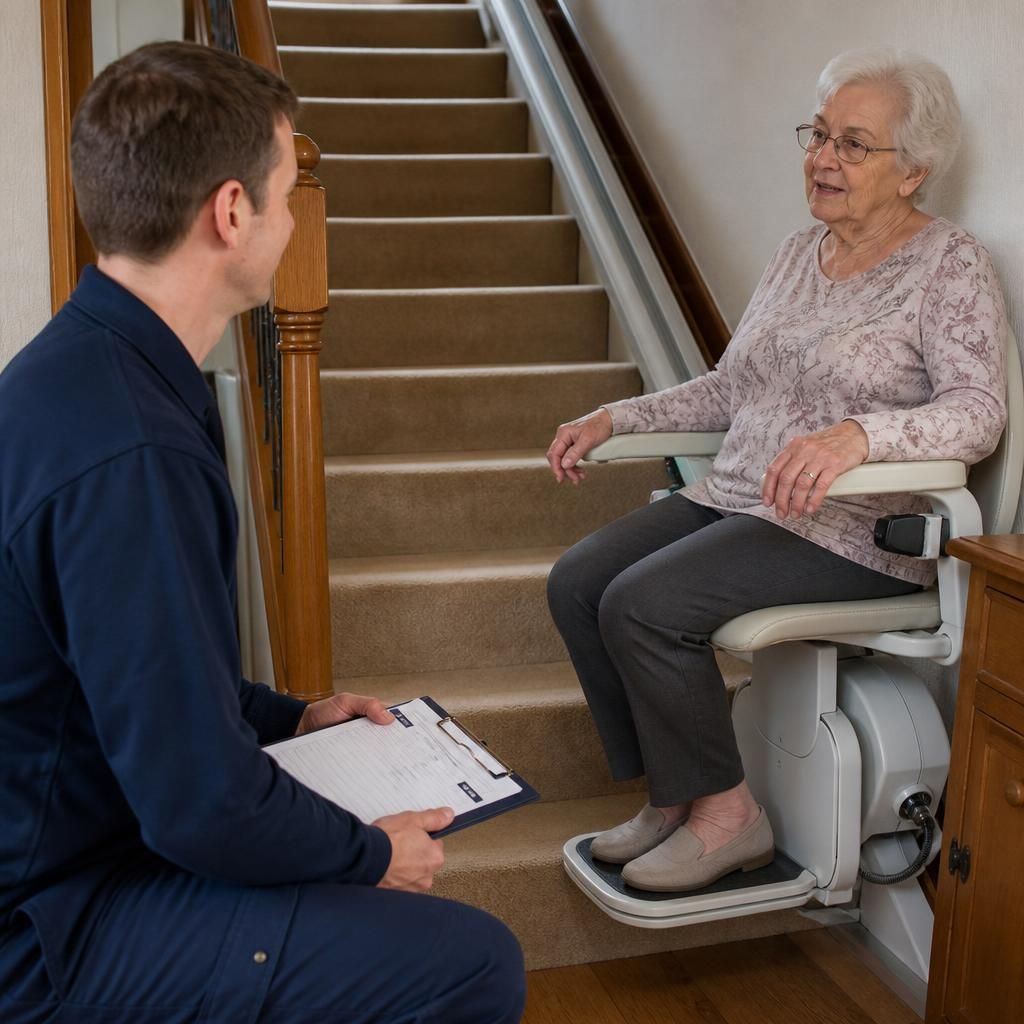
Discuss your reconditioned stairlift options
Discuss your reconditioned stairlift options with Independent Stairlifts to compare the initial cost, expected maintenance and available warranty support for your staircase. Contact us to arrange a practical assessment and receive advice based on your home and mobility needs.