
What should I expect in terms of warranty with a reconditioned stairlift?
A reconditioned stairlift will usually include a limited warranty covering specified parts and labour for an agreed period, although the exact cover depends on the model and supplier. Before installation, check the written terms for exclusions, servicing requirements, call-out arrangements and what support is available if a fault occurs.
A reconditioned stairlift will normally come with a limited warranty covering specified parts and labour for an agreed period. The exact protection depends on the stairlift model, its age and condition, the work carried out during reconditioning, and the terms provided by the installer. Before installation, you should receive the warranty details in writing so you know what is included, what is excluded and how to request support.
What the warranty usually covers
Warranty cover commonly applies to faults affecting the stairlift’s mechanical or electrical operation when the equipment has been used normally and in accordance with the manufacturer’s instructions. Depending on the written terms, this may include investigation of the fault, replacement or repair of covered components, and the engineer’s labour. The warranty may cover the lift itself and, in some cases, work associated with its original installation.
Parts are not necessarily covered on the same basis. For example, the warranty may set out separate terms for the motor, controls, charging equipment, seat mechanism, sensors, batteries and remote controls. Batteries and other consumable or wear-related items may have different exclusions or a shorter period of cover because their performance is affected by usage, charging conditions and age. Check the individual terms rather than assuming that every component has identical protection.
How long the warranty lasts
There is no single standard warranty period for every reconditioned stairlift. The cover should state when it starts, when it ends and whether it begins on the date of installation, delivery or another agreed date. It should also explain whether any replacement part receives cover for the remainder of the original warranty or for a separate period.
Ask for confirmation of the warranty period for the complete stairlift and for any items treated separately, particularly the batteries. If a service plan or extended warranty is available, check what additional protection it provides and whether it requires scheduled servicing or payment of a separate fee.
Common exclusions and conditions
A warranty is intended to cover faults within the agreed equipment and installation terms, not every possible cost associated with owning a stairlift. Typical exclusions may include:
- damage caused by misuse, impact, vandalism, pets, water or other external causes;
- faults resulting from unauthorised alterations, repairs or removal;
- normal wear and tear or items classed as consumables;
- problems caused by unsuitable or interrupted electrical supplies;
- damage arising when the stairlift is moved to another property without the supplier’s involvement; and
- call-outs where no covered fault is found or where the issue results from an excluded cause.
The terms may also require the stairlift to be operated, charged and maintained as instructed. Keep the user information and report any problem promptly. Continuing to use a lift that is displaying a fault can make the problem worse and may affect the assessment of a claim.
Servicing and maintenance
Routine servicing is separate from warranty cover unless the written agreement specifically includes it. A warranty may require servicing by an appropriately qualified engineer at recommended intervals, while other arrangements may provide support when a fault occurs without including planned maintenance. Ask whether servicing is included, chargeable or required to keep the warranty valid, and retain any service records.
Basic day-to-day care remains the user’s responsibility. This includes keeping the track and charging points clear, using the controls as instructed, keeping the stairlift on charge when it is parked as advised, and contacting the service team if warning lights, unusual noises or reduced performance appear. Do not attempt to dismantle or repair the lift yourself.
Call-outs and fault reporting
The warranty should explain how to report a fault and the support arrangements available during and outside normal working hours. Check whether engineer call-outs, diagnosis, travel and labour are included, and whether an out-of-hours visit carries a separate charge. It is also useful to know how faults are prioritised and what to do if the stairlift stops in a position that restricts access between floors.
When reporting a problem, have the customer details, stairlift model if known, installation address and a description of the fault available. Explain any display message or unusual sound and say whether the lift is completely unusable or still operates intermittently. This helps the service team decide what assistance is needed.
Transfer, relocation and ownership
Warranty cover may be linked to the original purchaser, property or installation rather than automatically transferring to a new owner. Relocating a stairlift can also end or alter the original warranty, particularly if it is removed and installed by someone other than the supplying company. If you move home, sell the property or need the lift repositioned, ask for the warranty position before any work is arranged.
Your legal rights
A manufacturer or supplier warranty is an additional promise and does not replace your statutory rights. In the UK, your rights can depend on whether you bought as a consumer or for business use, the seller’s obligations and the circumstances of the fault. The written warranty should not be treated as the only remedy available to you. If you are unsure how the warranty terms relate to your purchase, ask for clarification before agreeing to chargeable work.
What to check before installation
- the start date and duration of cover;
- which parts, labour and installation work are included;
- how batteries, chargers, remote controls and wear-related items are treated;
- any servicing, usage or charging conditions;
- exclusions, call-out charges and out-of-hours arrangements;
- the procedure for reporting a fault;
- whether the warranty can be extended or transferred; and
- who to contact for technical support after installation.
Keep the warranty document, installation paperwork and service records together. If the terms do not clearly identify the cover for your particular reconditioned stairlift, contact Independent Stairlifts before installation so the arrangements can be explained and confirmed in writing.
A reconditioned stairlift warranty is a written agreement that explains which faults, parts and labour are covered, and for how long. Cover can differ between models, so do not assume that batteries, remote controls, charging equipment and installation work are included on the same terms as the main lift.
Before installation, check the warranty document for:
- the start date and length of cover;
- parts or repairs that are excluded;
- whether batteries and other wear-related items have separate terms;
- any servicing, charging or usage conditions; and
- how to report a fault and whether call-out or out-of-hours charges apply.
Keep the warranty with your installation and service paperwork. If a fault develops, contact the service team rather than attempting a repair yourself, as unauthorised work may affect the cover.
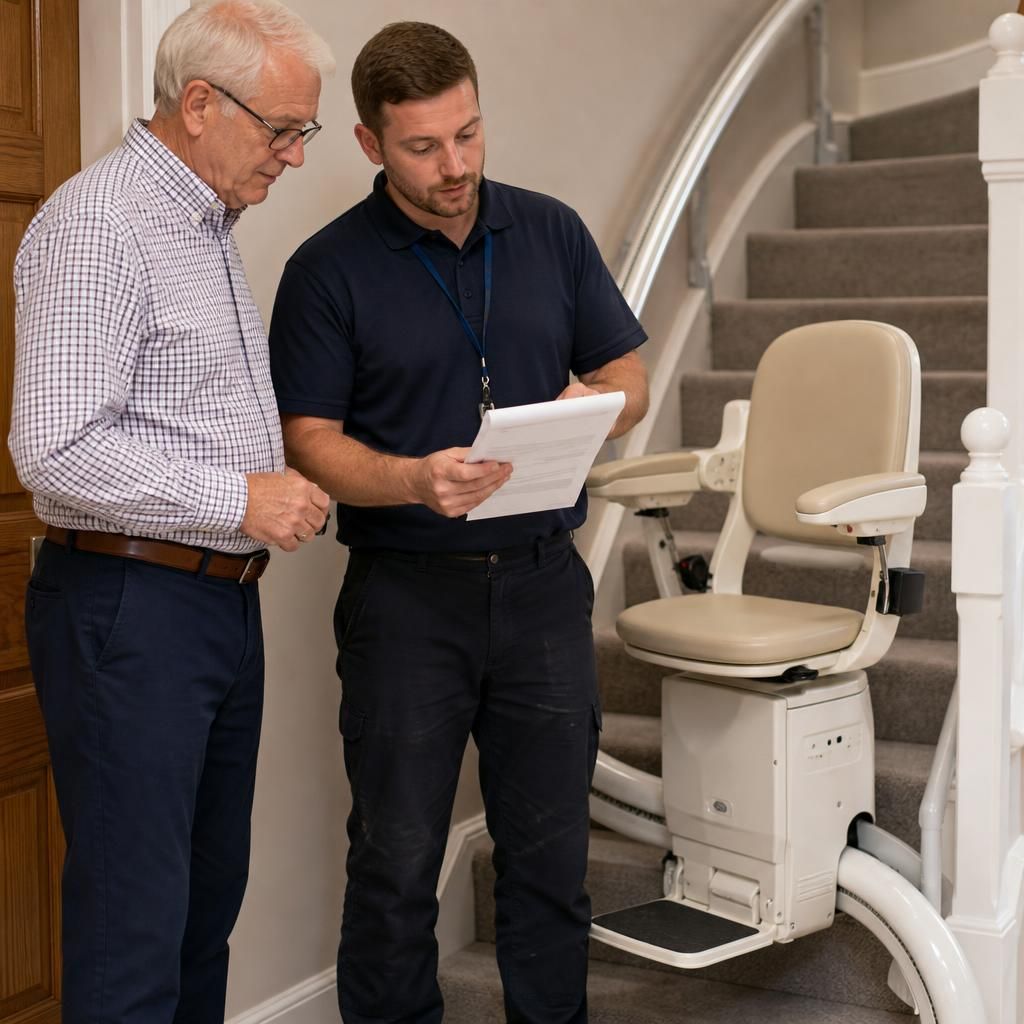
Clarify your reconditioned stairlift warranty cover
If you have questions about your reconditioned stairlift warranty, contact Independent Stairlifts before installation so we can clarify the cover, exclusions and support arrangements for your specific model.