
What factors should I consider when choosing a reconditioned stairlift over a new one?
Choosing a reconditioned stairlift over a new one usually depends on your budget, the lift’s condition and warranty, the features you need, and whether it is suitable for your staircase. A properly assessed and professionally installed reconditioned model can provide safe, reliable access, while a new stairlift may offer more choice, the latest features and a longer expected service life.
Choosing a reconditioned stairlift over a new one is usually a balance between initial cost, available features, expected length of use and confidence in the lift’s condition. A reconditioned model can be a practical and safe option when it has been properly inspected, serviced, fitted to your staircase and supplied with suitable warranty cover. A new stairlift may be preferable when you need a particular design, the latest features or a solution intended for a longer period of use.
Compare the total cost, not only the purchase price
Reconditioned stairlifts generally cost less than new models, which can be important if you need to improve access without paying for features you will not use. However, ask what is included in the quoted price. The overall cost may depend on the type of staircase, the length or shape of the rail, installation requirements, removal of an existing lift and any additional options.
It is also sensible to consider the cost of future servicing, repairs and eventual removal. A lower initial price is useful only if the stairlift remains suitable and support is available when it is needed. Your assessment should provide a clear explanation of the equipment, installation and aftercare included.
Check what “reconditioned” means
A reconditioned stairlift is not simply a second-hand unit taken from another property and refitted without preparation. It should be assessed, cleaned, tested and serviced before installation. Depending on the model and its condition, components such as batteries, sensors, upholstery or other parts may be replaced where necessary.
Ask how the specific stairlift has been checked and whether it has been tested under normal operating conditions. You should also be told about any visible wear, limitations or parts that may need attention in the future. A reputable assessment should distinguish between normal cosmetic marks and anything that could affect operation, comfort or safety.
Consider safety and reliability
Safety should not be compromised because a stairlift is reconditioned. Important features can include a seat belt, obstruction sensors, swivel or folding mechanisms, safe braking and controls that are easy to operate. The lift should stop correctly if it detects an obstruction, and the batteries should provide reliable operation during a power cut, subject to the model and its condition.
Reliability depends on the quality of the original equipment, its previous use, the condition of its batteries and moving parts, and the standard of reconditioning and installation. Ask whether the stairlift has been serviced by a suitably trained engineer and whether replacement parts remain available for that model. These points are often more useful than judging a lift by its age or appearance alone.
Review the warranty carefully
Warranty cover is one of the most important differences between individual reconditioned stairlift offers. Check how long the warranty lasts, what parts and labour are covered, whether call-outs are included and what exclusions apply. Some covers may treat batteries, upholstery, accidental damage or misuse differently from the main stairlift mechanism.
Find out who to contact if the lift develops a fault and whether support is available for the property where it is installed. Warranty terms should be provided clearly before you commit. If the proposed cover is shorter or more limited than that offered with a new model, consider whether the saving still represents good value for your circumstances.
Make sure it fits your staircase and home
Suitability is determined by the staircase and the way you use your home, not just by whether a lift is described as straight or curved. A straight reconditioned stairlift may suit a staircase with one continuous flight, while a curved model may be needed for bends, landings, intermediate floors or changes in direction. Outdoor stairs require equipment designed for external conditions rather than an indoor unit adapted for occasional outside use.
An assessment should consider the width and shape of the stairs, available space at the top and bottom, doorways, radiators, handrails and the position of the controls. It should also check whether other people can continue to use the stairs safely when the lift is parked or folded. For a curved staircase, a suitable refurbished rail may be available, but a new or individually made rail can provide more choice where the layout is unusual.
Decide which features you actually need
New stairlifts may offer the widest selection of upholstery, controls, power options and additional convenience features. With a reconditioned model, the choice may be limited to what is currently available and compatible with your staircase. This does not necessarily make it unsuitable, but you should identify the features that are essential rather than assuming every model will provide them.
- A powered swivel seat may make getting on and off easier where movement is restricted.
- A powered or manual folding footrest may be useful where space is limited.
- Remote controls can allow the lift to be called to another floor.
- Different seat styles, armrest widths and weight capacities may affect comfort and safe use.
- Weather-resistant controls and materials are important for an outdoor installation.
Try the proposed model, if possible, or discuss how its controls and seating position will work for the person using it. A model with fewer features can be the better choice if it is comfortable, simple to operate and well matched to the staircase.
Think about how long you expect to need it
A reconditioned stairlift can be particularly appropriate where access is needed quickly, for a temporary period or while a longer-term living arrangement is being considered. If the stairlift is likely to be used several times a day for many years, the condition of the drive system, batteries, seat and rail becomes especially important. In that situation, compare the expected service life and maintenance requirements with the additional cost of a new unit.
No provider can guarantee exactly how long a particular stairlift will operate, because performance depends on use, maintenance and the conditions in the home. Ask for a realistic explanation of the model’s condition rather than relying only on a general description such as “fully refurbished”.
Check installation and future support
Professional installation is essential for both new and reconditioned stairlifts. The installer should secure the rail correctly, set the controls and safety systems, check the batteries and demonstrate normal operation before completing the work. You should know how to use the lift, charge it, respond to an obstruction and contact the service team.
Ask whether servicing is available after the warranty period and whether engineers can obtain compatible parts if a repair is needed. A reconditioned lift that is well supported may be a more sensible choice than a new lift with features you do not need but limited practical assistance.
Compare the practical advantages of each option
- Reconditioned: often a lower-cost route, with the possibility of obtaining a reliable model quickly, but with less choice of specification and a condition that needs careful checking.
- New: usually offers the broadest choice of model and features, a new set of components and often more extensive warranty options, but normally involves a higher initial cost.
Neither option is automatically right for every home. The best choice is the one that provides safe access, comfortable operation, a suitable warranty and dependable support at a cost that fits your circumstances.
Before deciding, ask for a home assessment and request a written comparison of the available reconditioned and new options. Confirm the condition of the proposed lift, its suitability for your staircase, the features included, the installation arrangements, warranty exclusions and ongoing support. This gives you a clear basis for choosing a reconditioned stairlift where it meets your needs, or selecting a new model where the additional choice and longer-term benefits justify the extra cost.
When comparing a reconditioned stairlift with a new one, the condition of the specific lift and the warranty offered are often more important than the label alone. A reconditioned model should have been inspected, serviced and tested before installation, with worn or faulty components replaced where necessary.
Before agreeing to the installation, confirm what the warranty covers, including parts, labour, batteries and call-outs, and check any exclusions. You should also know who to contact if a fault develops and whether compatible replacement parts and servicing will remain available. A reconditioned stairlift with clear warranty protection and dependable aftercare can provide better practical value than a new model with features you are unlikely to use.
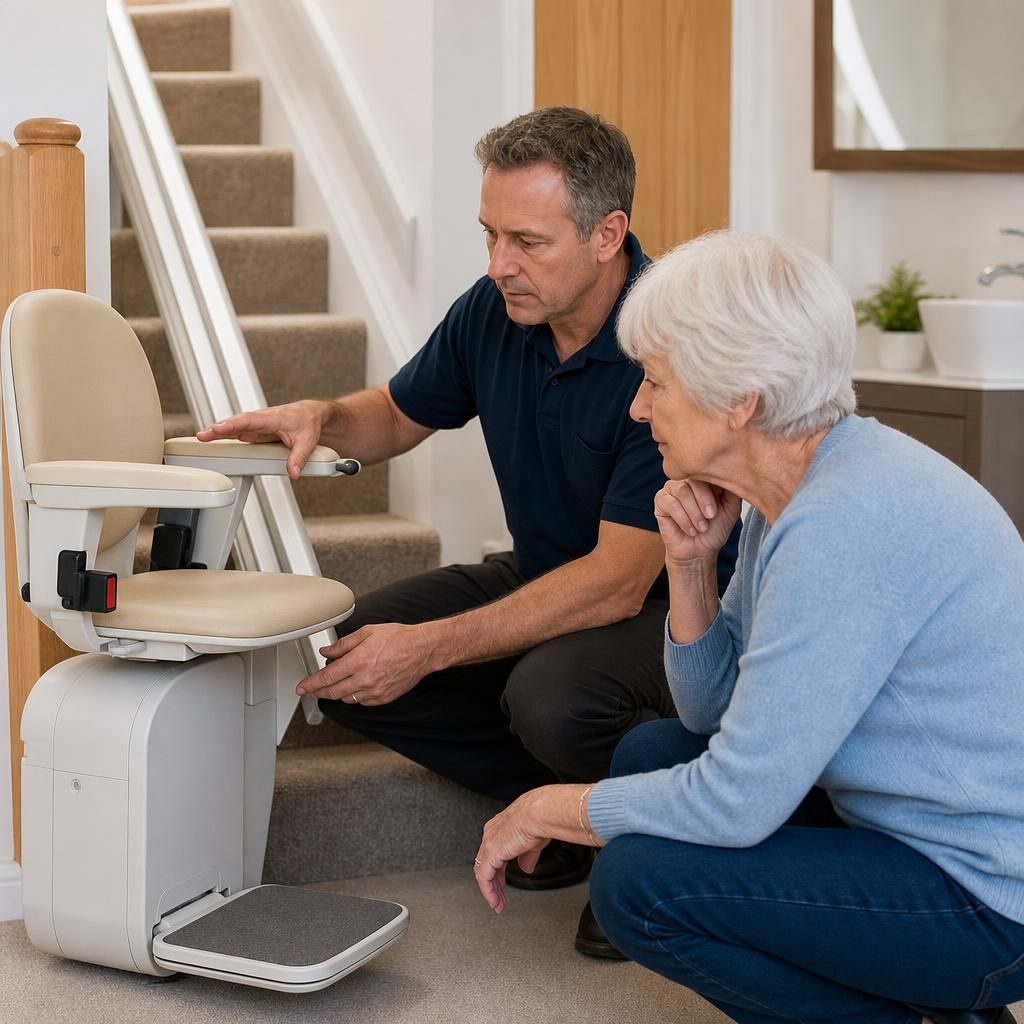
Compare Your Reconditioned and New Stairlift Options
Arrange a home assessment with Independent Stairlifts to compare suitable reconditioned and new stairlift options, including installation, warranty and aftercare.