
What does the warranty cover for a reconditioned stairlift?
A warranty for a reconditioned stairlift typically covers faults with specified parts and labour for an agreed period, subject to the supplier’s terms and conditions. Coverage can vary, so check whether call-outs, batteries, servicing and accidental damage are included before installation.
A warranty for a reconditioned stairlift usually covers faults in the components and workmanship for the period stated in your quotation or warranty document. It may also include labour and engineer call-outs, but the exact protection depends on the supplier’s terms. Before installation, check what is covered, how long the warranty lasts, what is excluded and who to contact if a problem develops.
Parts commonly covered
Warranty cover will generally apply to mechanical and electrical components that fail because of a manufacturing defect, wear associated with normal use or a fault arising after reconditioning. Depending on the model and agreement, this may include the motor, gearbox, carriage, controls, charging equipment, safety sensors and control board. The warranty should identify whether all parts are included or whether certain components have separate conditions.
A reconditioned stairlift has previously been installed and used, so some cosmetic marks or evidence of earlier installation may not be covered as faults. Reconditioning should address the lift’s operational condition, but it does not make every component new. Ask which parts have been inspected, replaced or tested and whether any older components have a specific limitation on their warranty cover.
Labour and engineer call-outs
Many warranties include the labour needed to diagnose and repair a covered fault. Some also include the engineer’s call-out within the covered area. Others may charge for attendance if the issue is found to result from misuse, an excluded cause or a problem unrelated to the stairlift. Confirm whether travel, out-of-hours attendance and repeat visits are included.
When reporting a fault, provide the stairlift model, the nature of the problem and any error message or warning light. Do not attempt to remove covers or repair electrical or mechanical parts yourself. An authorised engineer can determine whether the issue falls within the warranty and carry out the repair safely.
Batteries and charging equipment
Batteries are often subject to separate warranty terms because they gradually lose capacity through normal use. A warranty may cover a battery that fails prematurely, but not a reduction in performance caused by age, infrequent use or leaving the lift without an adequate charge. Charging points, cables and battery-related components may also have different exclusions.
To help prevent avoidable battery problems, leave the stairlift parked at its designated charging point when it is not in use, where the installation instructions permit this. Report repeated low-battery warnings or charging faults promptly rather than continuing to use the lift until it stops.
Installation and workmanship
If the stairlift was installed as part of your purchase, the agreement may cover defects caused by incorrect installation, such as a loose fitting or an issue with the rail or charging connection. This is separate from a fault caused by damage to the staircase, later building work or changes made by someone who is not authorised to work on the lift.
The warranty normally applies to the stairlift as installed at the agreed address. If it is dismantled, moved or altered, the original warranty may no longer apply unless the work is arranged and approved by the supplier.
What is commonly excluded?
- Accidental damage, impact, vandalism or damage caused by pets.
- Misuse, overloading or use that does not follow the operating instructions.
- Faults caused by water, damp, fire, power surges or other external events.
- Repairs, adjustments or modifications carried out by an unauthorised person.
- Routine cleaning, servicing and normal cosmetic deterioration.
- Normal wear to items such as upholstery, armrests, footplates or handles, unless the warranty specifically includes them.
- Problems caused by changes to the home, the staircase or the electrical supply after installation.
These exclusions do not mean that help is unavailable. They indicate that a repair may be chargeable rather than covered by the warranty. The written terms should take priority over general descriptions of warranty cover.
Warranty period and conditions
The warranty period should be confirmed in writing before you proceed. Cover may begin on the installation date, delivery date or another date stated in the agreement. It may apply to the complete stairlift for one period, while batteries or selected parts have different terms. Some agreements also require the stairlift to be maintained or serviced in line with the supplier’s instructions.
Keep your quotation, warranty document and installation paperwork together. These documents should explain the duration of cover, exclusions, maintenance requirements, geographical limits and the process for making a claim. If anything is unclear, ask for an explanation before installation rather than relying on a verbal assumption.
Your legal rights
A warranty is an additional agreement and does not replace your statutory rights as a consumer. Under UK consumer law, goods should be of satisfactory quality, fit for their intended purpose and as described. Services, including installation where applicable, should be carried out with reasonable care and skill. The precise remedy can depend on the circumstances, the age of the stairlift and the terms of your purchase, so contact Independent Stairlifts if you believe a fault does not match the warranty wording.
How to make a warranty claim
- Stop using the stairlift if it is unsafe, making an unusual noise, moving irregularly or showing a serious fault warning.
- Contact the service team using the details in your warranty or installation documentation.
- Explain what happened and provide the model details, installation address and any relevant photographs or error codes.
- Follow the engineer’s advice and avoid arranging third-party repairs without approval.
- Keep records of the reported fault, appointments and any work completed.
Before buying or accepting a reconditioned stairlift, ask specifically whether the warranty includes parts, labour, call-outs, batteries, installation workmanship and any future servicing. A clear written warranty allows you to understand the likely costs if a fault occurs and helps ensure the stairlift remains supported throughout the agreed cover period.
A reconditioned stairlift warranty covers the specific parts, labour and support listed in your written agreement, rather than every possible repair. Before installation, check whether engineer call-outs, batteries, charging equipment and installation workmanship are included, as these may have separate terms.
Keep the warranty document with your installation paperwork and contact Independent Stairlifts before arranging any third-party repair. This helps confirm whether the fault is covered and prevents changes or unauthorised work from affecting your protection.
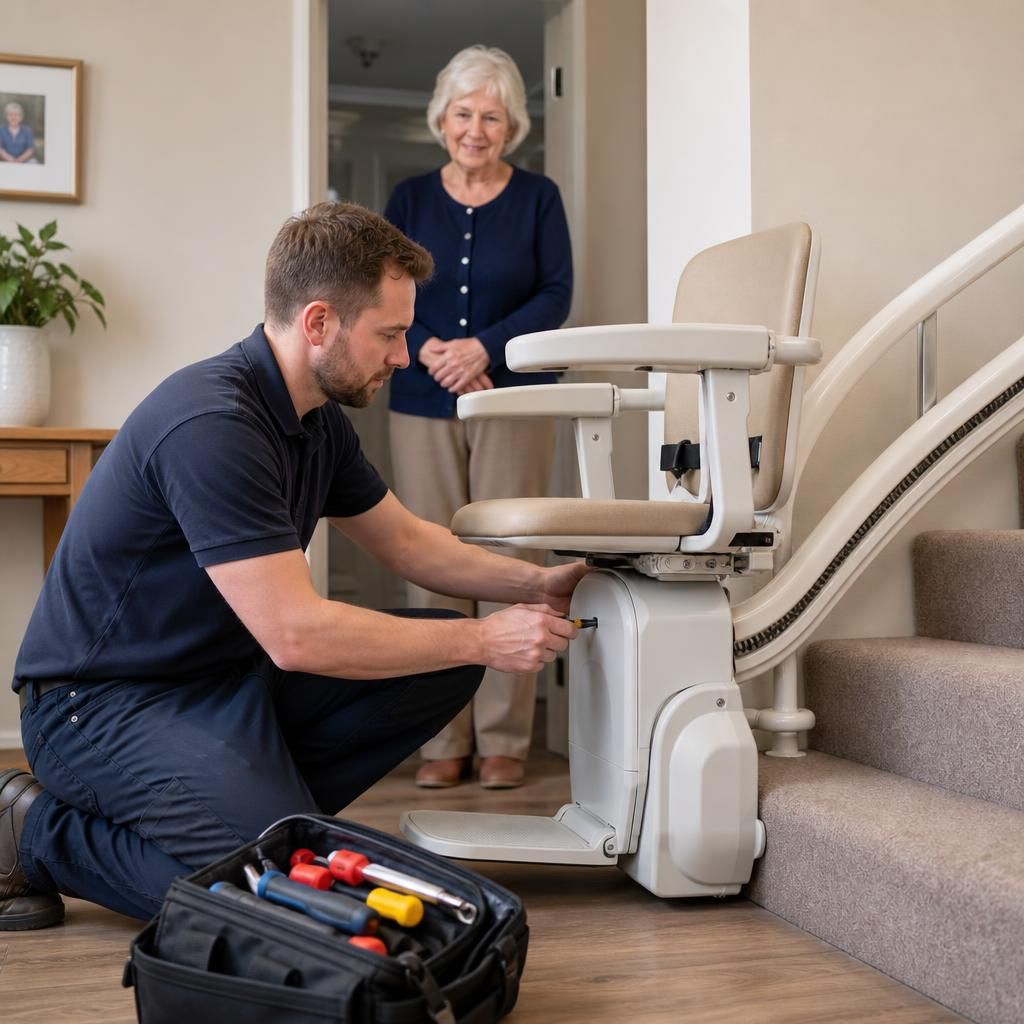
Speak to us about your stairlift warranty
If you have questions about what your reconditioned stairlift warranty covers, contact Independent Stairlifts for clarification on parts, labour, call-outs and exclusions. We can also explain the correct process for reporting a fault or arranging support.