
How does a reconditioned stairlift get installed in my home?
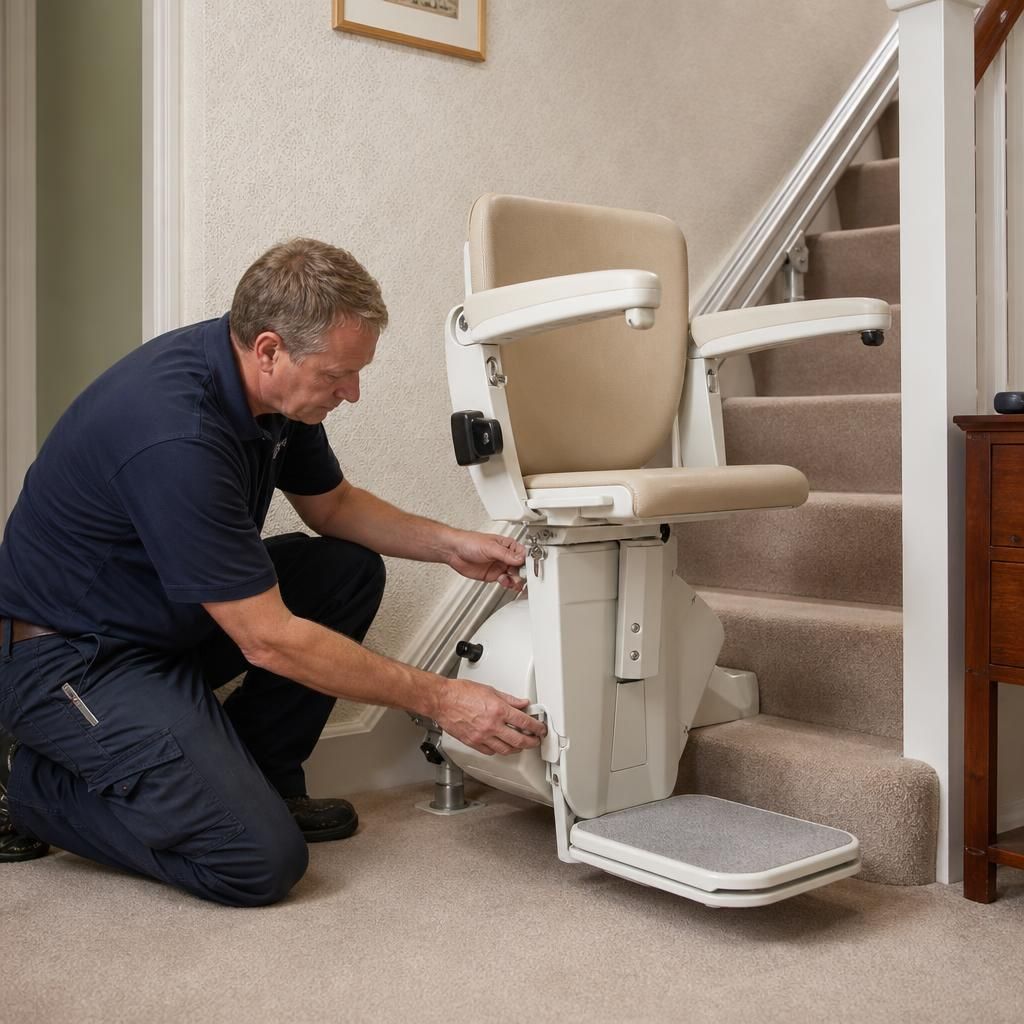
A reconditioned stairlift is installed after a home survey confirms that the selected lift suits your staircase, access needs and electrical supply. A trained installer then fits and tests the equipment on the stairs, explains how to use it safely and checks that everything is working correctly before leaving.
A reconditioned stairlift is installed in your home after a trained installer has checked that the equipment is suitable for your staircase, access needs and electrical supply. The lift is prepared and inspected before fitting, secured to the staircase rather than normally to the wall, then tested thoroughly so you can use it safely and confidently.
1. A home survey confirms the requirements
Before installation, an adviser or surveyor assesses the staircase and the way you intend to use the lift. This includes checking:
- Whether the staircase is straight, curved, narrow or has landings that affect the design
- The available space at the top and bottom of the stairs
- Whether doors, hallways, radiators or other features could obstruct the lift or its track
- Where you can sit down and stand up safely
- Your mobility, transfer needs and preferred controls
- The position of suitable electrical sockets and the location of the charging points
For a curved staircase, the survey is particularly important because the rail is made or configured to follow the individual shape of the stairs. A reconditioned curved stairlift may therefore need to be matched carefully to the staircase, rather than selected solely by model name.
2. The reconditioned stairlift is checked and prepared
Once a suitable stairlift has been identified, it is inspected and prepared before it comes to your home. Reconditioning normally involves cleaning the equipment, checking its mechanical and electrical components, replacing worn or unsuitable parts where required, and testing the safety systems in accordance with the manufacturer’s instructions.
The installer also confirms that the lift configuration is appropriate for your staircase. Components such as the seat, armrests, footrest, controls, charging equipment and rail must work together correctly. If an existing stairlift is being removed, this is usually arranged as part of the installation and the old equipment is disconnected safely rather than left in place.
3. The installer prepares the staircase and work area
On the day of fitting, the installer will normally protect nearby surfaces and bring the equipment into the property carefully. You may be asked to move small items from the stairs, landings or access route so the work can be completed safely.
Most stairlifts are fitted to the stair treads or another suitable part of the staircase structure using the approved brackets. This usually avoids the need for major building work or alterations to the wall. The exact fixing method depends on the staircase construction and the lift design. The installer should explain any proposed fixings before proceeding, particularly if the stairs have unusual construction, delicate finishes or limited access.
4. The rail and lift are installed
The rail is positioned to provide a safe, practical route between the levels. On a straight staircase, this involves aligning the rail along the stairs and securing it at suitable points. On a curved staircase, the shaped rail is assembled and aligned so that the lift follows the bends and landings smoothly.
The carriage, seat, footrest and controls are then fitted to the rail. Safety features, including the seat belt, swivel seat mechanism, obstruction sensors and braking systems, are connected and checked. Charging points are positioned so the stairlift can recharge when parked in the correct location.
5. The installation is tested
Testing is an essential part of the installation. The installer operates the stairlift repeatedly to check that it travels smoothly, stops in the correct positions and charges properly. They also check the controls, seat swivel, seat belt, footrest, sensors and emergency or safety functions.
The installer will look for potential obstructions at the top and bottom of the stairs and confirm that the stairlift does not interfere with doors, furniture or normal access. Any adjustments needed to improve the alignment, stopping position or user access should be completed before the installation is signed off.
6. You receive a demonstration and safety instructions
After testing, the installer demonstrates how to use the stairlift. This normally covers starting and stopping, using the controls, fastening the seat belt, turning or swivelling the seat where applicable, parking the lift, charging it and using the remote controls.
You should also be shown what to do if the lift stops unexpectedly, how to report a fault and which parts of the equipment must not be altered. The user instructions and warranty information should be left with you. If another person will regularly operate or assist with the stairlift, they should receive the demonstration as well.
How long does installation take?
The installation time depends on the type of stairlift, the shape and condition of the staircase, access to the property and whether an existing lift needs to be removed. Straight stairlift installations are generally less involved than curved installations, while unusual layouts or additional electrical work may require more preparation. Your surveyor or installer should explain the expected arrangements in advance.
What should you do before the installer arrives?
- Keep the stairs, landings and access route as clear as possible
- Tell the installer about any changes to your mobility or transfer needs since the survey
- Point out any doors, pets, furniture or household routines that could affect safe use
- Make sure someone is available to receive the demonstration if you will not be the only user
Installation should not be treated as complete until you understand the controls, the stairlift has been tested in its installed position and any questions have been answered. If the lift does not operate as demonstrated, makes an unusual noise, fails to charge or leaves insufficient space for safe access, stop using it and contact the installer for advice.
The home survey is the essential first stage of installing a reconditioned stairlift. A trained surveyor checks the staircase, available space, access points, electrical supply and your mobility needs before confirming whether the selected lift is suitable.
This assessment is particularly important for curved or unusually arranged staircases, where the rail must follow the layout accurately. The surveyor will also identify safe positions for sitting, standing and getting on or off the lift, while checking for possible obstructions such as doors, radiators and furniture. The findings are used to prepare the stairlift and plan a safe, properly fitted installation.
Arrange your reconditioned stairlift survey
Arrange your reconditioned stairlift survey with Independent Stairlifts so we can assess your staircase, access needs and the most suitable lift configuration. Contact our team to discuss the next step.