
How do I know if a reconditioned stairlift is the right choice for my home?
A reconditioned stairlift may be the right choice if you need a reliable solution at a lower cost than a new model and a suitable lift is available for your staircase. An assessment of your stairs, mobility needs, available features, installation requirements and warranty will help confirm whether it is appropriate for your home.
A reconditioned stairlift is likely to be the right choice if you need a dependable way to use your stairs, want to control the cost, and a suitable, fully checked model is available for your staircase. The decision should be based on more than price: the lift must match the shape and dimensions of your stairs, provide the support you need, fit safely in your home and come with appropriate installation and warranty arrangements.
Consider the condition of your staircase and home first. Reconditioned stairlifts can be suitable for many domestic settings, but the available options depend on whether your stairs are straight, curved, narrow, unusually steep or located outdoors. A straight stairlift is generally fitted to a single, uninterrupted flight. Curved staircases require a rail made to follow the route of the stairs, and the availability of a suitable reconditioned model may be more limited. A home assessment will identify issues such as landings, bends, doorways, radiator positions, low headroom and the space needed to get on and off the seat safely.
Think about how the stairlift will be used. Your mobility, balance, confidence and ability to transfer into the seat all affect which model is appropriate. Consider whether you need:
- A powered swivel seat to help you turn towards the landing before standing up
- Adjustable or powered footrest features
- Easy-to-use controls on the armrest or a remote control
- A perch or standing stairlift if bending your knees or sitting down is difficult
- A higher weight capacity than a standard model provides
- Outdoor-resistant equipment for external steps
The lift should be comfortable and straightforward to operate every time it is used. If more than one person will use it, the assessment should take account of the needs of everyone involved rather than focusing only on the person who currently needs the lift.
Review the benefits of choosing reconditioned equipment. A reconditioned stairlift has usually been previously installed, then removed, inspected, serviced and prepared for another home. Where a suitable model is available, this can provide a practical alternative to buying new equipment. It may offer:
- A lower purchase cost than an equivalent new stairlift
- Access to established models with familiar controls and features
- A suitable solution when you need installation without unnecessary delay
- Reliable performance when the equipment has been properly assessed and maintained
Reconditioned does not mean that every used stairlift is suitable. The important points are how the equipment has been checked, what work has been carried out, whether replacement parts are available and who is responsible for the installation and aftercare.
Compare the total cost, not just the initial price. Ask what is included in the quotation. This may include the assessment, removal of an existing lift, preparation of the rail, installation, testing, user instruction and warranty cover. For a curved stairlift, the rail and fitting requirements may make the cost different from a straight model. You should also ask whether future servicing, repairs, batteries and any changes to the installation are covered separately.
A reconditioned stairlift may be less suitable if the available model needs extensive alterations to work in your home, lacks the features required for safe use, or has limited parts and support. In these circumstances, a new stairlift may provide a better long-term fit even if the initial cost is higher.
Check the inspection and warranty arrangements. Before proceeding, make sure you understand what checks have been completed and what the warranty covers. Ask whether the warranty applies to parts, labour or both, how long it lasts, and what exclusions or call-out conditions apply. It is also sensible to confirm how faults are reported and who will provide technical support after installation. Clear warranty and aftercare arrangements are essential when comparing reconditioned equipment.
Consider the likely length of use. If you need a stairlift for a temporary period, a reconditioned model may be a cost-conscious option, provided it meets your needs and can be removed without causing damage to the stairs. If you expect to use the lift for many years, prioritise seating comfort, ease of operation, battery performance, service support and the availability of replacement parts. The cheapest suitable option is not always the best value if it does not remain comfortable or practical over time.
Ask for a professional assessment before choosing. Measurements and photographs alone may not show whether the seat can be positioned safely at the top or bottom of the stairs, whether doors can open freely, or whether other household members can pass the lift. An assessment should look at the staircase, the surrounding space and the user’s ability to transfer and operate the controls. It also gives you the opportunity to discuss any concerns about carrying shopping, using the lift during a power cut or sharing the stairs with other people.
A reconditioned stairlift is generally a sensible choice when the equipment is in good working order, the model suits your mobility needs, the rail and seat can be installed safely, and the price and warranty provide good overall value. If any of these points is uncertain, ask for the alternatives to be explained before making a decision. Independent Stairlifts can assess your home and help you compare a suitable reconditioned solution with the available new options.
A home assessment is the most reliable way to establish whether a reconditioned stairlift is suitable for your property. The installer will check the shape, width and gradient of the staircase, along with landing space, doorways, radiators and any obstructions that could affect safe use.
The assessment should also consider the person using the lift. Seat height, transfer ability, balance, weight capacity, control position and features such as a swivel seat or powered footrest can all affect the choice of model. A reconditioned stairlift is appropriate only when its available features and rail configuration meet these practical requirements.
Ask the installer to explain how the proposed lift will fit into your home, where you will get on and off, and how other people will use the stairs. This confirms that the equipment is not simply operational, but suitable for everyday use and supported by appropriate installation and warranty arrangements.
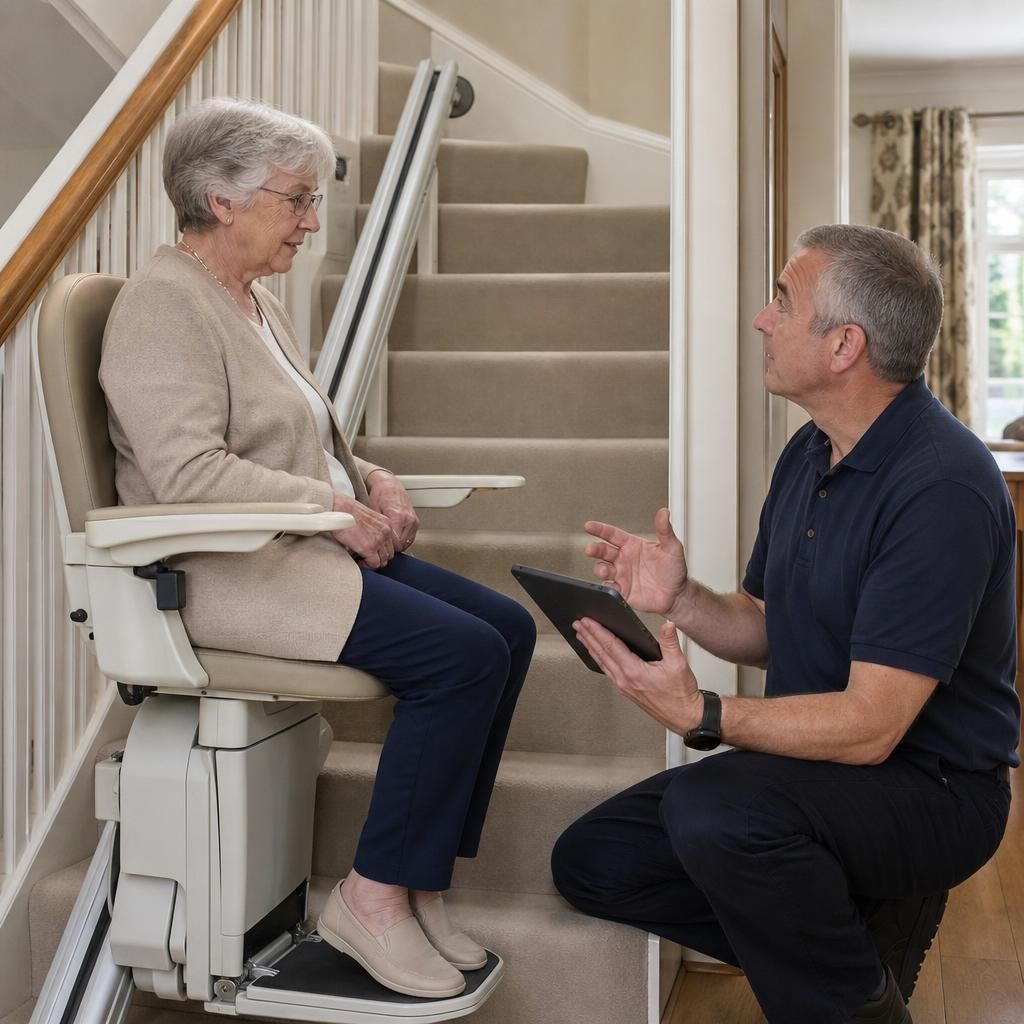
Arrange a home assessment for your reconditioned stairlift
Arrange a home assessment to confirm whether a reconditioned stairlift suits your staircase, mobility needs and budget. Independent Stairlifts can explain the available options, installation requirements and warranty cover before you decide.