
What should I look for in the warranty of a used stairlift?
A good used stairlift warranty should clearly state how long cover lasts, which parts and labour are included, and whether call-outs, breakdowns and replacement components are covered. Check the exclusions, servicing requirements, transfer conditions and claims process before buying, and ensure the warranty is provided in writing by the installer.
A good used stairlift warranty is a written agreement that explains what the installer will repair or replace, for how long, and what you may have to pay if the stairlift develops a fault. Before buying, check the duration of cover, the parts and labour included, call-out arrangements, exclusions, servicing requirements and the process for making a claim.
Check who provides the warranty. A warranty may be offered by the installer, the manufacturer or a separate warranty company. For a used or reconditioned stairlift, the installer’s warranty is often particularly important because the original manufacturer’s cover may have expired or may not apply to a second owner. The paperwork should clearly identify the responsible business, its contact details and the procedure to follow if the stairlift stops working.
Confirm the length of cover. The warranty should state its start date and expiry date. Check whether cover begins on the date of installation, delivery or purchase, and whether any part of the stairlift has a different warranty period. A warranty that covers the main unit but excludes older batteries or replacement components may provide less protection than expected.
Find out what is included. The terms should specify whether cover applies to:
- the motor, gearbox, drive mechanism and control systems;
- the chair, armrests, footrest, swivel seat and safety sensors;
- the charging points, batteries and power supply;
- the track, brackets and other installation components;
- labour for diagnosis, repair and fitting replacement parts; and
- engineer call-outs, including visits where the fault cannot be resolved remotely.
Ask whether replacement parts will be new, refurbished or compatible alternatives. This does not necessarily make a warranty unsuitable, but the terms should be clear about the standard of parts that may be used.
Check whether call-outs and labour are chargeable. Some warranties cover parts but charge separately for an engineer’s time, travel or emergency attendance. Others include repair visits but apply a call-out fee in particular circumstances, such as a fault caused by misuse. Ask for the likely charges before committing, and check whether cover applies throughout the UK or only within a defined service area.
Read the exclusions carefully. Common exclusions can include damage caused by misuse, accidental damage, water ingress, alterations by an unauthorised person, failure to follow operating instructions and faults resulting from unsuitable electrical supplies. Consumable or wearing parts may also be excluded. Batteries, upholstery, remote controls and safety belts should be checked individually because they may have separate terms.
Exclusions should be specific rather than so broad that almost any repair can be refused. Ask the installer to explain any wording you do not understand, particularly terms such as “fair wear and tear”, “negligence”, “unauthorised repair” or “normal maintenance”. Keep the operating instructions and follow the recommended care routine, as failing to do so could affect a claim.
Understand servicing conditions. A warranty may require the stairlift to be serviced by the provider or by an approved engineer. Check whether servicing is included in the warranty price, arranged separately or required at particular intervals. The terms should explain what happens if a service is missed and whether routine maintenance is different from repairing a fault covered by the warranty.
Ask whether the warranty remains valid if another qualified engineer carries out work, or if you move the stairlift to another property. A stairlift removed and refitted on a different staircase may require a new assessment and may not remain covered under the original terms. Do not arrange alterations or relocation without confirming the effect on the warranty in writing.
Check the claims process and response arrangements. The warranty should tell you how to report a fault, when the service line is available and what information you need to provide. It should also explain the expected response, although an exact repair time may depend on the fault, parts availability and access to the property. Ask what support is available if the stairlift becomes unusable and whether temporary assistance or a replacement unit is offered.
Find out whether you must carry out basic checks before an engineer attends, such as confirming that the stairlift is switched on, correctly parked or charging. These checks can resolve simple issues, but you should not be expected to dismantle the stairlift or undertake electrical repairs yourself.
Ask about transfer and ownership conditions. Some warranties apply only to the original purchaser or the address where the stairlift was installed. If the property is sold, the stairlift is given to another family member or the user moves home, cover may end unless the provider agrees to transfer it. Obtain confirmation of any transfer conditions before purchase, especially if the stairlift may only be needed temporarily.
Check the relationship between the warranty and your statutory rights. A warranty is additional protection and does not normally replace your legal rights when you buy from a business. Under UK consumer law, goods should be of satisfactory quality, fit for purpose and as described, although the application of these rights can depend on the circumstances of the sale and whether the seller is a business or a private individual. A warranty cannot simply remove rights that the law gives you. Keep the advert, quotation, invoice and warranty document in case the stairlift is not as described.
Before installation, ask for the complete warranty terms rather than relying on a verbal promise. The document should identify the stairlift, its model and serial number where available, the installation address, the cover period, exclusions, charges and contact arrangements. Check that the paperwork reflects any promises made during the assessment, including coverage for batteries, labour and call-outs.
A practical checklist is to ask:
- Who is responsible for handling a warranty claim?
- Which parts, batteries and labour are covered?
- Are call-outs, travel and out-of-hours visits included?
- What faults or damage are excluded?
- Are servicing and maintenance required to keep the cover valid?
- Can another engineer repair the stairlift without invalidating the warranty?
- Can the warranty be transferred if the user or property changes?
- What happens if a replacement part is no longer available?
- How should a fault be reported, and what support is available while it is being resolved?
The most useful warranty is not necessarily the one with the longest stated duration. It is the one with clearly defined cover, realistic exclusions, accessible servicing and a provider able to support the particular used stairlift after installation. If any important point is missing from the written terms, ask for clarification before proceeding.
A used stairlift warranty should state clearly whether engineer call-outs, diagnosis, labour and travel are included, as parts-only cover may still leave you paying for a repair visit. Ask the provider to explain exactly what you would pay if the stairlift stops working.
Check whether the warranty covers:
- an engineer’s visit to investigate the fault;
- labour to repair the stairlift or fit a replacement part;
- travel within the provider’s service area; and
- follow-up visits if the first repair does not resolve the problem.
Some terms apply a call-out charge where the fault results from misuse, accidental damage or a simple issue such as the stairlift not being switched on or correctly parked. These conditions should be explained before installation and provided in writing, so you can distinguish genuine warranty cover from chargeable maintenance or repairs.
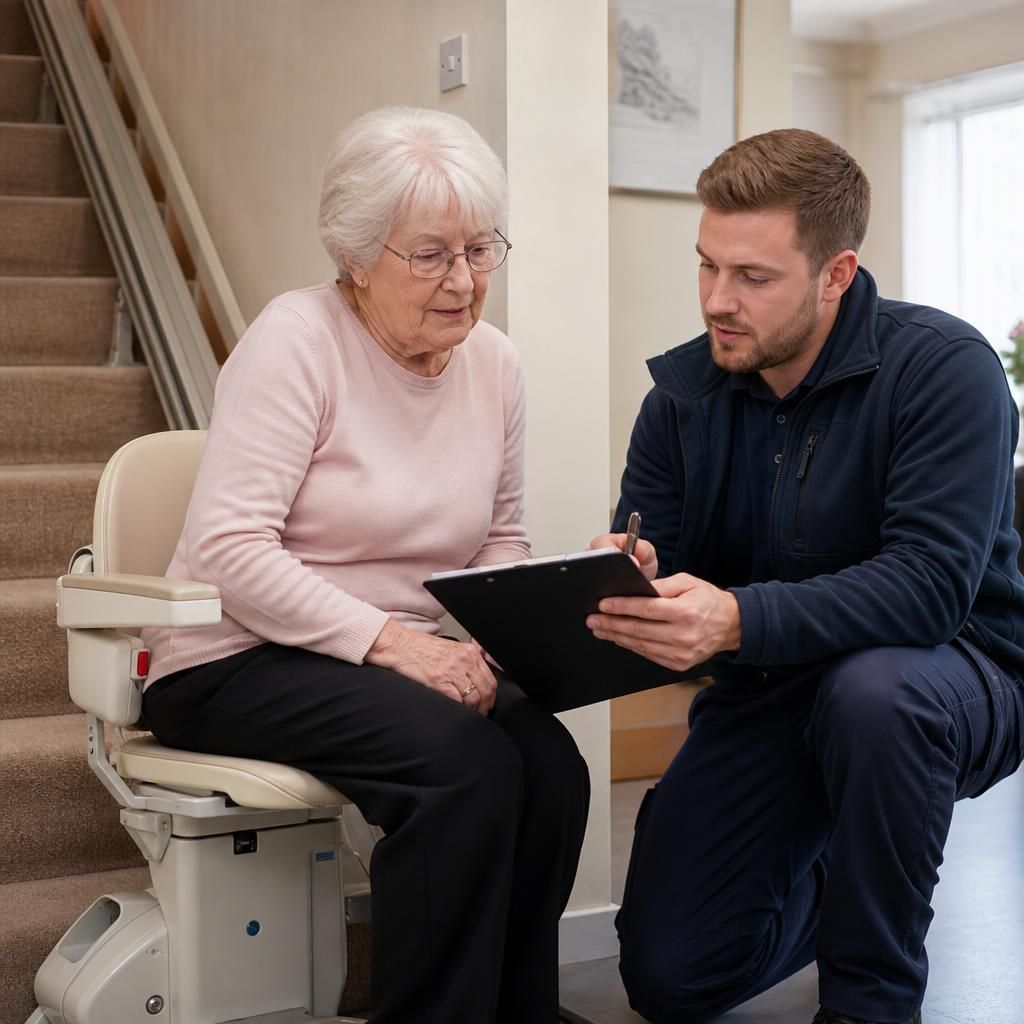
Discuss your used stairlift warranty options
Discuss your used stairlift warranty options with our team before installation, including parts, labour, call-outs, servicing requirements and exclusions. We can explain the written terms and help you identify any cover that may be important for your circumstances.