
What is the typical lifespan of a reconditioned stairlift?
A well-reconditioned stairlift can typically provide several further years of reliable service, although its remaining lifespan depends on its age, condition, usage and maintenance history. A thorough assessment and a suitable warranty are important when estimating how long a particular lift is likely to last.
A well-reconditioned stairlift can typically provide several further years of reliable service, but there is no fixed lifespan for every used lift. Its remaining service life depends on the age and model, how heavily it was used, the condition of key components, the quality of the reconditioning work and how it is maintained after installation.
Reconditioning does not make a stairlift new again. It normally involves a detailed inspection, cleaning, safety testing and replacement of worn or defective parts. Depending on the lift’s condition, this may include fitting a new battery, replacing rollers or other moving parts, checking the charging system and servicing the drive mechanism. A reputable provider should explain what work has been completed rather than describing a lift as reconditioned without further detail.
What determines the remaining lifespan?
- Age and previous use: A lift that has been lightly used in a private home may have experienced less wear than one used frequently or by several people. However, age alone does not determine condition. A well-maintained older lift may be a better choice than a newer lift with a poor service history.
- Mechanical condition: The motor, gearbox, drive system, rollers, hinges and safety mechanisms all affect reliability. Unusual noise, jerky movement, hesitation or difficulty stopping can indicate wear that needs investigating.
- Battery condition: Batteries are replaceable but are affected by age, charging patterns and periods when the stairlift has been left unused. A lift that does not hold its charge, stops away from the charging point or regularly reports a low battery may need attention.
- Model and parts availability: Some older models remain practical to support, while others may have limited access to replacement parts. Before buying, check that essential components, batteries and safety-related parts can still be sourced.
- Installation environment: Damp, very cold or dusty conditions can affect electrical and mechanical components. Outdoor lifts require equipment designed for external exposure and may need more frequent checks than an indoor lift.
- Ongoing use: Frequent journeys, heavier loads and demanding staircase layouts can increase wear. Correct use within the manufacturer’s weight and operating limits helps protect the lift.
How to judge a particular lift
The most useful estimate comes from an assessment of the actual stairlift, not from its age in isolation. Ask for the model details, installation or service history and a clear description of the reconditioning work. The provider should be able to confirm whether the lift has been tested on your staircase and whether any parts have been replaced.
During an assessment, the lift should travel smoothly and consistently, stop accurately at the top and bottom of the stairs, charge correctly and operate its safety features. The seat, armrests, footrest, seat belt, swivel mechanism and controls should also be checked. For a curved stairlift, the rail and programmed stopping points require particular attention because the system is made to follow the individual staircase.
A warranty can provide useful protection, but it does not guarantee that the stairlift will last for a particular period. Check what the warranty covers, how long it lasts, whether call-outs and labour are included, and whether batteries or wear-and-tear items are excluded. It is also worth asking what support is available when the warranty ends.
Maintenance and expected use after installation
Regular servicing helps identify wear before it becomes a breakdown and allows safety systems, batteries, charging points and moving parts to be checked. Keep the rail and surrounding area clear, follow the operating instructions and avoid carrying loads that exceed the manufacturer’s limit. Do not attempt to repair electrical or safety components yourself.
If the stairlift is not used regularly, leave it connected to its charging point unless the manufacturer or installer advises otherwise. Occasional use and routine checks can help identify a failing battery or control fault early. Report changes such as reduced speed, repeated warning tones, uneven movement or a need to recharge more often.
In practical terms, the right question is not simply how old a reconditioned stairlift is, but how much useful service remains and whether it can be supported safely. A documented history, thorough pre-installation assessment, appropriate warranty and realistic maintenance plan give a more reliable indication of value than the purchase price alone.
The typical lifespan of a reconditioned stairlift depends on its remaining component life rather than its age alone. A lift that has been thoroughly inspected, fitted with serviceable parts and matched correctly to the staircase can provide several further years of dependable use.
Before installation, ask for confirmation of the model, previous use, service history and reconditioning work. The provider should check the drive system, batteries, charging points, safety features and moving parts, and explain whether replacement parts remain available. A suitable warranty and regular servicing can then help identify wear early and support safe, reliable operation.
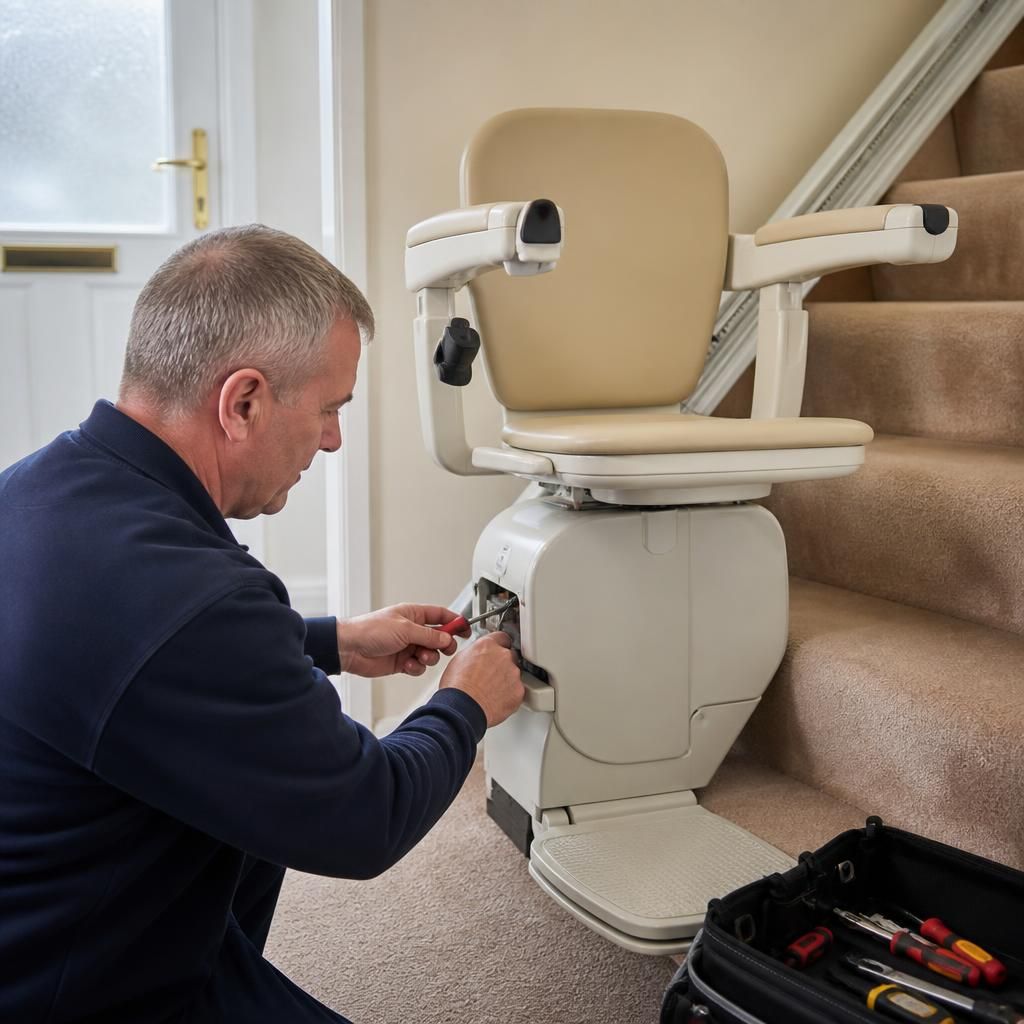
Find out how much service life your stairlift has left
Contact Independent Stairlifts to arrange an assessment of a reconditioned stairlift’s condition, remaining service life and suitability for your staircase.