
Are there any customisation options available for reconditioned stairlifts to ensure they fit my home's specific needs and aesthetic preferences?
Yes. A reconditioned stairlift can often be adapted with a rail made to suit your staircase, alongside available choices such as seat style, upholstery, colour, controls and safety features; the options depend on the model and your home’s layout. An assessment will confirm which practical and aesthetic adjustments can be made while maintaining safe, reliable operation.
Yes. Reconditioned stairlifts can often be customised to suit the layout of your staircase, the user’s mobility needs and your preferred appearance. The main options may include a made-to-measure rail, seat design, upholstery, colour, controls, safety features and installation details. The exact choice depends on the stairlift model, the condition and shape of the staircase, and which components are available and suitable after refurbishment.
The rail is usually the most important adaptation. For a straight staircase, a reconditioned stairlift may be fitted to a suitable rail or matched with a rail prepared for the installation. A curved staircase requires a rail designed around its bends, landings and changes in direction. In many cases, the rail is manufactured or adapted specifically for the property, while the stairlift carriage and other components are selected from the available reconditioned stock. The aim is to provide a secure, smooth-running fit rather than forcing a standard configuration into an unsuitable space.
A home assessment is needed before confirming what can be reused, adapted or newly supplied. The survey considers the staircase width, number and direction of turns, available space at the top and bottom, nearby doors and radiators, the position of handrails and the route needed to board or leave the lift safely. It also identifies whether a folding or hinged rail is needed to keep a doorway, hallway or walkway clear.
Seat and comfort options can often be selected or adjusted to suit the user. Depending on the model, these may include:
- A standard, perching or higher-seat configuration where appropriate for the user’s posture and ability to bend their knees.
- Different seat, armrest and footrest arrangements to provide suitable support.
- Adjustable seat height or seat positioning, subject to the design of the stairlift and the user’s safe transfer requirements.
- A powered swivel seat or manual swivel mechanism to help the user turn towards the landing before standing.
- Upholstery and finish choices available for the particular model, including options that are easier to wipe clean.
Comfort features must not be considered separately from safety. A seat that looks suitable may still be inappropriate if it makes it difficult for the user to sit down, remain positioned correctly or transfer at the top and bottom of the stairs. The assessment should therefore focus on how the user will operate the lift now, as well as any likely changes in strength, balance or flexibility.
Controls can also be tailored to the way the stairlift will be used. Most models have controls on the armrest, with remote controls at the top and bottom of the staircase so the lift can be called to the required level. The control position, operating method and ease of use should be checked with the user. Where more than one person uses the staircase, the controls should be positioned so they are accessible without creating a trip or obstruction risk.
Available safety and access features may include a seat belt, swivelling seat, obstruction sensors, an adjustable or folding footrest, hinged or powered- hinged rails and suitable charging arrangements. Some models also offer powered movement for particular seat or rail functions. These features are model-dependent and should be chosen for a clear practical reason. Adding equipment that the user cannot operate confidently does not improve accessibility.
Aesthetic customisation is possible, but it is more limited than with a new stairlift. Reconditioned equipment is selected from existing stock, so the exact upholstery, trim, colour or control style may not always be available. Some visible components can be replaced or supplied in a different finish, while others are retained because they have passed inspection and remain suitable for safe use. Where appearance is important, the available choices should be discussed before a particular model is reserved.
Installation details can make a noticeable difference to how the stairlift sits within the home. The rail is normally positioned to preserve usable stair width while allowing safe travel. A compact parked position may help keep the hallway or landing clear, and a folding rail can be considered where the rail would otherwise obstruct a door or passage. The final position must still provide enough room for safe boarding, dismounting and access to the controls.
Customisation does not mean that every component can be mixed and matched. Seats, rails, batteries, charging points, control systems and safety devices must be compatible with the carriage and each other. A component that fits physically may not be suitable electrically or mechanically. For that reason, modifications should be specified and installed by a competent stairlift professional rather than carried out independently.
During the assessment, it is useful to discuss the user’s priorities in practical terms: whether they need a more upright seat, whether they can bend their knees comfortably, which hand they use to operate controls, where they prefer to board, and whether other household members need the stairs to remain unobstructed. You can also identify any décor preferences, such as a discreet rail position or a finish that blends with the existing interior.
Once the staircase and user requirements have been assessed, the installer can confirm which parts of the reconditioned stairlift are available, which adaptations are recommended and whether any new or made-to-measure components are required. The completed installation should then be checked for smooth travel, secure mounting, correct charging, effective safety features and safe operation at both ends of the staircase. This approach allows a reconditioned stairlift to be adapted to the home without compromising reliability or the user’s ability to operate it safely.
For a reconditioned stairlift, the most important customisation is usually the rail. A straight rail may suit a simple staircase, while a curved staircase needs a rail shaped around its bends, landings and changes in direction. The rail position can also be planned to preserve usable stair width and keep nearby doorways or walkways clear.
During the home assessment, the installer checks the staircase, boarding areas and surrounding obstacles before confirming the suitable rail and carriage. Where required, options such as a hinged rail, swivel seat or compact parked position can improve access without compromising safe operation. Seat finish, upholstery and controls may also be selectable, although these depend on the available reconditioned model and compatible components.
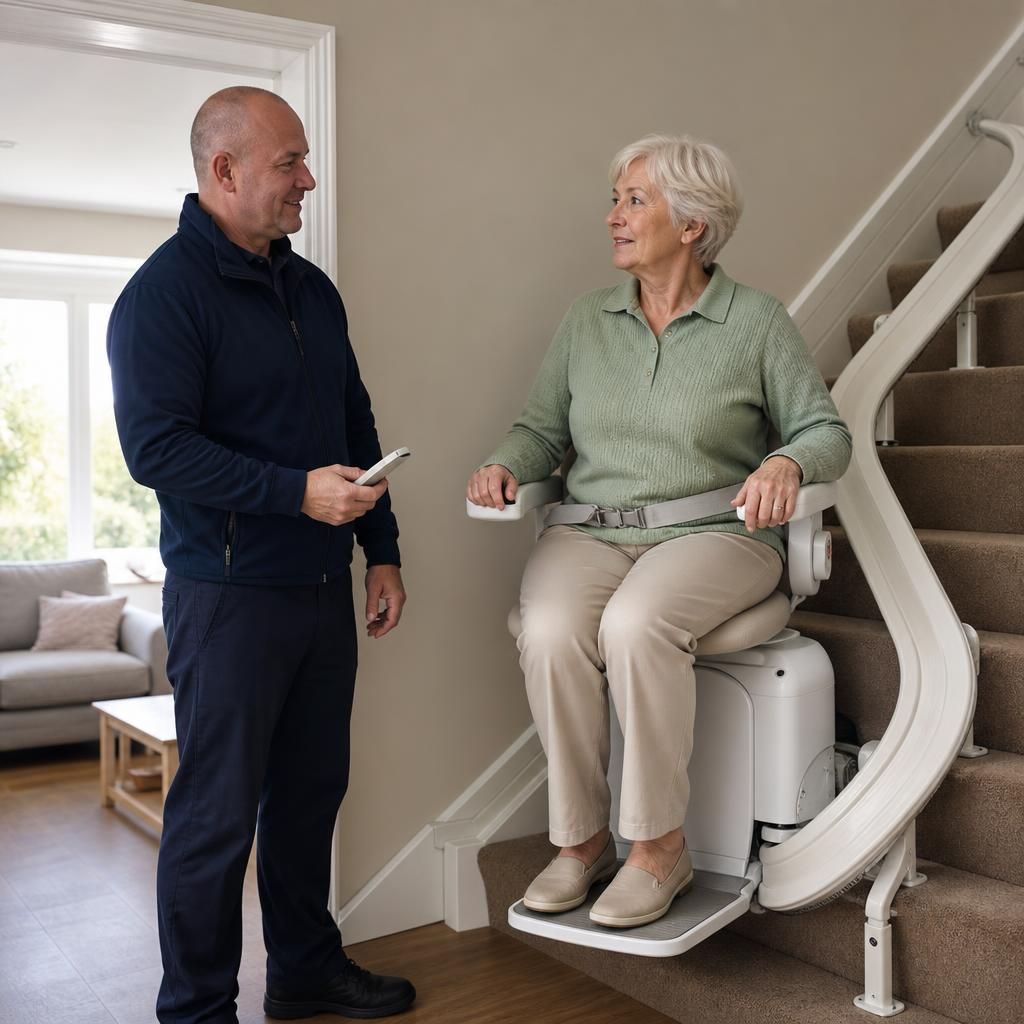
Discuss your reconditioned stairlift customisation options
Speak to Independent Stairlifts about your reconditioned stairlift customisation options. We can assess your staircase, mobility requirements and preferred finish, then explain which adaptations and compatible components are available.