
What unique features should I consider when selecting an outdoor stairlift for variable weather conditions?
When selecting an outdoor stairlift for variable UK weather, prioritise weather-resistant construction, corrosion-protected components, sealed controls, durable outdoor upholstery and reliable battery backup. A secure cover, effective drainage and safety features that remain usable in rain, cold, wind and reduced visibility will also help protect the lift and maintain dependable operation.
The most important features of an outdoor stairlift for variable UK weather are sealed weather-resistant controls, corrosion-protected components, durable outdoor upholstery, dependable battery operation, effective drainage and a properly fitted protective cover. These features should work together to protect the lift from rain, frost, wind, condensation, sunlight and coastal air without making it difficult or unsafe to use.
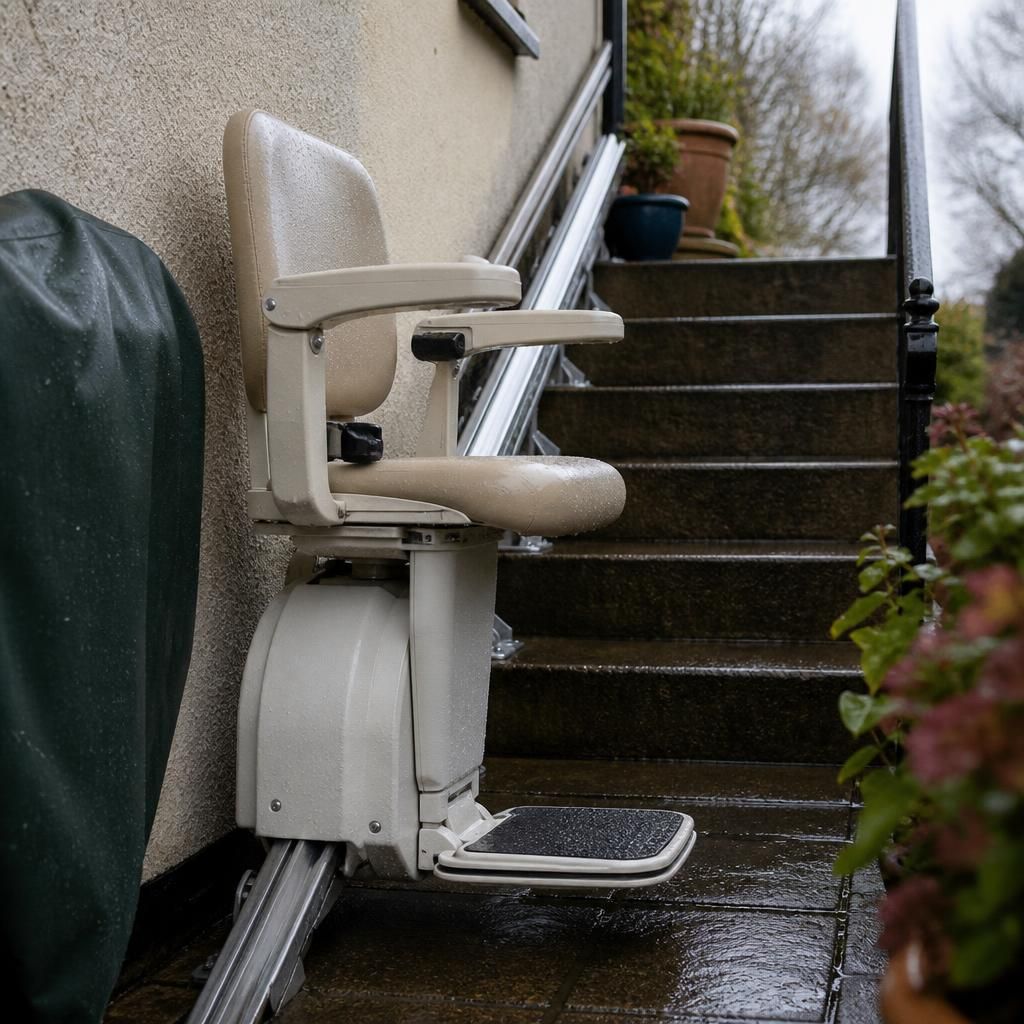
Outdoor stairlifts are designed for exposure, but weather resistance does not mean that every component is completely waterproof. During an assessment, ask which parts are sealed, which are intended to remain covered and how the lift should be used after heavy rain, frost or prolonged inactivity. The specification should reflect the actual location, including whether the stairlift is fully exposed, beneath a canopy, close to the sea or affected by falling leaves and standing water.
Sealed electrical controls and connections
Controls on the armrest, remote controls, charging points and electrical connections should be suitable for outdoor use. Sealed buttons and protected housings help prevent moisture entering the control system, while covered connectors reduce the risk of corrosion and unreliable operation. Controls should still be easy to identify and operate when the user is wearing gloves or has reduced hand strength.
Check whether the handset can be stored securely when it is not being used. A remote control left outside in wet weather may deteriorate more quickly than the lift itself. It is also useful to confirm whether the controls provide clear indication of battery status, charging and faults, particularly where the user may not be able to inspect the equipment closely.
Corrosion-resistant construction
Rain, condensation and airborne moisture can corrode exposed metalwork. Salt in coastal air is particularly aggressive, but roads treated during winter can also leave corrosive residue on equipment near entrances and paths. Look for corrosion-resistant finishes and protected fixings throughout the rail, chassis, seat frame and charging contacts.
Ask how the stairlift is protected at joints, brackets and other areas where water may collect. A durable coating is helpful, but it should be supported by a design that allows water to run off rather than remain trapped. The installer should also consider whether nearby gutters, sprinklers or downpipes could repeatedly wet the lift.
Drainage and protection from standing water
Good drainage is a practical feature rather than a cosmetic detail. The seat, footrest, armrests and control housings should be shaped or positioned so rainwater can drain away. The track and its fixing points should not create pockets where water can collect and freeze.
The stairlift should be installed clear of persistent puddles, splashback and overflowing drainage. Where the route includes a landing or a low point, the assessment should identify how water will move away from the equipment. This is especially important because repeated dampness can cause problems even when a lift is described as weather resistant.
Outdoor upholstery and user comfort
Outdoor upholstery should resist moisture, fading and temperature changes. Materials need to tolerate rain and sunlight while remaining comfortable and secure when the user is wearing outdoor clothing. A seat that becomes slippery when damp could make transfers less safe, so ask about the material’s grip and how it should be dried or cleaned.
Armrests, the seat and the footrest should be checked for water retention. Removable or wipe-clean surfaces can make routine care easier. A cover is still advisable, as it reduces the amount of rain, dirt, frost and ultraviolet exposure reaching the upholstery and controls.
Protective cover designed for the lift
A correctly sized, breathable outdoor cover is one of the most useful accessories. It should protect the parked stairlift without trapping condensation underneath. The cover needs to be straightforward to remove before use and secure enough not to catch in strong wind or interfere with the rail.
Do not assume that any waterproof sheet is suitable. An ill-fitting cover can retain moisture, obscure charging contacts or become a trip and snag hazard. The installer should explain where the cover should be stored while the lift is in use and how it should be dried and cleaned.
Battery performance in cold weather
Outdoor stairlifts normally use rechargeable batteries so they can continue to operate during a temporary power interruption. Cold conditions can reduce available battery performance, while a lift that is left unused may gradually lose charge. Reliable charging contacts and a clear charging position are therefore important.
Check that the stairlift returns to, or can be left at, a suitable charging point. Ask what happens if the lift is parked away from its charger for an extended period and how to identify a low battery. Battery backup is only dependable when the batteries are maintained and the lift is regularly returned to charge as advised.
Safety features that remain usable in poor weather
Safety systems should remain effective when the rail or steps are damp, visibility is reduced or the user is wearing heavier clothing. Consider a secure seat belt, adjustable armrests, a stable swivel seat, obstruction sensors and a footrest that provides a firm surface. The controls should be positioned so they can be reached without leaning into the weather or stretching across the stairs.
Ask how the sensors respond to leaves, grit, ice or other debris on the route. Sensors are valuable, but they cannot replace keeping the rail and steps clear. If the stairlift stops because an obstruction is detected, the user should have clear instructions for safely checking the route and obtaining assistance.
Wind, frost and reduced visibility
On exposed stairs, wind can affect loose clothing, covers and the user’s balance when getting on or off the lift. The seat should lock securely in the travel position, and the landing area should provide enough space for a controlled transfer. Where possible, the parking position should be sheltered without restricting access.
Frost and ice require particular attention. The stairlift should not be used if ice prevents the seat, footrest, rail or steps from operating safely. Ask whether the design includes a practical way to protect the equipment overnight and what checks should be completed before use in freezing conditions. Lighting around the route can also improve visibility, especially during winter evenings, although it should be treated as part of the wider access arrangement rather than as a substitute for safe surfaces.
Features for different outdoor locations
The right specification depends on the environment. A covered side passage may need less exposure protection than an open garden staircase, while a coastal property may need stronger corrosion protection and more frequent cleaning. A route beneath trees may require regular removal of leaves, seeds and bird debris, and a stairlift beside a driveway may be exposed to grit and vehicle splash.
During the assessment, describe seasonal conditions rather than only the current appearance of the stairs. Mention prevailing wind, direct sunlight, salt air, nearby trees, water run-off and how often the lift is likely to be used. This allows the recommended construction, cover, charging arrangement and maintenance plan to be matched to the setting.
Maintenance and warranty requirements
Before choosing a model, establish what routine maintenance is required and which cleaning products are suitable. Regularly removing dirt, leaves and salt residue, checking the cover and keeping charging contacts clean can help prevent avoidable faults. Do not pressure-wash the stairlift or use abrasive cleaners unless the manufacturer specifically permits this.
It is also sensible to confirm how weather-related faults are handled, what parts are covered and whether servicing is recommended more frequently in coastal or highly exposed locations. A written care routine gives everyone involved a clear understanding of how to protect the equipment.
For a reliable choice, prioritise the conditions at the property over a long list of optional features. An assessment should confirm the lift’s weather-resistant construction, drainage, charging position, cover, controls and safety systems, followed by clear advice on use during heavy rain, frost and strong wind. This approach helps ensure that the outdoor stairlift remains practical and safe throughout the changing UK seasons.
A properly fitted, breathable protective cover is an important feature when choosing an outdoor stairlift for variable UK weather. It helps shield the parked seat, controls and upholstery from rain, frost, dirt and ultraviolet light, reducing the amount of exposure between uses.
The cover should be made for the stairlift and remain secure in wind without catching on the rail or creating a trip hazard. It should also be easy to remove before use and allow moisture to escape, as trapped condensation can contribute to corrosion and electrical problems. Ask where the cover should be stored while the lift is in operation, how it should be cleaned and whether the charging position remains accessible when the lift is parked.
Arrange an outdoor stairlift assessment
Arrange an outdoor stairlift assessment with Independent Stairlifts to review your staircase, exposure to variable weather and the features needed for reliable operation. We can advise on a suitable specification, protective cover, charging position and maintenance requirements.