
What safety features are incorporated into outdoor stairlifts?
Outdoor stairlifts typically incorporate safety belts, swivelling seats, secure armrests, obstruction sensors and controls that stop the lift if an obstacle is detected. Weather-resistant components, non-slip surfaces, a lockable seat and emergency lowering or battery backup systems help support safe use during changing outdoor conditions.
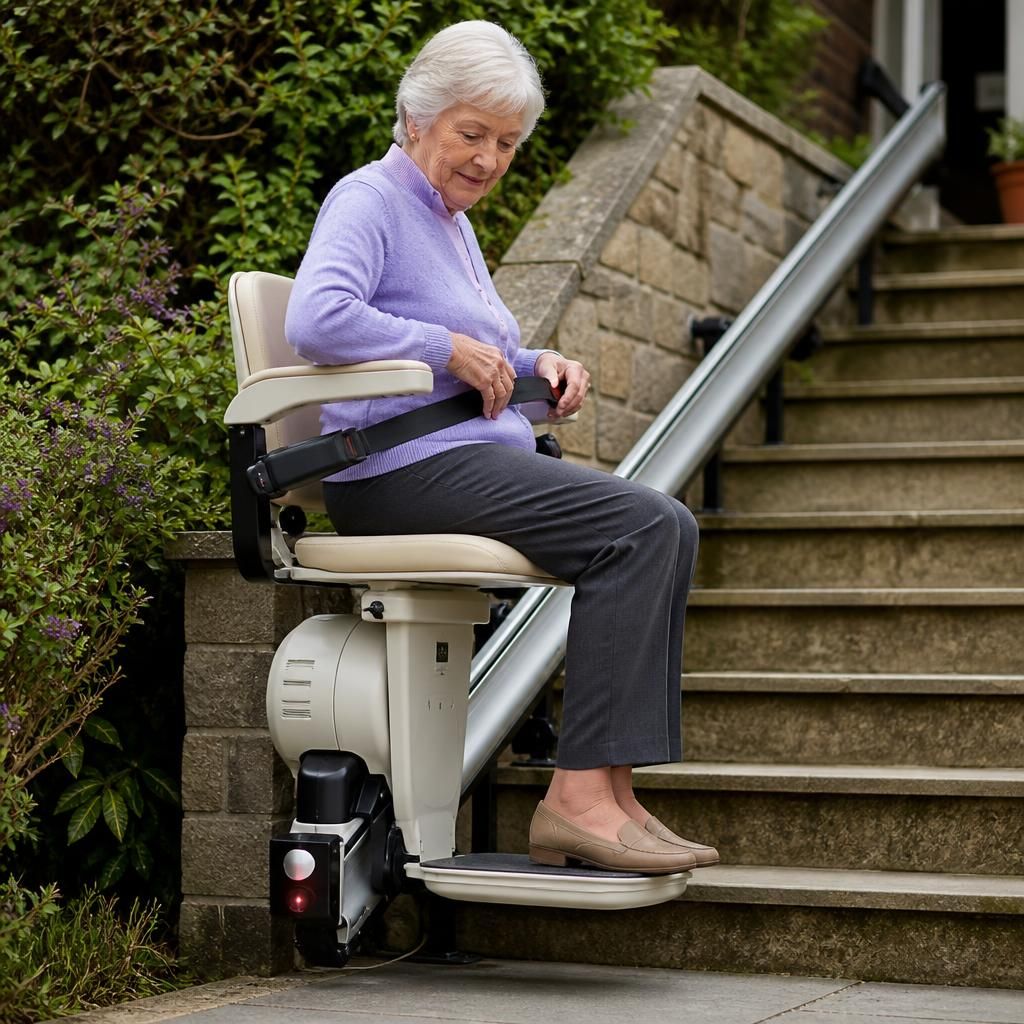
Outdoor stairlifts incorporate several safety features to help users travel securely on exterior steps despite rain, cold, sunlight and changing surface conditions. Core safeguards usually include a seat belt or harness, powered swivel seat, supportive armrests, non-slip surfaces, obstruction sensors, controlled stopping, weather-resistant components and battery-backed operation. The exact specification depends on the stairlift model, staircase layout and the conditions at the property.
Seat belt and supportive seating
A seat belt is designed to keep the user correctly positioned while the stairlift is moving. It should be fastened before travel and released only when the lift has stopped at the intended landing. Depending on the model, the belt may be positioned across the lap or upper body. A firm seat, raised armrests and a suitable backrest also help provide stability, particularly where outdoor steps are uneven or the user has reduced balance.
Swivelling seat and safe transfers
A powered or manually operated swivel seat turns towards the landing at the top or bottom of the staircase. This allows the user to get on and off facing away from the stair edge, rather than twisting or stepping sideways beside the stairs. Many outdoor models also include a swivel lock or interlock that prevents travel until the seat is returned to its correct riding position. The seat should only be swivelled when the stairlift is fully stopped.
Armrests, footrest and non-slip surfaces
Secure armrests provide support while the lift is moving and can include controls that are easy to operate with limited hand strength. The footrest gives the feet a defined, protected position and may include a safety edge or sensor. Non-slip materials on the footrest, seat and, where appropriate, the access area help reduce the risk of the user’s feet moving during a transfer. These surfaces still need to be kept clear of leaves, mud, ice and standing water.
Obstruction sensors and automatic stopping
Sensors around the footrest, carriage and sometimes the rail detect objects in the lift’s path. If an obstruction is encountered, the stairlift should stop or prevent movement until the object has been removed. This helps protect people, pets and items left on the steps, but it is not a substitute for checking the staircase before use. A professional assessment can also identify gates, low walls, narrow landings or other features that could interfere with travel.
Controlled movement and braking
Outdoor stairlifts are designed to start, travel and stop in a controlled manner. The drive system and braking mechanism hold the carriage securely on the rail when it is stationary. Controls normally require continuous pressure, so the stairlift stops when the control is released. This type of operation can prevent unintended movement if the user becomes uncomfortable or notices a hazard. The lift should never be forced manually or used if it is behaving unpredictably.
Weather-resistant construction
Outdoor models use components selected and protected for exterior use, including weather-resistant covers, sealed electrical parts and finishes intended to withstand exposure to moisture and sunlight. A protective cover may be supplied for the seat and controls when the stairlift is parked. Weather resistance does not mean that the equipment is unaffected by all conditions: flooding, heavy ice, salt, grit and prolonged water exposure can still affect operation. Keeping the lift covered where possible and following the manufacturer’s care instructions is an important part of safe use.
Battery backup and emergency operation
Most outdoor stairlifts operate from rechargeable batteries, allowing the lift to continue working during a mains power failure, provided the batteries have sufficient charge. Charging points are normally positioned at one or both ends of the rail, so the stairlift can recharge when parked correctly. Some systems include an emergency lowering facility or a manual release procedure. The available arrangements vary, so users and family members should be shown how to respond if the lift stops away from a landing. Do not attempt to dismantle the lift or move it by force.
Call controls and key switches
Call and send controls at the landings allow the stairlift to be brought to the required position. A key switch or similar control can help prevent unauthorised use, which may be useful where children, visitors or other household members could operate the equipment. Remote controls should be kept dry and used only as instructed. If controls become stiff, damaged or unreliable, arrange an inspection rather than continuing to use them.
Safety at the landings
Safe use depends on more than the stairlift itself. The upper and lower landing should provide enough clear space for the user to swivel, stand and move away from the stair edge. Outdoor surfaces should be reasonably level, well lit and free from slippery growth, loose gravel, snow and other trip hazards. Where the staircase is exposed, a handrail, suitable lighting or a weather-protective canopy may improve the overall safety of transfers, although these features must be assessed for the individual property.
What to check before using an outdoor stairlift
- Fasten the seat belt and sit fully back in the seat.
- Place both feet on the footrest and keep clothing, bags and blankets clear of moving parts.
- Check that the rail and steps are free from people, pets, branches, tools, ice and other obstructions.
- Make sure the seat is locked in the travel position and that the controls are dry.
- Release the control immediately if the lift makes an unusual noise, stops unexpectedly or detects an obstruction that cannot be removed safely.
- Park the stairlift at its charging point when it is not in use, if the manufacturer’s instructions require this.
These features reduce foreseeable risks, but they cannot compensate for incorrect installation, poor maintenance or use beyond the manufacturer’s instructions. During an assessment, the installer should explain the safety devices fitted to the chosen model, demonstrate normal and emergency operation, and confirm how weather exposure, charging and servicing will be managed. If the user’s mobility, posture or transfer ability changes, the stairlift should be reviewed to ensure that the belt, seat, controls and landing arrangements remain suitable.
Obstruction sensors are a key safety feature on outdoor stairlifts. Sensors around the footrest and carriage detect objects such as stones, branches, tools or pets in the lift’s path and stop movement when an obstruction is encountered.
These sensors reduce the risk of trapping or collision, but they do not replace a visual check before every journey. Keep the steps, rail and landing clear of leaves, mud, ice and standing water, and release the control immediately if the stairlift stops unexpectedly or makes an unusual noise.
Arrange an Outdoor Stairlift Safety Assessment
Arrange an outdoor stairlift safety assessment with Independent Stairlifts to review your staircase, landing areas, weather exposure and required safety features. We can explain the available options and demonstrate how to use the fitted safety systems correctly.