
What regular maintenance do outdoor stairlifts require to ensure optimal performance?
Outdoor stairlifts require regular professional servicing, along with routine cleaning and visual checks by the user, to keep the rails, seat, controls, batteries and safety features working correctly. Remove dirt and moisture, keep the lift covered when not in use where appropriate, and arrange an inspection if you notice unusual noise, slower movement, charging problems or weather-related damage.
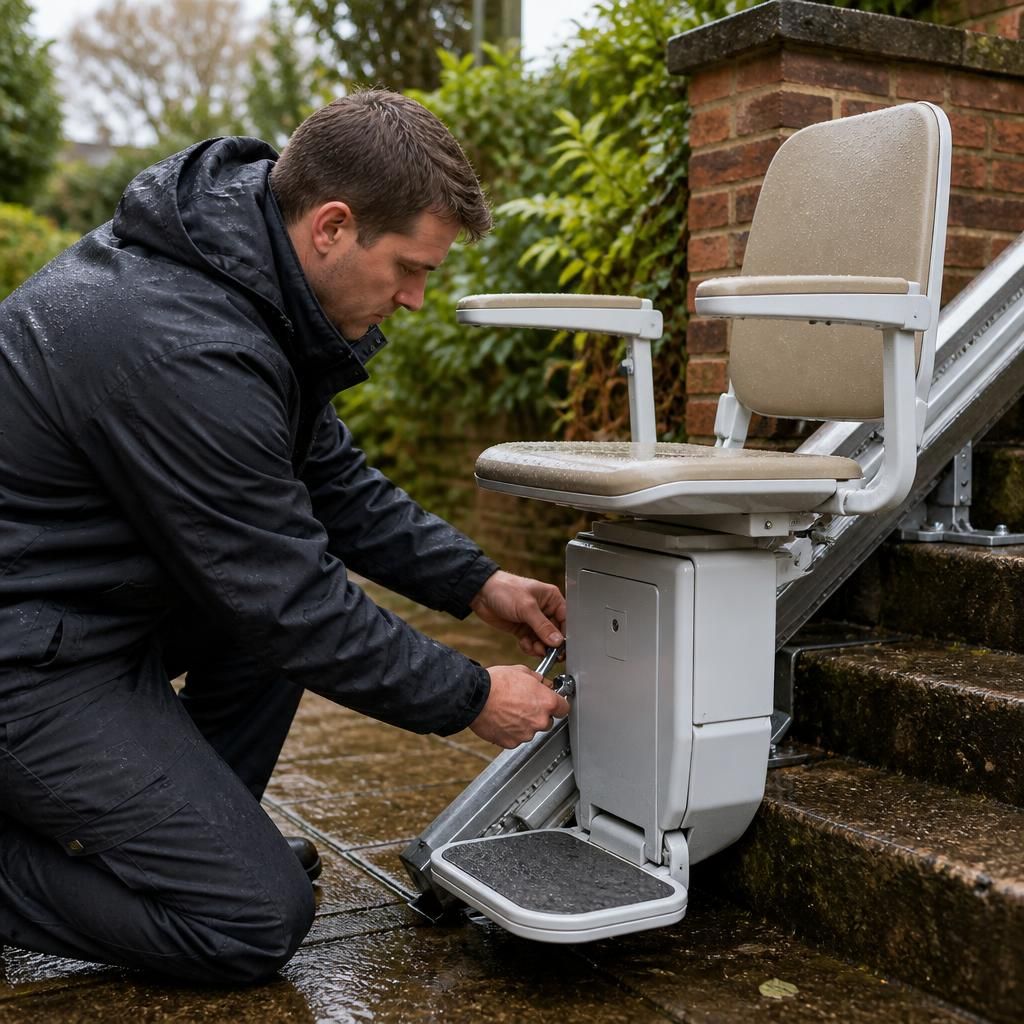
Outdoor stairlifts require scheduled professional servicing, supported by frequent cleaning and visual checks by the user, to maintain safe, reliable operation in changing weather. Maintenance should cover the rail, drive system, seat, controls, batteries, charging equipment and safety devices. The manufacturer’s instructions should always take priority, as service intervals and cleaning methods vary between models and installations.
Professional servicing
Arrange servicing with a qualified stairlift engineer at the interval recommended for your model. During a service, the engineer will normally inspect the lift’s mechanical and electrical components, check that it travels smoothly, test the safety sensors and controls, and look for corrosion, water ingress, loose fixings or wear caused by outdoor exposure.
The engineer may also clean and lubricate approved components, check the charging points and batteries, examine the rail and drive mechanism, and confirm that the stairlift stops correctly at the top and bottom of the route. Parts should only be lubricated, adjusted or replaced in accordance with the manufacturer’s guidance. Incorrect products or adjustments can attract dirt, damage components or affect safe operation.
Routine cleaning and visual checks
Outdoor users should keep the stairlift free from leaves, mud, grit, standing water, ice and other debris. Before using it, check the rail, footrest and seat area for obstructions. Wipe exposed surfaces with a soft, slightly damp cloth and dry them afterwards. Do not use a pressure washer, hose, abrasive cleaner or excessive water, as moisture can enter electrical components and charging contacts.
Check the following regularly:
- The rail is clear, secure and free from heavy dirt, rust or impact damage.
- The seat, armrests, footrest and safety belt are secure and undamaged.
- The controls respond correctly and the remote controls have not been affected by moisture.
- The charging points are clean and unobstructed.
- The weatherproof cover, where supplied, is fitted correctly and is not split or allowing water to collect.
- There are no unusual sounds, jolting movements, burning smells or signs of fluid or water damage.
Do not use a cover that traps dampness against the stairlift. If the manufacturer provides a specific cover, use it as instructed and remove or position it appropriately before operation.
Protecting the stairlift from weather
Outdoor stairlifts are designed for exterior conditions, but weather resistance does not mean they are maintenance-free. Keep the lift as sheltered as the installation allows, particularly from prolonged rain, coastal salt, snow and direct exposure to strong sunlight. Remove snow and ice from the travel path and seat before use, without scraping or striking the equipment.
After severe weather, inspect the stairlift for windblown debris, standing water, damaged covers, loose fittings and visible corrosion. Coastal locations may need especially careful cleaning because salt deposits can accelerate corrosion. Never attempt to open sealed electrical parts or dry them with a heat source.
Batteries and charging
Most outdoor stairlifts use rechargeable batteries, which need the lift to be returned to its charging position when it is not in use. Keep the charging contacts clean and make sure the stairlift reaches the correct charging point. If it is left unused for an extended period, follow the manufacturer’s instructions; disconnecting or storing the lift incorrectly can cause the batteries to discharge and reduce their service life.
Slower travel, reduced range, repeated low-battery warnings or failure to charge can indicate a battery or charging fault. Do not rely on repeated recharging to resolve the problem. Contact the service team so the batteries, charger and charging connections can be tested safely.
When to stop using the stairlift
Stop using the stairlift and request an inspection if it moves unevenly, makes a new grinding or clicking noise, fails to stop correctly, shows visible electrical damage, has been flooded or struck by an object, or develops a fault with the safety belt, arms, footrest or controls. Keep the stairway clear and do not dismantle or bypass a safety feature while waiting for assistance.
Keep a note of servicing, reported faults and any replacement parts. This provides a useful maintenance history and helps an engineer identify recurring weather-related or mechanical problems. Regular professional servicing, sensible cleaning and prompt reporting of faults will help an outdoor stairlift remain dependable without compromising its safety systems.
Routine visual checks are an essential part of outdoor stairlift maintenance because rain, grit, leaves, ice and salt can affect the rail, charging contacts and safety components. Before use, check that the travel path is clear, the rail is secure, and the seat, footrest, armrests and safety belt are undamaged.
Clean exposed surfaces with a soft, slightly damp cloth and dry them afterwards. Do not use a pressure washer, hose or abrasive cleaner, as water and dirt can enter electrical parts. After severe weather, inspect the lift for standing water, windblown debris, loose fittings, damaged covers or visible corrosion. Stop using the stairlift and contact a qualified engineer if it makes unusual noises, moves unevenly, fails to charge or shows signs of water or electrical damage.
Arrange your outdoor stairlift service
Arrange your outdoor stairlift service with Independent Stairlifts to keep its mechanical, electrical and safety components working reliably in changing weather. Contact our team to discuss servicing or report any maintenance concerns.