
What factors should be emphasized when assessing the durability of an outdoor stairlift in extreme weather conditions?
Assess an outdoor stairlift’s durability by checking its weather-resistant construction, including corrosion-resistant materials, sealed electrical components, a protected drive system and a battery designed for exposure to rain, frost, wind and sunlight. Also consider drainage, anchorage, protective covers, operating temperature limits, safety features and the manufacturer’s recommended inspection and maintenance schedule, as these directly affect reliable performance in extreme weather.
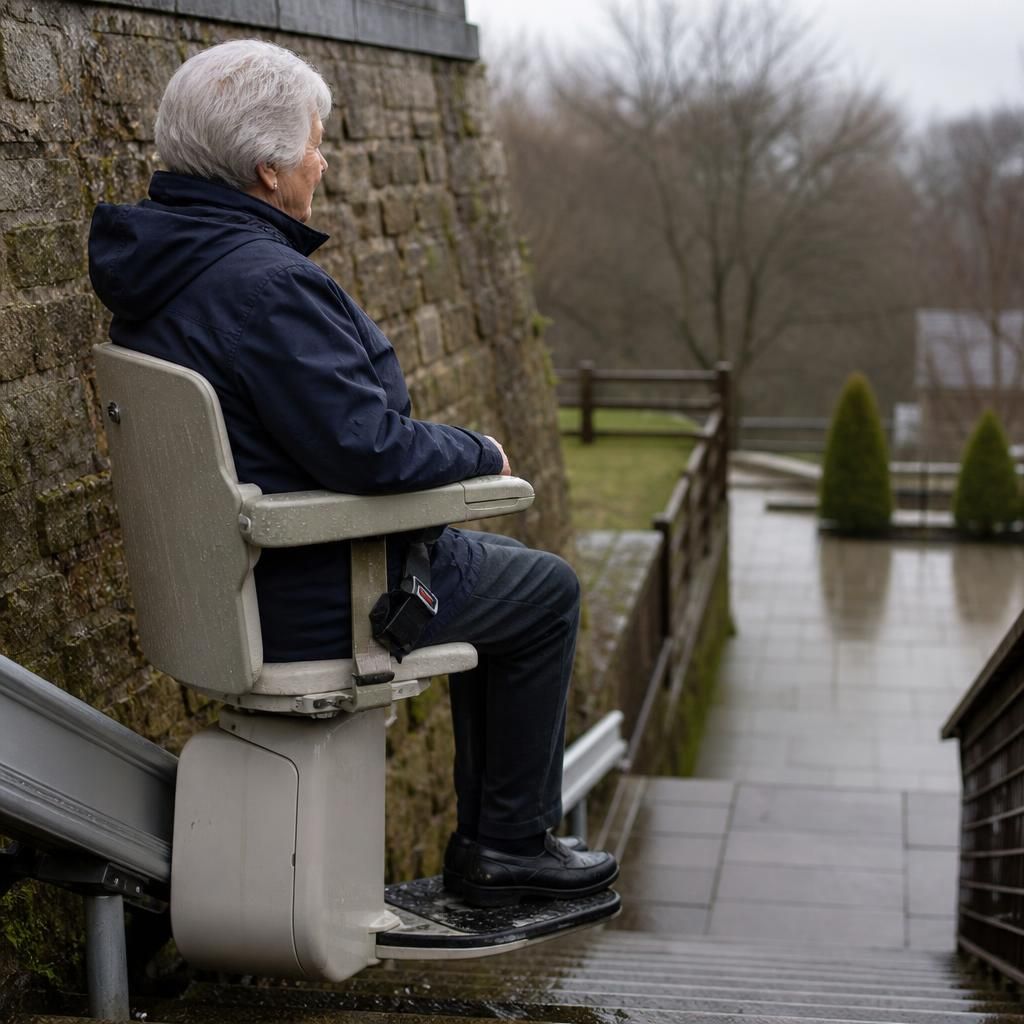
An outdoor stairlift is durable in extreme weather when its materials, electrical systems, drive mechanism, battery and installation are specifically designed for exposed conditions. When assessing a model, look beyond the word “weatherproof” and check how it manages prolonged rain, frost, snow, strong wind, direct sunlight, coastal salt and changes in temperature. The quality of drainage, anchorage, protective components and ongoing maintenance is just as important as the stairlift itself.
Check the construction materials and finishes. Outdoor components should resist corrosion, ultraviolet degradation and repeated wetting and drying. Stainless steel, treated metals, durable powder-coated finishes and weather-resistant plastics can help, but the important point is how the complete system is protected, including fixings, brackets, armrests, footplates and exposed fasteners. A coating may be damaged by impact or wear, allowing corrosion to begin underneath, so inspect the finish regularly for bubbling, flaking, rust staining or exposed metal.
Salt carried in sea air and road spray can accelerate corrosion, even when a stairlift is not directly exposed to seawater. Homes near the coast or beside roads treated in winter may therefore require more frequent cleaning and inspection. Ask which materials and finishes are recommended for the location, rather than assuming that a standard outdoor model will provide the same protection in every environment.
Examine protection against water and moisture. Outdoor stairlifts should have sealed or suitably protected electrical enclosures, switches, wiring connections and control components. Ask for the product’s stated ingress protection rating and clarify what that rating covers. It should be relevant to the exposed parts of the stairlift, not just a separate enclosure or accessory. A rating does not mean the equipment can be submerged, pressure-washed or left in standing water.
Water should be directed away from the motor, battery compartment and charging points. The installation should avoid locations where rainwater runs down the staircase or collects beneath the carriage. Check that cable entries, covers and seals remain intact and that the charging equipment is positioned according to the manufacturer’s instructions. Never use a damaged outdoor electrical component until it has been inspected by a suitably qualified professional.
Assess the drive system and moving parts. The rail, rack, motor, gears, bearings and other moving parts must continue to operate when exposed to moisture, dirt, grit and low temperatures. A protected drive system helps prevent contamination, but it still needs appropriate cleaning and lubrication. Ask which parts are sealed, which require servicing and whether the recommended lubricant is suitable for outdoor use. Incorrect oils or greases can attract grit, damage seals or affect braking and movement.
Look at how easily leaves, mud, ice and grit could gather around the rail or steps. A sheltered route may reduce exposure, but it can also create narrow areas where debris is missed. The stairlift should not be operated if ice or an obstruction prevents the carriage, footplate or safety edges from moving normally.
Confirm the operating temperature limits. Batteries lose available capacity in cold weather, while freezing conditions can affect lubricants, switches, displays and moving mechanisms. Heat and direct sunlight can also age batteries, seals, plastics and electronic components. Obtain the manufacturer’s specified storage and operating temperature range and ask how performance may change outside it. If the stairlift is installed in a location that regularly freezes or receives strong sunlight, discuss whether additional shelter or a different equipment arrangement is appropriate.
Temperature changes can cause condensation inside poorly protected enclosures. This is one reason that intact seals, ventilation designed by the manufacturer and correct installation are important. Do not drill extra holes or modify covers to improve ventilation, as this can allow water into the electrical system.
Consider wind, snow and physical loading. Wind can affect a user’s stability when boarding or travelling, particularly on open external staircases. It can also drive rain into sheltered areas and place additional force on covers, seats and folded footplates. The installer should assess the position of the staircase, nearby walls and potential wind exposure rather than relying only on the stairlift’s normal indoor-style load rating.
Snow and ice can add weight to the rail and carriage and make steps or landing areas unsafe. The stairlift should not be used to clear snow, carry bulky loads or travel over an iced rail. A suitable cover may protect the seat when parked, but it must be used as instructed and secured so that it cannot flap against the equipment or become a wind hazard. Clear the route and check the controls, seat, footplate and safety edges before use.
Review the installation and anchorage. Durable equipment can fail prematurely if it is fixed to unsuitable or deteriorating masonry, timber or decking. The installer should check the condition and strength of the staircase, landings and fixing points, allowing for water damage, loose surfaces and movement caused by frost. Outdoor fixings must be suitable for the environment and installed to prevent water tracking into the structure wherever possible.
Drainage is particularly important. The rail and lower landing should not create a place where water pools, and the supporting surface should remain stable during prolonged rain and freeze-thaw conditions. If the staircase is exposed to flooding, soil movement, falling debris or regular tree growth, these environmental risks should be considered before installation and during every inspection.
Give particular attention to the battery and charging system. Outdoor batteries need protection from water, extreme temperatures, impact and unauthorised interference. Ask where the battery is housed, whether it can be removed for approved sheltered storage, and how charging is maintained when the stairlift is not used regularly. A battery that appears charged may still have reduced capacity in cold weather or may deteriorate if the stairlift remains unused for long periods.
Charging contacts should be kept clean and dry, and the stairlift should be parked at its designated charging point when instructed. Do not use an indoor extension lead or improvised weather protection for outdoor charging equipment. If the battery warning appears, charging becomes unreliable or the stairlift stops sooner than expected, arrange an inspection rather than repeatedly resetting the controls.
Check safety features that remain effective in poor weather. Important features include a seat belt or restraint, swivel seat and interlocks, obstruction sensors, safety edges, reliable stopping controls, a manual lowering or emergency procedure and battery backup. Ask how rain, dirt, ice or low temperatures could affect each feature and what checks the user should carry out before travelling. A safety sensor that is obstructed by mud or a switch affected by moisture may not operate as intended.
The seat, footrest and armrests should provide secure support when damp, but users still need to transfer carefully and wear suitable footwear. Outdoor stairlift safety also depends on adequate lighting, a clear staircase, stable handrails and a dry, unobstructed boarding area. The stairlift is not a substitute for clearing hazardous steps or repairing defective outdoor surfaces.
Compare the maintenance requirements with the location. Ask for a written maintenance schedule covering cleaning, lubrication, battery checks, electrical inspection, corrosion checks, fixings and safety devices. An exposed coastal installation, a shaded damp staircase and a sheltered porch each present different risks, so the required inspection frequency may differ from that of a relatively protected route.
- Remove leaves, grit, mud and bird fouling without directing a pressure washer at the stairlift.
- Keep drainage channels, landing areas and the rail clear.
- Check covers, seals, cables, fixings and charging contacts for visible damage.
- Look for unusual noise, jerky movement, delayed stopping, corrosion or reduced battery performance.
- Report faults promptly and do not bypass interlocks or safety sensors.
- Arrange professional servicing at the interval recommended for the specific model and environment.
Use the manufacturer’s evidence, not general claims. Before choosing an outdoor stairlift, request the operating limits, weather-resistance information, care instructions, warranty conditions and any restrictions for coastal, high-wind, freezing or exposed locations. Confirm whether the stated protection applies to the complete installed system and which parts are excluded from normal environmental wear. A professional site assessment should record the staircase condition, exposure, drainage, fixing substrate, charging position and practical maintenance access.
In summary, the most reliable assessment combines product design with site conditions. Corrosion-resistant construction, sealed electrics, protected drive components, suitable battery protection, effective drainage and secure anchorage are essential, but they must be supported by correct use and regular inspection. If the route experiences unusually severe wind, flooding, persistent ice or coastal salt, raise these conditions during the assessment so the proposed outdoor stairlift and maintenance plan can be matched to the environment.
Effective drainage and secure anchorage are essential to an outdoor stairlift’s durability in extreme weather. Even a stairlift made with weather-resistant materials can deteriorate quickly if rainwater pools around the rail, charging equipment or fixing points, or if frost affects an unstable supporting surface.
During the site assessment, check that the staircase and landings can shed water freely and that the fixing substrate is sound. The installer should consider damp masonry, timber movement, decking, freeze-thaw damage, coastal exposure and areas where water runs down the stairs. Outdoor fixings must be suitable for the environment, while cable entries, covers and seals should be positioned to prevent water tracking into electrical components.
Ask for drainage, anchorage and access for future maintenance to be included in the installation plan. Keeping the rail, landing and charging area clear of leaves, mud, ice and standing water will help protect the equipment and make faults or corrosion easier to identify during routine inspections.
Arrange an outdoor stairlift assessment
Arrange an outdoor stairlift assessment with Independent Stairlifts to review your staircase, weather exposure, drainage, fixing points and charging position. We can recommend a suitable solution and maintenance plan for your environment.