
What environmental factors should I evaluate to ensure the longevity of my outdoor stairlift?
To protect your outdoor stairlift’s longevity, assess its exposure to rain, snow, frost, sunlight, wind, salt and airborne debris, along with the quality of drainage and shelter around the staircase. Regular cleaning, prompt removal of standing water and leaves, and maintenance suited to the local conditions will help prevent corrosion, moisture damage and premature wear.
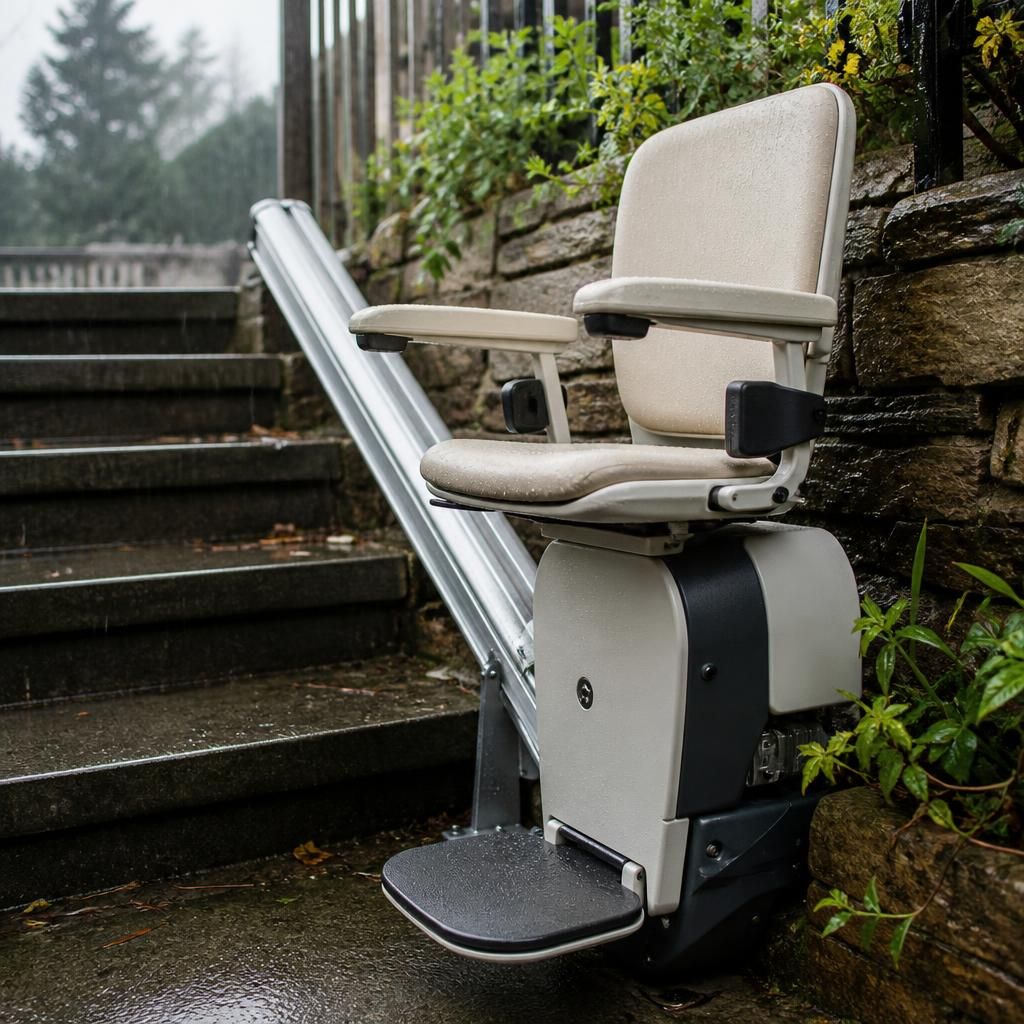
Outdoor stairlift longevity depends on how much weather, moisture, salt, dirt and physical exposure the equipment receives, as well as how effectively water drains away from the track, carriage and charging points. An outdoor model is designed for exterior conditions, but it is not completely immune to corrosion, temperature changes, debris or prolonged exposure. Assessing the staircase environment and adapting cleaning and maintenance to local conditions will help preserve safe, reliable operation.
Rain, damp and standing water. Check whether the stairlift is directly exposed to driving rain or positioned beneath a roof, balcony or overhang. Shelter can reduce the amount of water reaching the seat, controls and carriage, although it does not remove the need for weather protection. Pay particular attention to areas where water collects on steps, landings or beside the rail. Persistent standing water can increase corrosion and allow moisture to reach components that should remain dry.
Examine the drainage around the staircase, including blocked gullies, overflowing gutters, leaking downpipes and sloping surfaces that direct water towards the stairlift. Keep drainage channels clear and ask for any persistent water-management problem to be investigated. Do not alter the rail, charging equipment or electrical connections to redirect water without professional advice.
Frost, ice and snow. Freezing conditions can make the steps unsafe and may affect moving parts if water enters joints and freezes. Snow and ice should be removed from the steps and the stairlift’s travel path before use. Avoid striking the rail or carriage with a shovel or scraper, and do not use salt or corrosive de-icing products close to the equipment unless their suitability has been confirmed. If the lift appears frozen, do not force it to move; allow it to thaw naturally and contact the service team if operation does not return to normal.
Repeated freezing and thawing can also loosen fixings, damage seals and create cracks in nearby masonry or paving. During periods of severe frost, inspect the installation visually for displaced brackets, loose surfaces or unusual movement, but leave mechanical and electrical checks to a qualified technician.
Sunlight and heat. Strong sunlight can gradually degrade exposed plastics, upholstery, protective covers and control labels. It can also heat the seat and armrests, making them uncomfortable to touch. A suitable cover or naturally shaded position may reduce ultraviolet exposure, provided the cover is breathable, securely fitted and approved for the stairlift. Avoid covering a wet lift, as trapped moisture can promote corrosion and mould.
Large temperature changes can cause materials to expand and contract. This is normally allowed for in the design, but unusual noises, sticking, intermittent charging or changes in the way the lift travels should not be ignored. Report these signs rather than compensating by applying unapproved lubricants or making adjustments yourself.
Wind and airborne debris. Wind can move covers, branches and loose objects into the stairlift’s path. On exposed balconies, garden steps and open-sided access routes, check that the lift will not be struck by branches, fencing, furniture or other items during bad weather. Strong gusts can also make a seat, footrest or armrest difficult to handle safely when entering or leaving the lift.
Leaves, soil, grit and seeds can collect on the rail, footrest, switches and charging contacts. Remove loose debris regularly, particularly after storms and during autumn. If the staircase borders a hedge or overhanging tree, pruning it back can reduce contamination and physical impact. Keep the travel route clear rather than relying on the lift’s obstruction sensors to deal with accumulated debris.
Coastal and industrial environments. Salt carried in sea air, spray or road water accelerates corrosion on exposed metalwork. Similar problems can occur near roads treated with de-icing materials or in areas with industrial dust and pollutants. If the stairlift is installed in one of these locations, inspect it more frequently for surface rust, discolouration, pitting, damaged paint or stiff movement. Clean deposits away using the method recommended for the specific model, and arrange servicing at an interval appropriate to the exposure.
Do not assume that light surface discolouration is only cosmetic. Corrosion around fixings, charging contacts or moving joints can worsen and affect performance. Contact Independent Stairlifts if rust is spreading, a protective finish is damaged or a component appears swollen, cracked or loose.
Vegetation, animals and pests. Plants growing against the rail or steps can retain moisture and obstruct movement. Moss and algae may also make the staircase slippery, while insects, birds or small animals can build nests around sheltered components. Keep vegetation trimmed and remove nests or debris without interfering with wiring, covers or safety equipment. A persistent pest problem may require environmental control around the staircase rather than repeated cleaning of the lift.
Electrical exposure and charging conditions. Identify where the charger, charging points, isolation switch and controls are positioned relative to rain splash, irrigation systems and snow. Sprinklers, pressure washers and leaking gutters can expose equipment to more water than normal weather conditions. Keep charging areas clean and unobstructed, and do not use the stairlift if there are signs of water ingress, damaged cables, burning smells or repeated electrical trips. Electrical inspection and repair should be carried out by a suitably qualified professional.
How the staircase is used. Outdoor longevity is also affected by mud, grit, footwear, gardening materials and moisture carried onto the steps. Keep the footrest and seat area free from soil and water, and avoid placing heavy items on the lift. If the stairlift is used seasonally, follow the manufacturer’s instructions for periods of limited use; do not simply leave the equipment uncovered or disconnected without advice. Regular movement and charging arrangements should follow the guidance supplied with the model.
Practical checks after poor weather.
- Look for standing water, blocked drainage and water running towards the rail or charging points.
- Remove leaves, grit, snow and other loose material from the steps and travel route.
- Check for loose covers, damaged upholstery, cracked plastics, corrosion or displaced fixings.
- Make sure the rail, footrest and seat are not obstructed before operating the lift.
- Listen for new noises and note any hesitation, uneven travel or charging changes.
- Report damage or unusual operation promptly instead of continuing to use the lift.
Clean the stairlift according to the manufacturer’s instructions, using a soft cloth and approved products where specified. Avoid abrasive cleaners, solvents, excessive water and pressure washing, as these can damage finishes, seals, labels and electrical parts. Protective covers should be used only when suitable for the model and local conditions; they must not interfere with the carriage, controls, charging system or safety sensors.
During a service visit, the technician can assess corrosion, fixings, charging performance, rail condition, safety features and the effect of the surrounding environment. Tell them if the installation is exposed to coastal air, flooding, heavy snowfall, tree cover, road spray or unusual periods of non-use. This information helps determine whether cleaning, protection or servicing needs to be adapted.
The most important environmental priorities are effective drainage, protection from prolonged moisture, control of salt and debris, safe management of frost and snow, and regular inspection after severe weather. If conditions around the staircase have changed since installation—such as new landscaping, a leaking gutter, tree growth or increased water exposure—contact Independent Stairlifts for advice before the problem affects the lift’s operation.
Effective drainage is one of the most important environmental factors in outdoor stairlift longevity. Water collecting on the steps, beside the rail or near charging points can increase corrosion and allow moisture to reach components that should remain dry.
After heavy rain, check for blocked gullies, overflowing gutters, leaking downpipes and surfaces that direct water towards the stairlift. Remove leaves and debris promptly, but do not alter the rail, charger or electrical connections yourself. If standing water remains, or you notice rust, damaged cables or repeated charging problems, contact Independent Stairlifts for professional advice.
Arrange an outdoor stairlift assessment
Arrange an outdoor stairlift assessment with Independent Stairlifts to review drainage, weather exposure, access conditions and any environmental risks affecting your installation. We can recommend suitable protection and maintenance arrangements for your property.