
What maintenance is required to keep my outdoor stairlift in optimal condition?
Keep your outdoor stairlift in optimal condition by cleaning it regularly, checking the seat, controls, track and safety features, and keeping the charging points clear and dry. Arrange professional servicing at the manufacturer’s recommended intervals, and report unusual noises, movement or charging problems promptly rather than continuing to use the lift.
Keeping an outdoor stairlift in optimal condition requires regular cleaning, simple visual checks and professional servicing at the intervals recommended by the manufacturer. Outdoor lifts are designed to withstand exposure to rain, sunlight, wind and changing temperatures, but removing dirt and moisture promptly helps protect the controls, seat, track, batteries and safety systems. Any unusual noise, movement, warning light or charging fault should be reported to your stairlift provider rather than ignored.
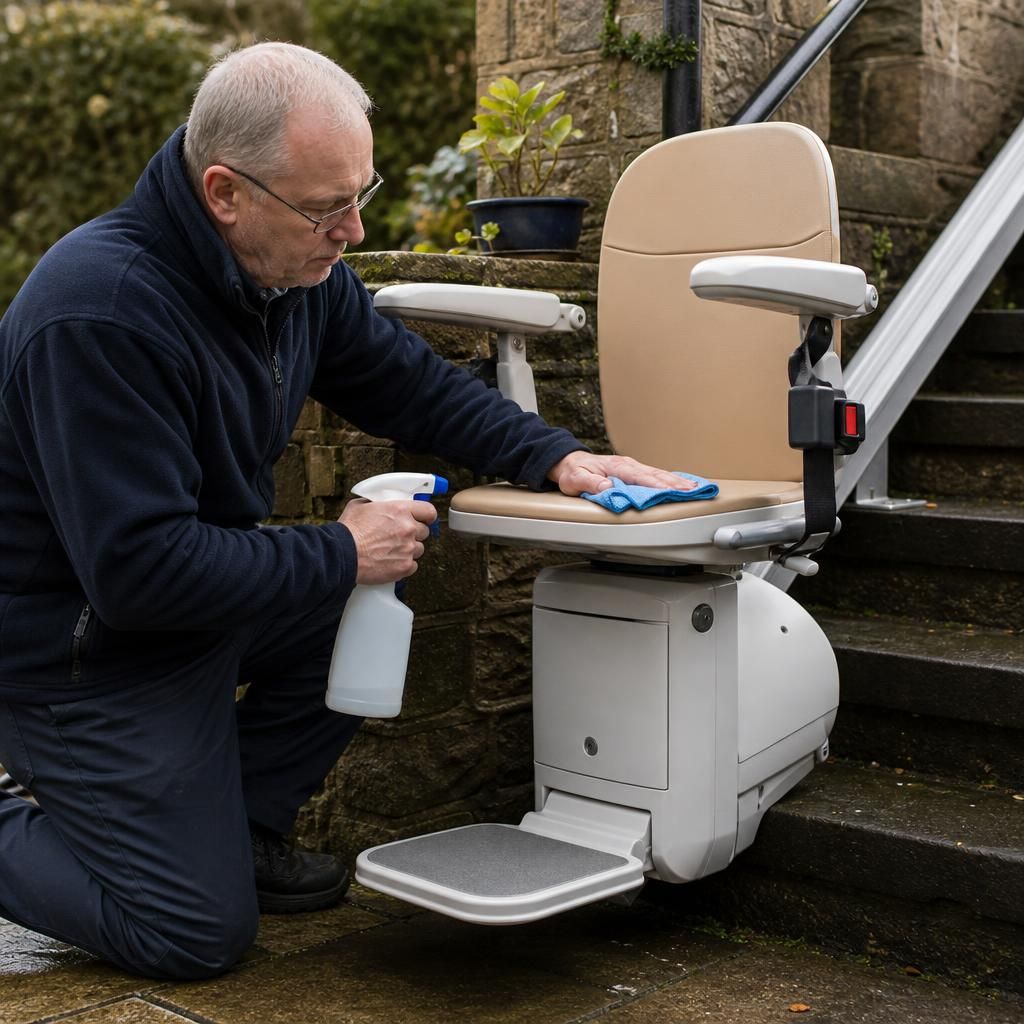
Keep the lift clean and dry. Wipe the seat, armrests, footrest and controls with a soft, slightly damp cloth. Use a mild household cleaning solution if necessary, following the manufacturer’s instructions. Avoid soaking electrical controls, spraying liquid directly onto the lift or using abrasive products, solvents or pressure washers. Dry the surfaces afterwards, particularly around the control buttons, swivel seat mechanism and charging contacts.
Remove leaves, mud, grit, bird droppings and other debris from the track and the areas around the lift. Dirt can affect the wheels, drive components and sensors, while grit may contribute to premature wear. Check the track after periods of strong wind or heavy rain, and clear anything that could obstruct the lift’s movement. Do not place storage items, plant pots or other objects beside the staircase where they could interfere with the stairlift or reduce safe access.
Inspect the main components before use. A brief visual check can identify problems early. Look for:
- Cracks, loose covers or visible damage to the seat, armrests, footrest or casing.
- Loose, bent or obstructed sections of track.
- Signs of rust, corrosion, water ingress or unusual staining.
- Frayed cables or damaged wiring, without touching or attempting to repair them.
- Anything caught around the footrest, drive unit or track.
- Changes in the way the lift starts, stops, travels or parks.
Never continue using the stairlift if a safety component appears damaged or if the lift is not travelling smoothly. Switch it off if this can be done safely, keep others away from it and contact the service team for advice. Do not remove covers or attempt electrical, mechanical or battery repairs yourself.
Check the seat and safety features. The seat should swivel, lock into its travel position and return correctly without excessive stiffness or looseness. Test the seat belt, armrests and footrest as part of your normal pre-use routine. The belt should fasten securely and show no signs of damage. Safety sensors, obstruction switches and controls should respond as expected; these should not be bypassed, taped down or modified. If the lift stops unexpectedly because a sensor detects an obstruction, clear the obstruction only if it is safe to do so and follow the operating instructions.
Protect the charging system. Outdoor stairlifts rely on correctly positioned charging points to keep their batteries ready for use. Keep the charging contacts and parking area free from dirt, ice, standing water and other obstructions. Park the lift at its designated charging position whenever it is not being used, rather than leaving it part-way along the track. If the lift gives a low-battery warning, fails to charge or has reduced travel capacity, contact your installer or servicing provider. Battery performance can decline over time, and battery replacement should be carried out using the correct parts by a competent technician.
During cold weather, check for ice, snow and accumulated water around the steps, track and charging point before travelling. Do not force the lift through ice or use hot water to thaw components, as sudden temperature changes and trapped moisture can cause damage. In hot or sunny conditions, use the supplied cover where appropriate and make sure the lift is parked as advised. A cover can reduce exposure to ultraviolet light and rain, but it must be fitted correctly and should not conceal a fault or trap moisture against the equipment.
Arrange professional servicing. A qualified engineer can inspect and test parts that are not accessible during routine cleaning, including drive components, batteries, charging equipment, track fixings, wiring, sensors, braking systems and safety mechanisms. Servicing should follow the manufacturer’s recommended schedule and may need to be brought forward if the lift is used heavily, is exposed to particularly harsh conditions or has experienced a fault. Keep records of service visits, reported issues and replacement parts, as this helps identify recurring problems and supports future maintenance decisions.
Use the stairlift only as described in the operating instructions. Do not exceed its stated user or load limits, carry unsuitable items on the footrest, or allow water to collect on the seat or controls. If the lift will not be used for an extended period, ask your provider how it should be left, particularly regarding battery charging, isolation switches and weather protection. Before returning it to regular use, check for damage and confirm that it completes its normal charging and travel cycle.
Regular user checks cannot replace a service inspection, and a clean appearance does not confirm that the internal safety systems are working correctly. Promptly reporting faults and maintaining a suitable service schedule are the most reliable ways to keep an outdoor stairlift safe, dependable and ready for everyday journeys.
Regular cleaning and visual checks are essential to outdoor stairlift maintenance because rain, leaves, mud, grit and sunlight can affect the track, controls, charging contacts and safety components. Wipe the seat, armrests, footrest and controls with a soft, slightly damp cloth, then dry them thoroughly. Keep liquid away from electrical controls and never use a pressure washer, abrasive cleaner or solvent.
Before use, check that the track and footrest are clear of debris, ice and standing water. Look for loose covers, corrosion, damaged wiring, cracks or anything that could obstruct the lift. Confirm that the seat locks correctly, the belt fastens securely and the lift reaches its charging position as expected. Do not use the stairlift if it moves unevenly, makes an unusual noise or shows visible damage; contact the service team for advice.
These checks support, but do not replace, professional servicing. A qualified engineer should inspect the batteries, charging system, drive components, fixings and safety mechanisms at the intervals recommended by the manufacturer, or sooner if the lift is heavily used or exposed to particularly severe weather.
Arrange professional outdoor stairlift maintenance
Contact Independent Stairlifts to arrange professional maintenance for your outdoor stairlift at the manufacturer’s recommended intervals, or sooner if you notice unusual noise, movement, charging problems or visible damage.