
What features should I look for when selecting an outdoor stairlift for safety and comfort?
When selecting an outdoor stairlift, prioritise weather-resistant construction, reliable safety sensors, a secure seat belt, comfortable seating, simple controls and battery backup for safe use during power cuts. A swivel seat, adjustable footrest, suitable rail design and accessible parking position can further improve comfort and ease of transfer.
The most important outdoor stairlift features are weather-resistant construction, dependable safety sensors, a secure restraint, battery backup and controls that are simple to use. For comfort and easier transfers, also compare the seat design, swivel function, footrest, armrests, rail arrangement and parking position. The right combination depends on the staircase, the user’s mobility and how exposed the installation is to rain, frost, wind and sunlight.
Weather-resistant construction
An outdoor stairlift should be specifically designed for external use rather than adapted from an indoor model. Look for durable materials and protected electrical components that can cope with moisture, temperature changes and exposure to sunlight. The seat, armrests and controls should be suitable for outdoor conditions, while the charging point and other connections should be positioned and protected appropriately.
A weatherproof cover is useful when the lift is parked outside, particularly if the staircase is not sheltered. However, a cover should complement, not replace, weather-resistant construction. During an assessment, consider whether the stairlift will be exposed to driving rain, coastal air, snow, falling leaves or standing water. These conditions can affect the most suitable equipment and parking arrangement.
Safety sensors and braking
Sensors beneath the footrest and around the carriage should detect obstacles in the stairlift’s path and stop the lift before contact. This is important outdoors, where grit, leaves, ice and other debris can collect on the steps. Ask how the sensors work, where they are located and whether the user can safely clear an obstruction before travelling.
The stairlift should also start and stop in a controlled manner, hold securely when stationary and include a manual or emergency lowering procedure appropriate to the model. A competent survey will check that the rail, carriage and steps provide adequate clearance throughout the journey. Safety features are most effective when the staircase is kept clear and the equipment is used in accordance with the instructions.
Seat belt and supportive seating
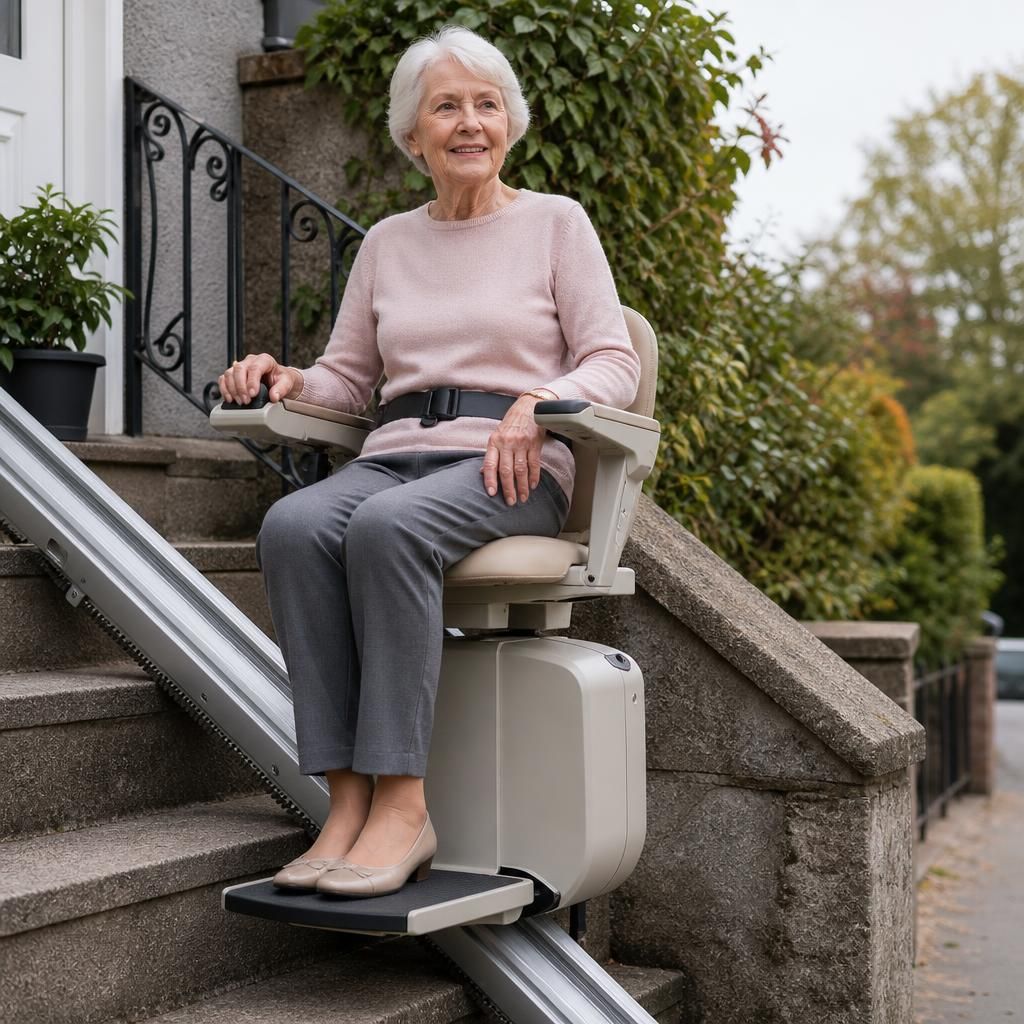
A seat belt or other suitable restraint should be easy to fasten and release without requiring excessive hand strength. Its position should provide a secure fit for the user, and it should not be difficult to operate when transferring from a wheelchair, walking frame or nearby seat.
Compare the seat height, width, cushioning and back support with the user’s posture and physical needs. A firm, supportive seat can make it easier to remain stable during travel, while appropriate padding can improve comfort on longer or repeated journeys. Armrests should provide useful support without making it difficult to sit down or stand up. If more than one person will use the stairlift, discuss whether the seat and belt can be adjusted safely for each user.
Swivel seat and transfer features
A swivel seat allows the user to turn towards the landing before standing, rather than rising while facing the stairs. This can reduce the need to twist and can make transfers easier, particularly at the top of the staircase. Check that the swivel mechanism locks securely in the travel position and at the landing.
The seat height, footrest position and landing clearance should be considered together. A powered swivel or powered footrest may be helpful where the user has limited leg, hip or upper-body movement, although the controls and maintenance requirements should be explained clearly. A manual feature may be suitable where the user can operate it reliably.
Adjustable footrest and armrests
The footrest should support both feet comfortably and leave enough space for footwear. It should not catch on the steps, walls or surrounding landscaping as the lift moves. A safety sensor on the footrest is particularly useful outdoors because it can stop the lift if an object is in the way.
Adjustable armrests can help provide a stable handhold and accommodate different body sizes. They should remain secure during travel and leave sufficient room for safe transfers. If the user has reduced grip strength, arthritis or one-sided weakness, the design and position of the controls and armrests should be tested rather than judged from appearance alone.
Simple, accessible controls
Controls should be clear, tactile and usable without fine finger movement. A directional control on the armrest, a remote control at the landings or both may be appropriate. Consider whether the user can distinguish the controls, press them comfortably and release them quickly if necessary.
Remote controls can be useful when the stairlift is shared or when it needs to be called to the opposite landing. A key switch or user control can prevent unintended operation where appropriate. The installer should explain charging, starting, stopping and what to do if the lift does not respond, and the user should have an accessible instruction guide.
Battery backup and charging
Battery-powered outdoor stairlifts can continue to operate during a mains power cut, provided the batteries are sufficiently charged. Confirm where the stairlift charges, whether it charges at one or both ends of the rail and what happens if it is left away from its charging point. A convenient parking position helps the lift remain ready for use.
Ask how battery condition is checked and how often replacement is normally considered. Cold weather can affect battery performance, so the installation and charging arrangement should take local exposure into account. Battery backup is not a substitute for routine servicing; worn batteries or a fault in the charging system can reduce reliability.
Rail design and parking position
The rail should follow the staircase securely while maintaining safe clearance from walls, doorways, paths and other obstructions. On a straight flight, the rail may extend beyond the steps to create a more convenient transfer or parking position. On a curved or more complex staircase, the rail is made to follow the surveyed route and may include changes in direction or gradient.
For an outdoor installation, the parking position should avoid blocking a doorway, gate, pathway or emergency access route. It should also place the lift where it can be reached safely and, where possible, protected from the worst weather. The final position must allow the user to swivel, release the belt and stand without stepping into an unsafe area.
Protection against outdoor hazards
Ask how the proposed stairlift is protected from rain, frost, dirt, salt and direct sunlight, and whether additional shelter or drainage improvements are recommended. The steps should have a suitable, even surface and remain free from ice, moss and loose debris. Outdoor lighting can also improve visibility when using the lift in the early morning or evening.
Where the staircase is near a road, driveway or public path, check that the parked lift does not create an obstruction or become vulnerable to impact. A risk assessment should consider children, pets, gardening equipment and anything else that could enter the lift’s path.
What to compare during your assessment
- Whether the stairlift is designed and protected for the exact outdoor conditions at your property.
- The position and operation of obstacle sensors, safety switches and the restraint.
- Seat height, support, swivel action, footrest size and ease of transfer.
- Whether the controls and remote controls suit the user’s strength, reach, sight and dexterity.
- Battery backup, charging points and the procedure for a fault or power cut.
- Rail clearance, landing access and a safe, practical parking position.
- How the stairlift will be protected from weather and what routine cleaning or servicing is required.
A proper home assessment should test these features against the user and the staircase, not simply recommend a standard specification. Before installation, discuss any changes in mobility, transfer difficulties or concerns about exposure to the elements so the equipment can be configured safely and explained clearly.
Safety sensors are essential on an outdoor stairlift because leaves, grit, ice and other debris can enter the lift’s path. Sensors beneath the footrest and around the carriage should stop the stairlift if an obstruction is detected, while the braking system should provide a controlled start, stop and secure hold when stationary.
For comfort and safer transfers, check that the seat belt is easy to fasten and release, the seat provides suitable support, and a swivel function allows the user to turn towards the landing before standing. The footrest, armrests and controls should also be tested by the intended user so they can operate them comfortably in changing outdoor conditions.
Arrange an outdoor stairlift assessment for your home
Arrange an outdoor stairlift assessment for your home so we can check the staircase, weather exposure and user’s needs. We can then help you compare suitable safety, comfort and access features.