
How do outdoor stairlifts handle different weather conditions to ensure durability?
Outdoor stairlifts are designed with weather-resistant materials, sealed electrical components and protective covers to withstand rain, snow, wind and sunlight. Regular servicing, sensible use of the protective cover and prompt removal of standing water or debris help maintain reliable, durable operation throughout the year.
Outdoor stairlifts are built to tolerate changing outdoor conditions through weather-resistant materials, protected electrical components, durable upholstery and a cover designed for when the lift is not in use. These features help protect the stairlift from rain, snow, wind, frost, sunlight and airborne debris, but they do not make it maintenance-free. Correct installation, sensible use and regular servicing are all important for dependable access throughout the year.
Protection against rain and moisture
An outdoor stairlift is designed with components that are better suited to exposure than those used on an indoor model. The seat, armrests, footrest and control equipment are selected to cope with damp conditions, while electrical connections and drive components are protected to reduce the risk of water reaching sensitive parts. The outdoor rail and fixings also use materials or finishes intended to resist corrosion.
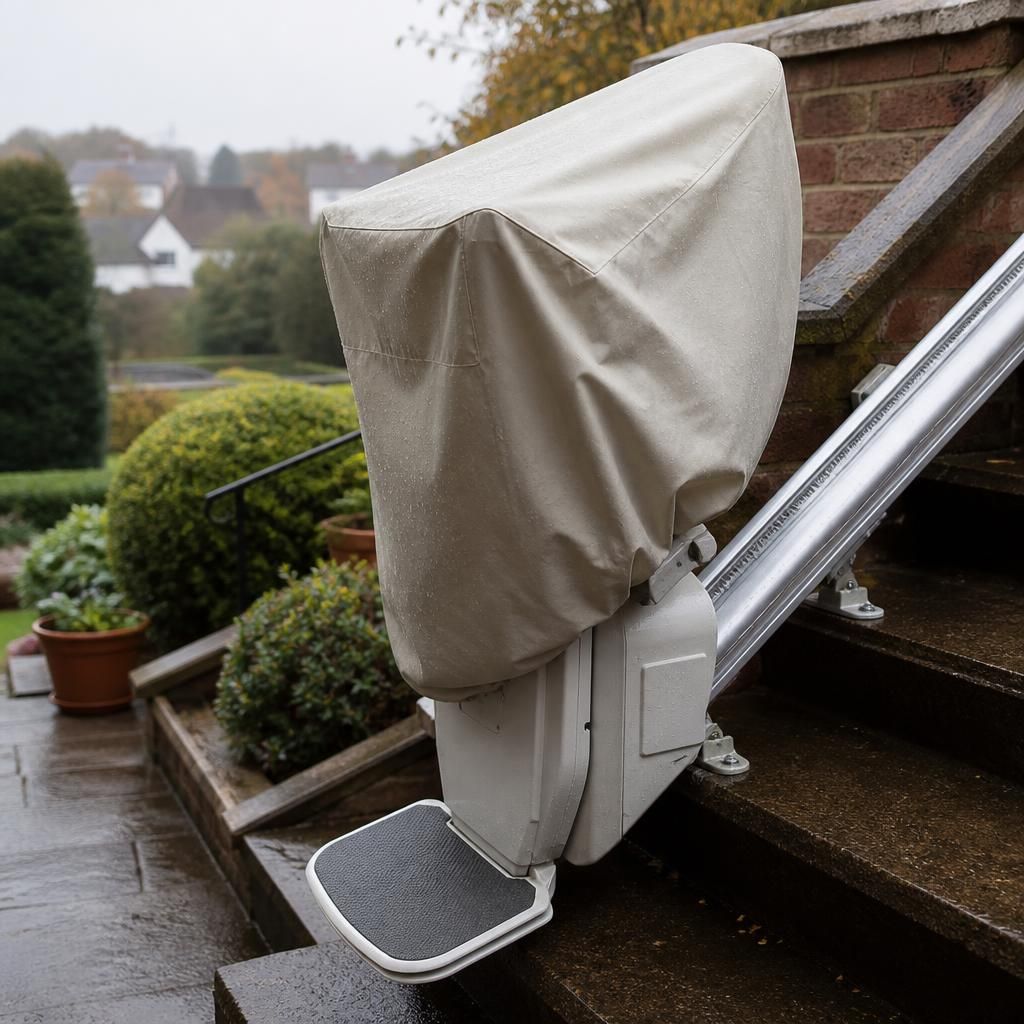
Even so, water should not be allowed to collect around the seat, controls, charging points or carriage. A protective cover should be fitted whenever the stairlift is parked outside, particularly during prolonged rain. If the lift becomes wet, allow it to dry naturally where possible and wipe away standing water before use. Do not use a pressure washer, hose or solvent-based cleaning product, as these can force water into components or damage protective finishes.
Performance in cold weather, frost and snow
Cold temperatures can affect batteries, lubricants and the movement of mechanical parts. Frost and ice may also form on the footplate, seat or rail, creating a slip or obstruction risk. Before using the stairlift in freezing conditions, remove snow and ice carefully and check that the travel path is clear. Never try to force the lift through an obstruction.
Battery performance can reduce in cold weather, especially if the stairlift is left unused or is not returning correctly to its charging point. Keeping the lift connected to its charger as instructed helps maintain battery readiness. If the stairlift stops working after a period of severe cold, check the power supply and charging position first, then contact the service team if the problem remains. Avoid applying salt, de-icer or other corrosive substances directly to the rail or mechanism unless the manufacturer specifically permits it.
Wind and exposed locations
Wind does not usually damage a correctly installed outdoor stairlift by itself, but exposed staircases can carry dust, grit, leaves and other debris into the operating area. Strong gusts may also move an unsecured cover or cause loose objects to strike the lift. Keep the stairway clear and make sure the cover is secured according to the manufacturer’s instructions.
In particularly exposed locations, an assessment should consider the position of the staircase, prevailing weather, nearby trees and the risk of falling branches or wind-blown material. A stairlift should not be used during conditions that make it unsafe for the passenger to remain seated or that prevent the operator from seeing the route clearly. If the lift has been struck by an object or appears to have moved from its normal position, stop using it and arrange an inspection.
Sunlight and changing temperatures
Direct sunlight and ultraviolet exposure can gradually fade upholstery and degrade some plastics or rubber materials. Outdoor models use more suitable finishes and materials, but a cover remains useful when the lift is parked. It reduces exposure to sunlight as well as rain and helps keep the seat cooler and cleaner.
Repeated changes between hot and cold conditions can cause condensation. This is another reason to keep electrical covers closed, avoid storing wet items on the seat and allow moisture to clear before operation. If you notice cracked casing, deteriorated seals, exposed wiring or unusual discolouration, report it rather than attempting an improvised repair.
Corrosion, dirt and coastal conditions
Salt in coastal air, road spray and garden chemicals can accelerate corrosion, even where corrosion-resistant materials have been used. Regularly removing surface dirt with a soft, damp cloth helps protect the finish. Keep grit, mud, leaves and plant growth away from the rail, footrest and charging area. Cleaning methods should always follow the equipment instructions, as abrasive pads and harsh chemicals may remove protective coatings.
How to support long-term durability
- Park the stairlift in its recommended position so that it can charge correctly and is less exposed to obstructions.
- Use the supplied outdoor cover when the lift is not in use, and replace it if it becomes torn or no longer fits securely.
- Remove standing water, snow, ice, leaves and other debris before operation.
- Keep the rail, steps and landing clear, especially after storms or garden work.
- Check for unusual noises, jerky movement, reduced battery performance, damaged upholstery or visible corrosion.
- Arrange servicing at the recommended intervals and report faults promptly rather than continuing to use a lift that appears unsafe.
Weather protection reduces the effects of the UK’s changing climate, but it cannot prevent every issue caused by flooding, impact, vandalism or neglected maintenance. An outdoor stairlift should be assessed for its specific location, including drainage, exposure and access to a suitable power supply. Following the manufacturer’s operating instructions and keeping up with professional servicing gives the equipment the best opportunity to provide safe, consistent access in all seasons.
An outdoor stairlift cover helps protect the seat, controls and other exposed components from rain, snow, frost, sunlight and airborne debris when the lift is parked. It does not make the stairlift waterproof in every circumstance, so standing water should still be removed and the lift should be allowed to dry naturally before use.
Fit the supplied cover securely and check it regularly for tears, loose fastenings or water collecting inside. Keep the rail, footrest and charging area clear of leaves, grit and ice, and follow the manufacturer’s cleaning instructions. These simple steps reduce moisture ingress, corrosion and weather-related wear, helping the stairlift remain dependable throughout the year.
Arrange an outdoor stairlift assessment
Arrange an outdoor stairlift assessment so we can review your staircase, exposure to weather, drainage and power supply before recommending a suitable solution.
Contact Independent Stairlifts to discuss your access requirements and arrange a convenient assessment.