
Are outdoor stairlifts easy to operate for someone with limited mobility?
Yes, outdoor stairlifts are designed to be straightforward to operate for people with limited mobility. Simple controls, powered movement, safety sensors and a secure seat allow the user to travel between levels with minimal physical effort, subject to an appropriate assessment and correct installation.
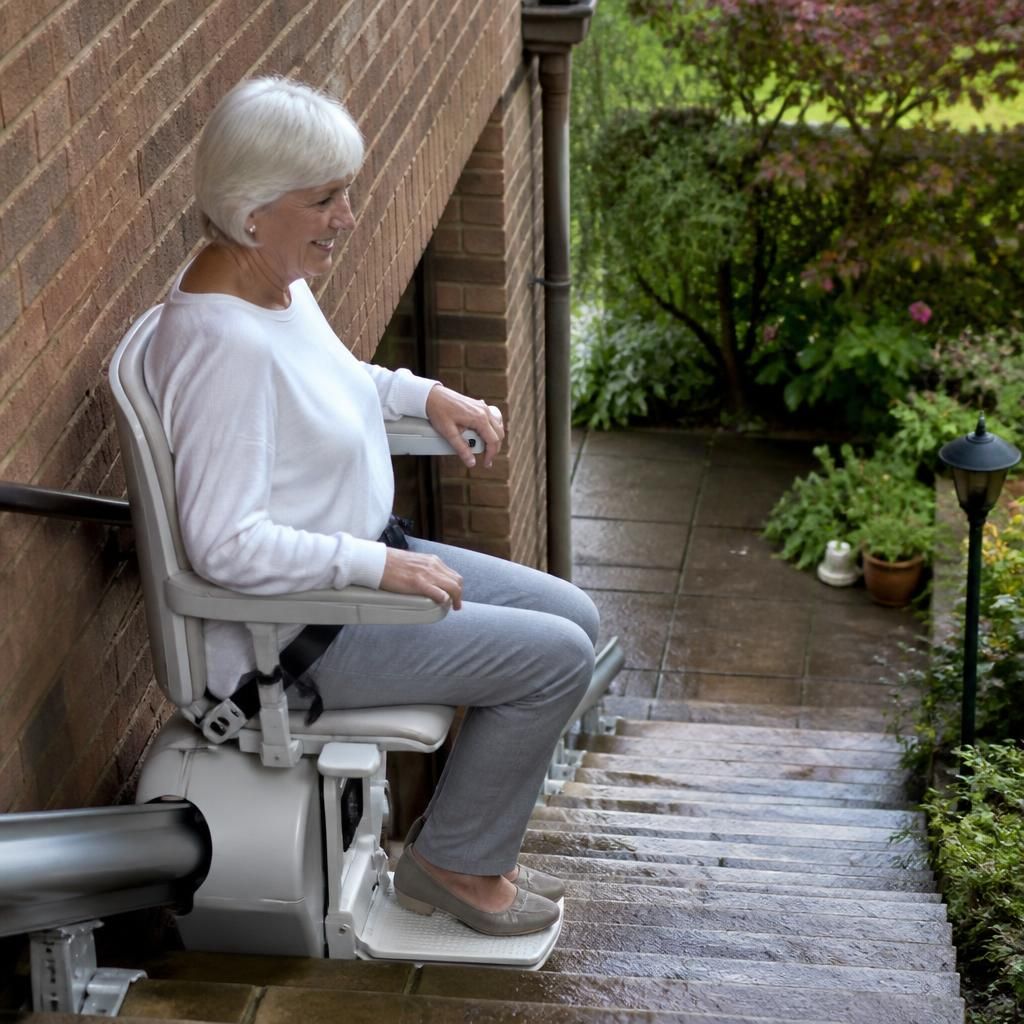
Yes. Outdoor stairlifts are generally designed to be straightforward to operate for people with limited mobility. A user normally controls the lift with a simple hand-operated control, while the motor moves the seat along the rail. This reduces the need to climb steps, maintain balance or exert significant leg strength. Ease of use still depends on the person’s dexterity, posture, vision, confidence and the layout of the staircase, so an assessment is important before installation.
Simple, accessible controls
Most outdoor stairlifts are operated using a control integrated into an armrest or positioned where the user can reach it comfortably. Depending on the model, the control may be a joystick, toggle switch or push control. Holding the control in the direction of travel moves the stairlift, and releasing it stops the lift. This type of operation allows the user to travel at their own pace rather than requiring complex settings or several separate controls.
Controls can often be fitted on the most suitable side for the user. This is helpful if limited movement, weakness or discomfort affects one hand or arm. Where more than one person uses the stairlift, remote controls at the top and bottom of the stairs may allow the lift to be called to the required level. The exact control arrangement should be agreed during the assessment.
Features that reduce physical effort
An outdoor stairlift supports the user throughout the journey, so they do not need to step from one stair to the next. A powered drive system carries the seat along its rail, while the user remains seated with their back supported. Armrests provide additional stability when getting on and off, and a seat belt helps keep the user securely positioned during travel.
Many models include a swivel seat, allowing the user to turn towards the landing before standing. This can make transfers easier where bending, twisting or reaching is difficult. A folding seat, footrest and armrests may also help keep the staircase clear when the lift is not being used. If transferring from a wheelchair or walking aid, the position of the lift and the available space at each end of the stairs need particular attention.
Safety controls and automatic stopping
Outdoor stairlifts usually include safety sensors that stop the lift if an obstruction is detected on the stairs or in the path of the carriage. Other safety systems can include a seat-belt sensor, speed control, emergency stop functions and controls that prevent movement unless the seat or armrests are correctly positioned. These features are intended to reduce the physical and mental effort required from the user, but the operating instructions should still be followed carefully.
The user should sit fully back in the seat, fasten the belt where provided, keep hands and clothing inside the armrests and keep the footrest clear. The lift should not be used to carry another person, heavy items or objects that could fall into the mechanism. If the user feels unable to control the lift safely, a carer or family member should provide assistance rather than operating it on the user’s behalf without suitable guidance.
Using an outdoor stairlift in wet or cold conditions
Outdoor models are built for exposure to changing weather and normally use weather-resistant materials, covers and protected electrical components. Even so, rain, ice, snow, dirt and standing water can affect the stairs and the user’s footing. The seat, controls and footrest should be kept as dry and clean as reasonably possible, and any manufacturer-supplied cover should be used when the lift is parked.
Users should check that the steps and landing are clear before travelling. Wet or icy surfaces can still create a risk when getting on or off, even though the stairlift itself is moving safely. If snow, ice, flooding or another obstruction prevents safe access, the lift should not be used until the route has been made safe.
What happens if the user has limited hand movement?
Limited grip strength or reduced finger movement does not automatically prevent someone from using an outdoor stairlift. A suitable control may require only light pressure, and its position can often be adjusted to make operation easier. However, the user must be able to operate the control reliably, release it when required and respond to instructions or an obstruction. A practical demonstration during the assessment is the best way to confirm whether the proposed control is suitable.
Vision, hearing and memory should also be considered. Clear instructions, a consistent operating routine and audible or visual indicators may help. If the user has a condition that causes sudden weakness, confusion or unpredictable movement, the risks should be discussed with the assessor and, where appropriate, a healthcare professional or carer.
Assessment, demonstration and ongoing support
Before installation, an assessor should consider the staircase, landing areas, weather exposure, power supply, transfer points and the user’s physical abilities. The user should be able to try the controls, practise starting and stopping, and learn how to use the seat belt, swivel seat, charging points and emergency functions. Installation should not be considered complete until the user understands the operating procedure and can use the lift as safely as their abilities allow.
Regular servicing helps keep the controls, batteries, sensors, drive system and safety features working correctly. If the lift starts unexpectedly stopping, makes an unusual noise, moves unevenly or shows a fault indicator, it should be taken out of use and reported for advice. Do not attempt to bypass a safety sensor or repair electrical components yourself.
In practice, an outdoor stairlift can be easy to operate with limited mobility when its controls and seating position are matched to the user and the staircase is kept safe and accessible. If you are unsure whether a particular user can operate one independently, a personalised assessment and supervised demonstration can identify suitable adaptations or whether assistance is required.
Outdoor stairlifts are usually easy to operate with limited mobility because the user travels while seated and controls the lift with a simple hand control. Releasing the control stops the lift, so the user does not need to manage complicated settings or climb the stairs.
The control position, seat height and swivel function should be matched to the user during the assessment. A practical demonstration can confirm that they can reach the control, use it reliably and transfer on and off the seat safely. Features such as a seat belt, powered movement and obstruction sensors further reduce the physical effort required, although wet or icy steps must still be cleared before use.
Arrange Your Outdoor Stairlift Assessment
Arrange an outdoor stairlift assessment with Independent Stairlifts to check that the controls, seat position and transfer points are suitable for your mobility needs. We can demonstrate the lift and explain safe operation before installation.