
What maintenance is required to keep an outdoor stairlift functioning effectively over time?
An outdoor stairlift needs regular servicing by a qualified engineer, along with routine cleaning and checks of the rail, seat, controls, battery, charging points and safety features. Keep it protected from prolonged exposure to heavy weather, remove leaves or debris, and report unusual noises, reduced movement or charging problems promptly rather than continuing to use it.
An outdoor stairlift needs scheduled servicing by a qualified engineer, combined with routine cleaning and simple visual checks. The rail, seat or platform, controls, battery, charging points and safety features should be kept clean and free from obstructions, while prolonged exposure to heavy rain, frost, salt and debris should be limited wherever possible. Any unusual noise, jerky movement, reduced travel, fault warning or charging problem should be reported promptly rather than ignored.
Arrange professional servicing
Professional servicing is the most important part of maintaining an outdoor stairlift. An engineer can inspect components that are not safely accessible to the user, test the electrical and safety systems, check fastenings and confirm that the lift is operating in line with the manufacturer’s requirements. Servicing intervals depend on the model, how often it is used and the conditions around the staircase, so follow the schedule provided with your stairlift or ask Independent Stairlifts to confirm what is appropriate.
During a service, the engineer may check the drive system, rail, motor, seat or platform, sensors, armrests, footrest, swivel or folding mechanisms, remote controls, charging system and battery condition. They can also identify wear before it affects reliability. Keep service records and note any issues you have noticed since the previous visit, including intermittent faults that may not be present when the engineer arrives.
Keep the rail and surrounding area clear
- Remove leaves, mud, grit, standing water and other debris from the steps and the area around the rail.
- Check that plants, stored items, hoses and garden equipment cannot obstruct the lift or its travel path.
- Wipe the rail and accessible surfaces with a soft, slightly damp cloth, following the cleaning instructions for your model.
- Do not apply oil, grease or household cleaning products unless the manufacturer or a qualified engineer specifically recommends them. The wrong lubricant can attract grit or affect sensors and drive components.
- After strong winds or bad weather, inspect the route for fallen branches, loose items or damage before using the stairlift.
Clean and protect the seat or platform
Outdoor seats and platforms are designed for external use, but they still benefit from protection. Remove dirt and moisture from the seat, armrests, footrest, platform surface and controls. If the stairlift has a weatherproof cover, use it when the lift is parked, ensuring the cover is fitted correctly and does not trap excessive moisture. A cover should not conceal a wet stairlift for prolonged periods; allow surfaces to dry when conditions permit.
Do not use the lift if the seat, platform or footrest has become slippery, iced over or contaminated with mud. For a platform model, check that the ramp, platform floor and edges are clear before boarding. Never cover controls, sensors or charging contacts in a way that prevents normal operation.
Check the battery and charging points
Most outdoor stairlifts rely on rechargeable batteries, including when mains power is not available during a journey. Park the lift in its designated charging position after use, where the model requires this, and check that the charging indicator shows that the batteries are receiving power. Keep charging contacts clean and dry, and make sure the power supply has not been switched off accidentally.
Reduced travel, slower operation, repeated low-battery warnings or failure to hold a charge can indicate battery deterioration or a charging fault. Batteries are consumable components and eventually need replacement, but the cause should be assessed by an engineer rather than guessed. Do not attempt to open the battery compartment, alter wiring or use an unapproved charger.
Carry out safe visual checks
Before use, look for loose covers, damaged cables, unusual gaps, corrosion, leaking fluids, damaged control switches or anything that has changed in the stairlift’s appearance. Test the controls only as described in the user instructions and make sure the safety belt, if fitted, locks correctly. Check that the swivel seat, armrests, footrest, ramps and barriers operate as intended, without forcing them.
Listen for new grinding, scraping, clicking or rattling sounds. Jerky movement, unexpected stopping, a smell of overheating, repeated fault codes or movement in the wrong direction are also reasons to stop using the lift. Isolate the stairlift only if the instructions explain how to do so safely, keep other people away from it and contact a qualified engineer.
Take account of outdoor conditions
Weather can accelerate wear even when a stairlift is operating normally. Rain and humidity can affect exposed metalwork and electrical contacts, while frost and ice can restrict movement or make the steps unsafe. Coastal air and road salt may increase corrosion, and intense sunlight can gradually affect some plastics, covers and upholstery. Regular cleaning, appropriate weather protection and prompt attention to corrosion or water ingress help reduce these risks.
Do not use an outdoor stairlift in conditions outside its stated operating limits. If the route or equipment is iced, flooded, obstructed or visibly damaged, wait until it is safe and obtain advice if necessary. A weatherproof outdoor model is resistant to expected exposure, not immune to damage from severe conditions or poor storage.
Do not carry out unauthorised repairs
Outdoor stairlifts contain electrical, mechanical and safety components that must work together. Do not bypass sensors, safety edges, interlocks or the seat belt, and do not dismantle the rail, motor or control equipment. A repair carried out without the correct parts or testing can create a safety risk and may affect warranty or service arrangements. Report the fault with a clear description of what happened, when it occurs and any display message shown.
Good maintenance is therefore a combination of professional servicing, sensible cleaning, correct charging, weather protection and prompt fault reporting. If your outdoor stairlift is used by someone who cannot safely perform visual checks, arrange for a family member, carer or service engineer to monitor it and keep the access route clear.
Regular professional servicing is the most important maintenance for an outdoor stairlift because it checks the drive system, safety controls, battery and electrical connections in ways that routine cleaning cannot. The service schedule should follow the manufacturer’s instructions and take account of how often the lift is used and how exposed the staircase is to rain, frost, salt or debris.
Between services, keep the rail, charging contacts, seat or platform and travel path clean and unobstructed. Park the lift in its designated charging position where required, use a suitable weatherproof cover when it is dry to do so, and report reduced movement, unusual noises, warning messages or charging problems promptly. Do not bypass safety features or attempt electrical or mechanical repairs yourself.
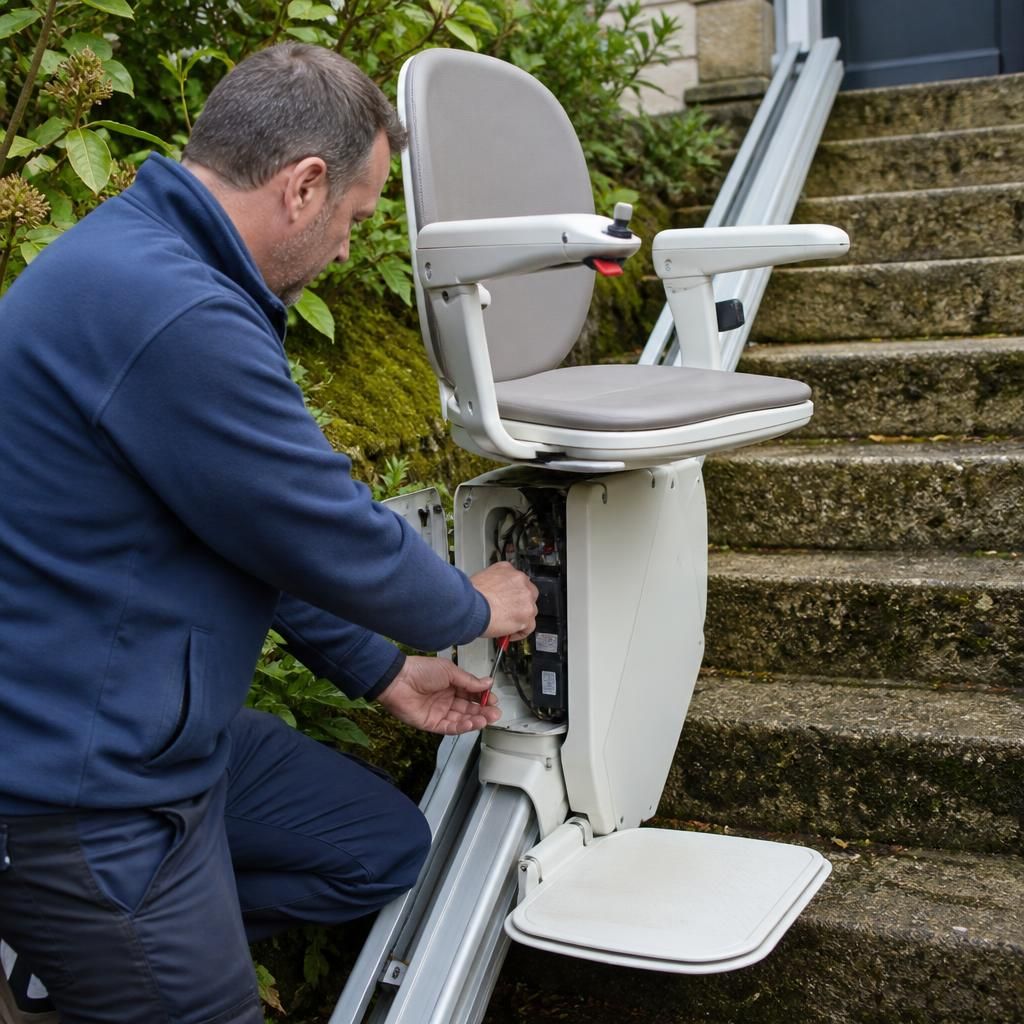
Arrange your outdoor stairlift service
If your outdoor stairlift is due for a service, contact Independent Stairlifts to arrange a professional inspection and maintenance visit. We can help confirm the appropriate service schedule and address any concerns about its operation, battery or weather exposure.