
How do adverse weather conditions affect the performance of outdoor stairlifts over time?
Adverse weather can gradually affect an outdoor stairlift through moisture, frost, snow, heat, UV exposure and wind, potentially causing corrosion, battery depletion, stiff movement or damage to electrical components. Weather-resistant covers, keeping the track and controls clear, and regular servicing help protect performance, safety and reliability over time.
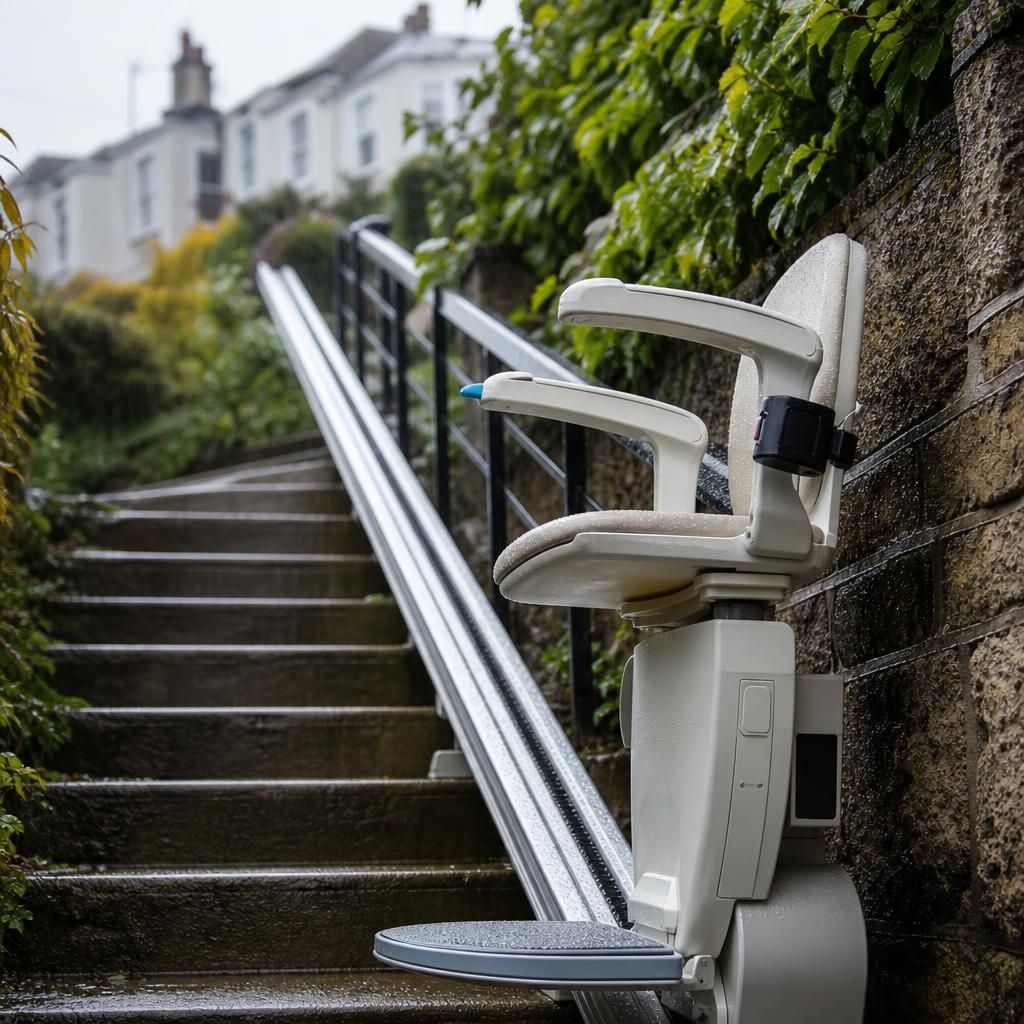
Adverse weather can gradually reduce an outdoor stairlift’s performance by exposing its track, seat, controls, battery and electrical components to moisture, frost, snow, heat, ultraviolet (UV) light and wind. These conditions may lead to corrosion, stiff or noisy movement, reduced battery performance, water ingress and faster wear unless the stairlift is correctly protected, used and maintained.
Outdoor stairlifts are designed with weather-resistant materials and protective features, but weather resistance does not mean that every component is permanently unaffected by the environment. The effect of exposure depends on the stairlift’s design, the position of the staircase, drainage, how often it is used and whether it is covered when not in operation.
Rain and persistent damp
Rain itself should not prevent a suitable outdoor stairlift from operating, provided the equipment is correctly installed and kept in good condition. However, repeated exposure to water can affect moving joints, charging contacts, switches and other electrical connections over time. Damp conditions can also encourage corrosion on metal fixings, the track and exposed mechanical parts, particularly where water collects or dirt prevents proper drainage.
After heavy rain, check that the track, footrest, seat and landing areas are free from leaves, mud and standing water. Do not direct a hose or pressure washer at the stairlift, as high-pressure water can force moisture into seals and electrical components. If the lift becomes unusually slow, stops intermittently or shows signs of water ingress, stop using it and arrange an inspection.
Frost and freezing temperatures
Frost can make the track, seat and footrest slippery, while ice may restrict the movement of hinged or folding parts. Water that enters small gaps and then freezes can place additional strain on covers, joints and fittings. Cold temperatures may also reduce the available battery capacity temporarily, so the stairlift may travel more slowly or require charging sooner than usual.
Remove ice carefully before use and avoid forcing the stairlift through a frozen section. Do not use boiling water or unsuitable de-icing chemicals, because sudden heat or corrosive products may damage surfaces and electrical parts. Keeping the track and charging points clear, and using the stairlift’s recommended protective cover, can reduce the risk of frost-related problems.
Snow and ice
Snow can obstruct the track and controls, add weight to the seat or footrest and conceal uneven steps. Melting snow may then create standing water around the charging points or at the bottom of the staircase. A platform model may also be affected if snow accumulates on the platform, ramp or access area, as this can interfere with safe boarding and disembarking.
Clear snow with a soft brush before operating the lift and keep access routes free from ice. Never use the platform or seat to push through snow, and do not allow grit, salt or de-icer to build up on the track. If salt has been used nearby, remove residue according to the manufacturer’s care instructions, as salt can accelerate corrosion.
Heat and direct sunlight
High temperatures can affect batteries, lubricants, plastic covers and electronic controls. Direct sunlight and UV exposure may cause some plastic or upholstered surfaces to fade, become brittle or deteriorate sooner than they would in a sheltered position. A stairlift installed against a south-facing wall, or on stairs with little shade, may receive particularly strong and prolonged exposure.
Use a correctly fitted outdoor cover when the stairlift is parked, but allow wet equipment to dry as recommended rather than trapping moisture underneath the cover. Keep ventilation openings unobstructed and do not leave the battery or control unit exposed to unnecessary heat. If the battery warning appears more frequently during hot weather, mention this during servicing so its condition can be checked.
Wind and airborne debris
Strong wind can move a seat cover, loose clothing or other objects into the path of the stairlift. Blown leaves, grit, branches and other debris may collect on the track, under the footrest or around platform ramps. Coastal locations can be more demanding because salty air may speed up corrosion, even when there is no direct spray.
Secure or remove covers before using the stairlift in strong winds, and inspect the route after storms. The lift should not be operated if debris is caught in the mechanism or if a cover, guard or other part has become loose. Report any impact damage, unusual vibration or change in alignment rather than attempting to straighten the track yourself.
How weather-related wear affects performance
- Slower or uneven travel: contamination, corrosion or cold conditions can increase resistance in the drive system.
- Noisy operation: dirt, water or wear may affect rollers, gears, bearings or other moving parts.
- Reduced battery performance: very cold or hot conditions can temporarily reduce battery efficiency, while repeated exposure and normal ageing can shorten battery life.
- Intermittent controls: moisture or corrosion around switches, remotes or charging contacts may cause unreliable operation.
- Charging difficulties: dirty, wet or corroded contacts may prevent the battery from charging correctly.
- Surface and material damage: UV light, salt, frost and standing water can gradually affect paint, plastics, upholstery and metalwork.
These symptoms are not always caused by weather. A worn battery, obstruction, mechanical fault or electrical problem can produce similar signs. A qualified stairlift engineer should diagnose persistent or worsening issues.
Practical steps to protect an outdoor stairlift
- Park the stairlift in its recommended charging position when it is not being used.
- Use the manufacturer-approved outdoor cover and fit it securely without covering vents or trapping excessive moisture.
- Keep the track, steps, platform, footrest and controls clear of leaves, mud, snow and ice.
- Wipe away dirt and moisture with suitable materials, following the care instructions supplied with the stairlift.
- Check that water drains away from the staircase and charging points instead of pooling around the equipment.
- Inspect visible covers, seals, cables, fixings and charging contacts for damage, looseness or corrosion.
- Arrange routine servicing so the engineer can check battery condition, safety devices, drive components, alignment and weather-related wear.
Do not dismantle covers, apply lubricant to parts unless it is specifically recommended, or use household cleaning products on electrical components. Unapproved alterations can damage the equipment and may affect its safe operation.
When to stop using the stairlift
Stop using the stairlift if it is exposed to flooding, has visible electrical damage, gives off a burning smell, repeatedly loses power, moves unexpectedly, or makes a new grinding or scraping noise. Keep the user away from the affected area and contact the service team for advice. After severe storms, flooding or impact from falling debris, the stairlift should be checked before it is returned to use, even if it appears to be working normally.
Regular cleaning, sensible weather protection and timely servicing cannot prevent every effect of outdoor exposure, but they can limit deterioration and help identify faults before they affect safe operation. If the stairlift is installed in a particularly exposed, coastal or shaded location where moisture remains for long periods, an assessment can determine whether additional shelter, drainage improvements or a revised maintenance routine is appropriate.
Weather protection and routine cleaning are essential to maintaining an outdoor stairlift’s performance over time. A suitable cover helps shield the seat, controls and electrical components from rain, frost, UV exposure and airborne debris, but it should be fitted as instructed and must not block ventilation or trap moisture underneath.
After heavy rain, snow or strong winds, check that the track, steps, footrest, charging points and platform access areas are clear. Remove leaves, mud and snow with a soft brush, wipe away excess moisture using suitable materials, and check for loose covers, visible corrosion or damaged cables. Do not use a pressure washer, boiling water or unapproved cleaning products.
If the stairlift becomes slow, noisy or intermittent, fails to charge, or shows signs of water ingress, stop using it and contact the service team. An engineer can check the battery, charging contacts, drive components, safety devices and seals before weather-related wear develops into a more serious fault.
Arrange an Outdoor Stairlift Weather-Protection Check
Arrange an outdoor stairlift weather-protection check with our team to identify moisture, corrosion, battery and charging issues before they affect safe operation. Contact Independent Stairlifts to book an assessment or discuss any changes in performance after severe weather.