
How can I ensure the longevity and reliability of my outdoor stairlift?
To ensure your outdoor stairlift remains reliable, arrange regular servicing, keep the track and charging points clear, and protect the lift from prolonged exposure to rain, frost, dirt and direct sunlight. Use it as instructed and report unusual noises, reduced movement or charging problems promptly so they can be assessed before they affect safe operation.
To extend the life and reliability of your outdoor stairlift, combine scheduled professional servicing with regular cleaning, sensible weather protection and correct day-to-day use. Outdoor models are designed to withstand changing conditions, but rain, frost, dirt, leaves, salt and prolonged sunlight can still affect the track, seat, controls, charging system and batteries if they are not managed properly.
Arrange servicing at the recommended intervals. A qualified stairlift engineer can inspect the drive system, track, batteries, charging points, safety sensors, seat mechanism, armrests, footrest and fastening points. Servicing can identify wear or corrosion before it causes a breakdown. Follow the service schedule supplied with your stairlift and keep records of visits, repairs and any replacement parts. If the lift is used heavily, is exposed to coastal air or is installed in a particularly wet or dirty location, ask whether it needs more frequent attention.
Keep the track and moving parts clean. Remove leaves, mud, grit, cobwebs and other debris from the stairs and the accessible parts of the track. Use a soft, slightly damp cloth or the cleaning method recommended for your model. Do not pour water over the lift, use a pressure washer or apply household cleaning products, grease or oil unless an engineer has specifically advised you to do so. Incorrect lubricants can attract dirt or affect the drive mechanism, while excess water may reach electrical components.
Pay particular attention to the charging points and the areas where the carriage travels. They should be clean, dry and unobstructed so that the lift can charge and move correctly. Never place objects on the track or leave garden equipment, plant pots or other items where they could interfere with the carriage, footrest or safety sensors.
Protect the lift from prolonged exposure. Use the manufacturer-approved cover when the stairlift is not in use, particularly during heavy rain, frost, snow, strong sunlight or dusty conditions. A cover should be fitted only when the lift is dry and should not trap moisture against the seat or controls. Remove it before operating the stairlift and check that it has not blown into the track or become caught on any moving part. Where possible, improve drainage around the stairs and avoid allowing water to collect at the top or bottom of the track.
Outdoor stairlifts are weather-resistant rather than completely immune to weather damage. Coastal locations may need extra vigilance because salt in the air can accelerate corrosion. In colder weather, check for ice before use and never force the lift over a frozen section. Clear snow and ice from the route using a method that will not damage the track, sensors or surrounding surfaces.
Maintain the charging routine. Leave the stairlift at its designated charging position when it is not being used, unless your installer has provided different instructions. Regular charging helps the batteries remain ready for use and reduces the risk of a flat battery. If the lift has charging points at more than one end of the track, use the positions specified for your model. Do not ignore charging warnings, repeated low-battery messages or a lift that stops short of its charging point.
Batteries are consumable components and eventually lose capacity. Reduced travel, slower operation, repeated charging alerts or difficulty completing the full journey can indicate that they need testing or replacement. Do not attempt to open the battery compartment or replace batteries unless you have been instructed that this is safe for your specific equipment. An engineer should also check the charger and charging contacts, as a charging fault may not be caused by the batteries themselves.
Use the stairlift as intended. Sit centrally on the seat, fasten the safety belt if fitted, keep hands and clothing inside the armrests, and keep feet clear of the steps and adjacent structures. Do not exceed the stated weight limit, carry bulky items on the seat or footrest, or allow another person to operate the lift while you are travelling. Keep the seat, footrest and controls free from objects that could obstruct movement or trigger a sensor.
Make sure other people in the household understand the basic operating instructions, including how to use the remote control and what to do if the lift stops. Do not allow children to play with the controls. If the stairlift is shared by several users, consistent use helps prevent avoidable damage and makes unusual behaviour easier to identify.
Respond promptly to changes in performance. Stop using the lift and contact Independent Stairlifts or your servicing provider if you notice unusual noise, juddering, a burning smell, intermittent stopping, reduced speed, difficulty reaching the charging point, loose components, damaged wiring or a safety belt that does not fasten correctly. Do not continue operating the lift to see whether the problem clears. Early assessment can prevent a minor issue becoming a more serious safety or mechanical fault.
If the lift stops between floors, follow the emergency procedure supplied with the equipment and contact the appropriate service provider. Do not try to push the carriage, climb out on the stairs or dismantle the lift. Keep the instructions and service contact details accessible to the user and anyone who may need to assist.
Check the surrounding staircase as well as the lift. Keep steps, landings and access areas clear, repair loose paving or damaged surfaces, and maintain lighting so the user can approach and leave the seat safely. Trim nearby vegetation where it could brush against the track or controls. Any building, landscaping or drainage work close to the stairlift should be planned so that dust, rubble, paint and water cannot enter the equipment.
Finally, tell the servicing engineer about changes in use or the environment, such as a period of non-use, building work, increased exposure to weather or a change in the user’s mobility needs. Professional inspection, correct charging, careful cleaning and prompt reporting of faults will help preserve safe performance for as long as the equipment and its replaceable components remain serviceable.
Regular professional servicing is one of the most effective ways to preserve an outdoor stairlift’s reliability. An engineer can check the drive system, batteries, charging contacts, safety sensors, track, seat and fastenings, identifying wear or corrosion before it develops into a breakdown.
Between services, keep the track, charging points and surrounding steps clear of leaves, mud, grit and standing water. Use a manufacturer-approved cover when the lift is dry and not in use during prolonged rain, frost or strong sunlight. Remove the cover before operating the stairlift and make sure it has not become wet, displaced or caught on any moving parts.
Leave the lift at its designated charging position when it is not being used, following your installer’s instructions. Report reduced travel, repeated charging warnings, unusual noises, juddering or difficulty reaching the charging point promptly so the issue can be assessed safely.
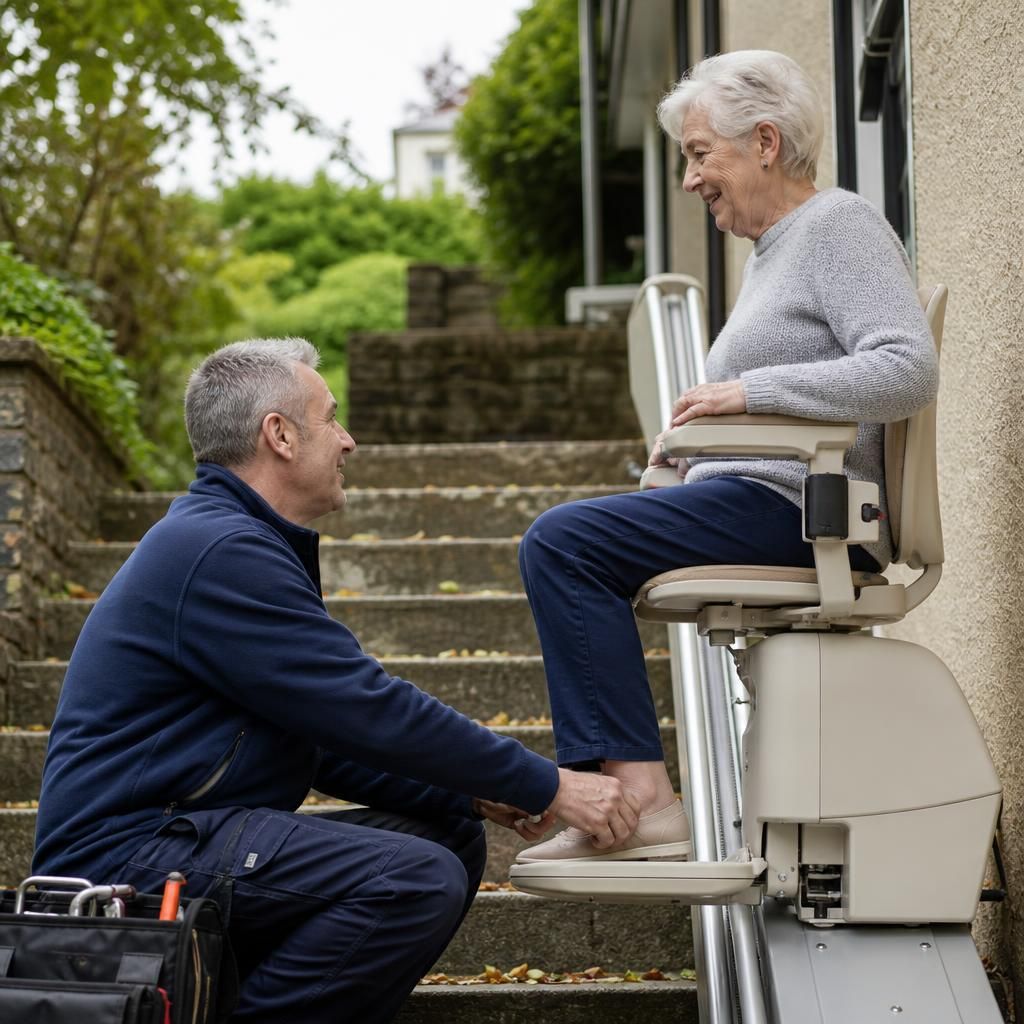
Book an outdoor stairlift service or assessment
Book an outdoor stairlift service or assessment with Independent Stairlifts to check its condition, charging system and weather protection. Contact our team if you have noticed reduced performance, unusual noises or any other concerns.