
What specific maintenance does an outdoor stairlift require?
An outdoor stairlift requires regular cleaning, inspection and servicing to protect it from rain, dirt, frost and changing temperatures. Maintenance should include checking the track, seat, controls, battery, charging points and safety features, while removing debris and reporting unusual noises, movement or charging problems promptly.
An outdoor stairlift requires regular cleaning, inspection and professional servicing to protect it from rain, dirt, frost, moisture and changing temperatures. Maintenance should cover the track, seat, controls, battery, charging points and safety features, with any unusual noise, movement or charging problem reported promptly.
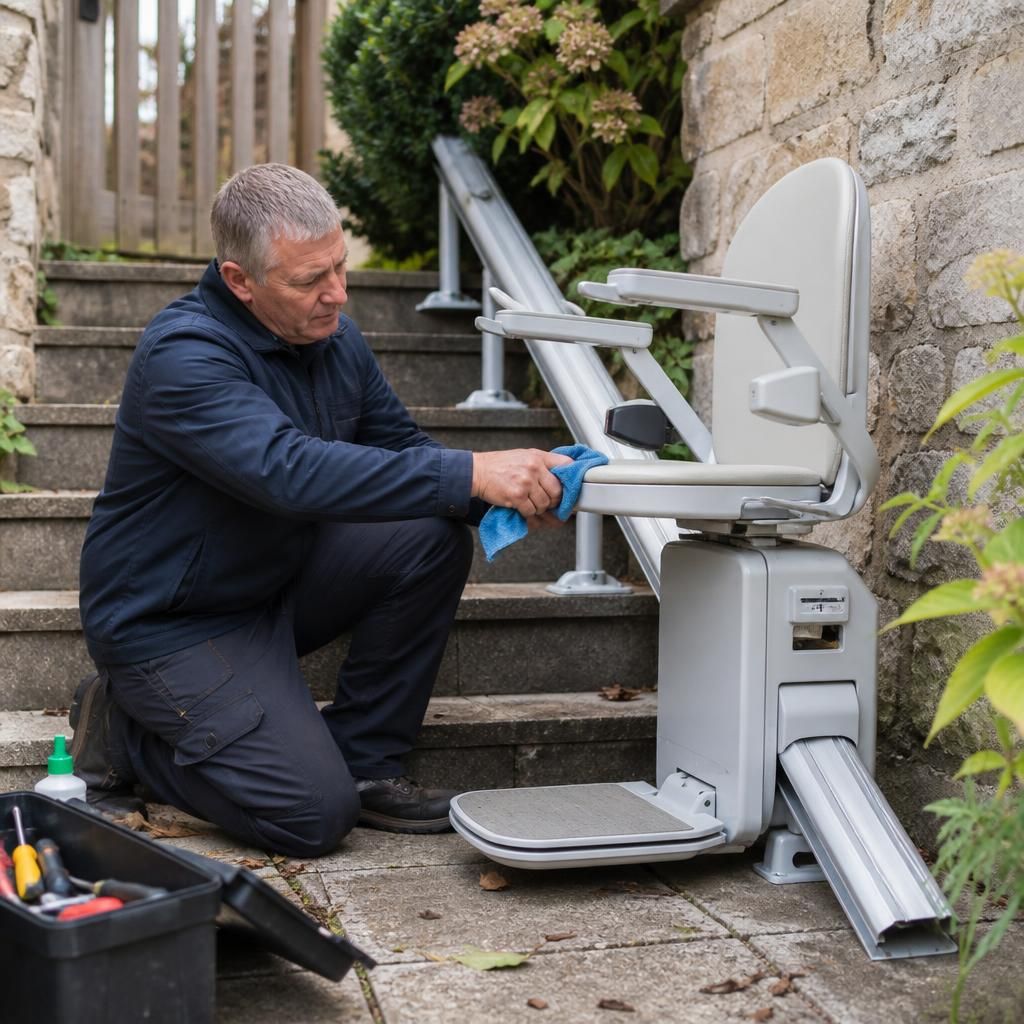
Keep the lift and track clean. Remove leaves, mud, grit, cobwebs and other debris from the steps, track and areas around the charging points. Dirt can obstruct moving parts, affect the lift’s travel and create a slipping hazard when it is used. Clean the seat, armrests, footplate and controls with a soft, slightly damp cloth, following the cleaning instructions supplied with the lift. Avoid soaking electrical components, spraying water directly onto the carriage or using abrasive or solvent-based cleaning products unless the manufacturer specifically permits them.
Check the track regularly for obstructions and signs of damage. It should remain securely fixed, with no loose sections, sharp edges, corrosion or objects affecting the lift’s movement. Do not apply oil, grease or other lubricant unless this is specified for the particular model. Some outdoor stairlift tracks use materials or components that require specialist products, and unsuitable lubrication can attract grit or interfere with the drive system.
Inspect the seat and safety equipment. Check that the seat swivels and locks correctly, the armrests and footplate are secure, and the seat belt fastens and releases as intended. Look at the safety sensors and switches for dirt, damage or moisture. These may stop the stairlift if an obstruction is detected, so they must not be covered, bypassed or altered. Make sure the footplate and steps are clear before every journey, particularly after windy or wet weather.
Check the controls and charging points. Test the handset, armrest controls and any stop or emergency controls according to the operating instructions. Outdoor controls should be kept clean and protected from standing water. Confirm that the stairlift returns to, and remains correctly positioned at, its charging point when not in use. If the lift does not charge, the indicator behaves unexpectedly or the battery loses power quickly, arrange an assessment rather than repeatedly attempting to use it.
The battery is recharged through the stairlift’s charging system and can be affected by age, cold conditions, poor contact or a fault with the charger. Keep charging contacts clean and dry, and do not disconnect the charger or remove the battery unless instructed by a suitably qualified person. A stairlift that is left unused for a prolonged period may still need to remain connected to its power supply, depending on the model and the manufacturer’s guidance.
Protect the lift from the weather. Use the supplied outdoor cover when the stairlift is not in use, if one is provided and it can be fitted without obstructing the mechanism. The cover should be clean and dry on the inside before it is placed over the lift. Do not cover a wet lift in a way that traps moisture, and remove snow, ice or pooled water before operating it. In exposed locations, inspect more frequently after storms, strong winds, freezing conditions or heavy rainfall.
Outdoor-rated does not mean maintenance-free. Repeated exposure to moisture and temperature changes can gradually affect fasteners, electrical connections, seals, upholstery and metal surfaces. Report rust, cracking, fading, water ingress, damaged covers, loose fixings or deterioration of the track or mounting points. Do not attempt to repaint, seal or dismantle affected parts without professional advice, as this may conceal a safety issue or invalidate the manufacturer’s requirements.
Arrange scheduled professional servicing. A qualified stairlift engineer should inspect and test the lift at the intervals recommended for its model and level of use. A service typically includes checking the drive system, track, fixings, seat, sensors, controls, battery and charger, as well as testing the lift under operating conditions. The engineer can also identify wear that is not obvious during routine cleaning and replace components before they affect reliability.
Maintenance may need to be more frequent where the stairlift is used heavily, installed close to the coast, exposed to salt spray, positioned beneath trees or used in a particularly damp or dirty environment. Keep the service information and any fault reports available, and tell the engineer about changes in use, recurring error messages, unusual sounds or occasions when the lift has stopped unexpectedly.
Stop using the stairlift and contact us or the appointed service provider if it makes grinding, clicking or scraping noises; moves unevenly or more slowly than usual; stops without an obvious obstruction; fails to charge; shows a warning light or error message; smells of burning; has exposed wiring; or has suffered impact or water damage. Use alternative access until it has been checked if there is any doubt about safe operation. Never remove covers, interfere with safety switches or attempt electrical repairs yourself.
A practical routine is to keep the track and steps clear, wipe down accessible surfaces, check the controls and charging position, and look for visible damage after severe weather. Professional servicing then provides the detailed mechanical and electrical checks that routine cleaning cannot. Following the operating manual and reporting faults early will help keep the outdoor stairlift safe, dependable and suitable for its environment.
Protecting an outdoor stairlift from moisture and debris is an important part of routine maintenance. Use the manufacturer-supplied cover when the lift is not in use, provided it can be fitted without obstructing the track, carriage or controls. Make sure the cover is clean and dry inside, and do not use it to trap water against a wet stairlift.
After heavy rain, strong winds, frost or snow, remove leaves, grit, ice and pooled water before operating the lift. Check for damaged covers, loose fixings, corrosion or signs of water ingress, and report any deterioration to a qualified engineer. Outdoor-rated equipment is weather resistant, but it still requires regular inspection in exposed, coastal or particularly damp locations.
Book an outdoor stairlift maintenance check
Contact Independent Stairlifts to book an outdoor stairlift maintenance check and ensure your lift remains safe, reliable and suitable for its environment.