
What safety features are included in outdoor stairlifts?
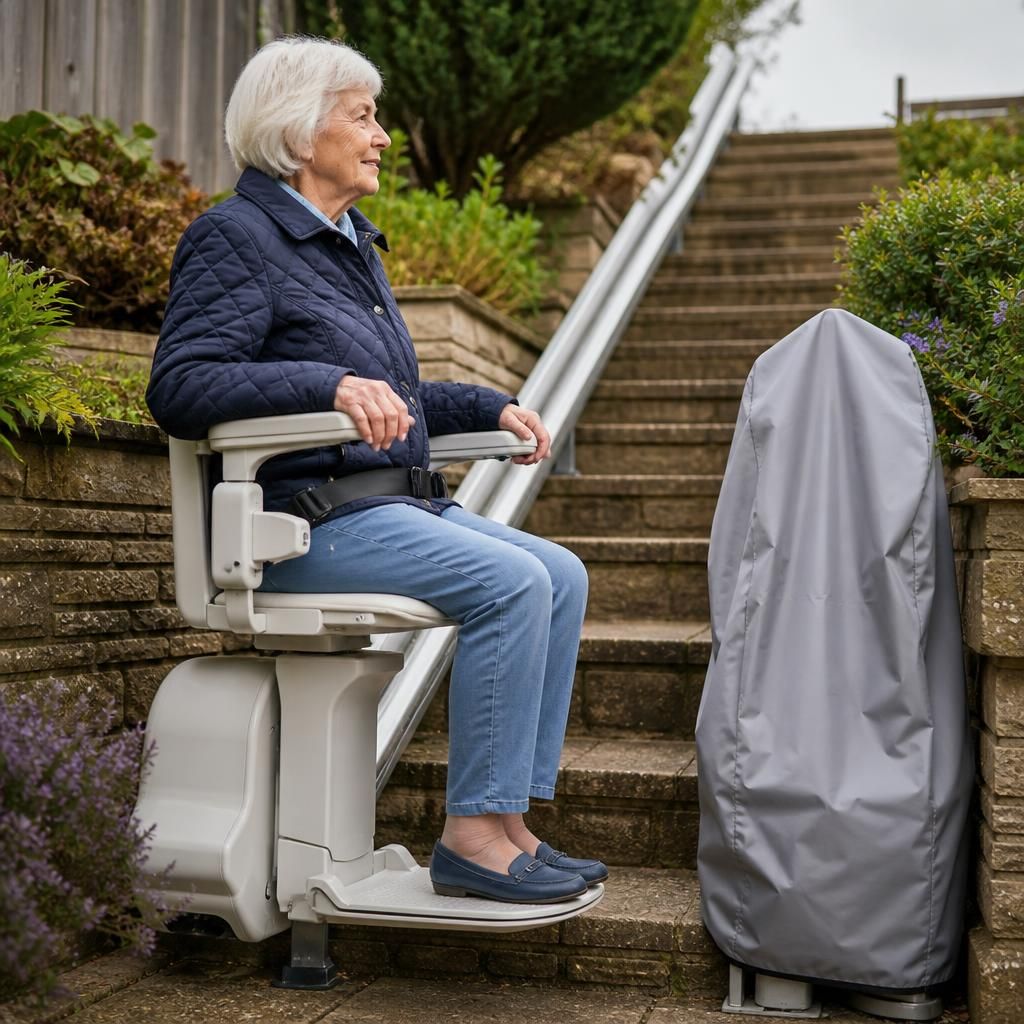
Outdoor stairlifts typically include weather-resistant controls and covers, obstruction sensors, a secure swivel seat, armrests, a safety belt and an emergency stop function. Depending on the model and installation, additional protection may include lockable controls, battery backup and manual lowering, with the exact features selected to suit the staircase and user.
Outdoor stairlifts are designed with safety features that help the user remain secure on the seat, control movement safely and stop the lift if a problem is detected. Common features include a lap belt, powered swivel seat, armrests, obstruction sensors, weather-resistant controls, an emergency stop function and battery operation. The exact specification depends on the staircase, exposure to weather and the user’s mobility needs.
Secure seating and transfer features
- Safety belt: A lap belt helps keep the user correctly positioned while the stairlift is moving. It should be fastened before every journey, particularly on steep, uneven or exposed staircases.
- Powered swivel seat: The seat can turn towards the landing so the user can get on and off facing away from the stairs. This reduces the need to twist or step sideways at the top or bottom of the staircase. A safety mechanism normally prevents the lift from travelling unless the seat is correctly positioned.
- Armrests: Armrests provide support while the user is seated and help prevent sideways movement. They can also make transfers more controlled, although the user should not rely on them to support their full weight unless the equipment has been designed for that purpose.
- Footrest protection: A stable footrest supports the feet during travel. Some models include sensors or a folding design to reduce the risk of the footrest catching an object or obstructing access when the lift is parked.
Movement and obstruction protection
Outdoor stairlifts usually have obstruction sensors around the footrest, carriage or other vulnerable areas. If the sensor detects an object on the stairs, the lift should stop or prevent travel until the obstruction is removed. This can help identify items such as garden tools, branches, loose stones or other objects that may have been left on the staircase. Sensors are an additional safeguard, not a replacement for keeping the steps clear before use.
Controls are generally positioned on the armrest and may also be available at the top and bottom of the stairs. They are designed to be simple to operate, with controls that require continuous pressure so the stairlift stops when the user releases them. A key switch or lockable control can prevent unauthorised use, which is useful where children, visitors or other household members could operate the lift accidentally.
Emergency stopping and power protection
An emergency stop button allows the user or another person to stop the stairlift immediately if there is an unexpected problem. After an emergency stop, the cause should be checked and the lift should not be used again until it is safe to do so. If the stairlift stops away from a charging point, its battery system is intended to provide sufficient reserve for normal operation or a controlled response, depending on the model and condition of the batteries.
Some outdoor stairlifts also include manual lowering or a hand-winding facility for use by a trained person if the lift cannot be moved electrically. This is model-specific and should only be used in accordance with the manufacturer’s instructions. Do not attempt to push or dismantle the stairlift, and contact the service team if a user is left in an unsafe position.
Protection from outdoor conditions
Outdoor models use weather-resistant materials, sealed electrical components and protective covers to reduce the effect of rain, frost, sunlight and dirt. Outdoor-rated controls and charging equipment are selected for the environment in which the lift will be installed. A cover can protect the seat and controls when the stairlift is parked, but it does not make the equipment immune to standing water, flooding, ice or storm damage.
The stairlift should be parked in its recommended position, usually where it can connect with the charging points and where the cover can be fitted correctly. Keep drainage areas clear and remove snow, ice, leaves and accumulated debris before use. Never use the stairlift if water has entered an electrical component, the track is icy or a cover or control appears damaged.
Safety features are selected during the assessment
A proper assessment considers the width and shape of the stairs, landing space, access at both ends, lighting, weather exposure and the user’s ability to transfer and operate the controls. For example, a lockable control may be particularly useful in a shared garden area, while a powered swivel seat or a different seat configuration may be more important where the user has limited balance or movement. The installer should explain each control, safety feature and emergency procedure during handover.
Safety features work best when combined with sensible use and regular servicing. Keep the steps clear, use the belt, follow the charging instructions and report unusual noises, repeated stopping, damaged covers, reduced battery performance or sensor faults. Never bypass a sensor or continue using an outdoor stairlift that does not stop, start or park normally. If you are unsure whether the current specification provides enough protection for your staircase or changing needs, arrange a review so the equipment and installation can be checked together.
Outdoor stairlifts include weather-resistant safety features to protect the user and support reliable operation on exposed staircases. These commonly include a lap belt, armrests, a powered swivel seat, obstruction sensors and weatherproof controls.
The powered swivel seat helps the user get on and off while facing the landing, reducing twisting and sideways movement. Obstruction sensors can stop the lift if they detect items such as leaves, branches or garden tools on the stairs. A protective cover helps shield the seat and controls from rain, frost and sunlight when the stairlift is parked, although snow, ice, standing water and debris should always be cleared before use.
Use the belt on every journey and report damaged covers, unusual stopping or control faults. Safety features provide important protection, but they must not be bypassed or treated as a substitute for keeping the staircase clear and following the manufacturer’s instructions.
Arrange an outdoor stairlift safety assessment
Arrange an outdoor stairlift safety assessment to check that the current features, controls and installation suit your staircase and mobility needs. Contact Independent Stairlifts for practical advice and a review of your requirements.