
What is the lifespan of an outdoor stairlift and how can it be extended?
An outdoor stairlift can provide reliable service for many years, but its lifespan depends on usage, exposure to weather, installation conditions and regular servicing. Protecting the lift from the elements, keeping its track and charging points clean, and arranging professional maintenance can help extend its working life.
An outdoor stairlift can provide many years of reliable service, but it has no fixed lifespan. Its working life depends on the model, frequency of use, installation conditions, exposure to rain and temperature changes, battery care, and the quality of routine maintenance. Outdoor stairlifts usually experience more wear than indoor models because their electrical and mechanical components must withstand the UK climate.
What determines an outdoor stairlift’s lifespan?
The most important factors include the following:
- Weather exposure: Rain, frost, snow, strong sunlight, wind-borne dirt and coastal salt can affect the seat, controls, charging points, batteries, sensors and track.
- Frequency of use: A lift used several times a day will experience more cycles of movement and charging than one used occasionally. Regular use is not normally a problem when the lift is correctly maintained, but wear may occur sooner on heavily used equipment.
- Installation conditions: A track fitted on an uneven, unstable or poorly drained staircase can place additional strain on the lift. Correct alignment and secure fixings are essential.
- Cleaning and maintenance: Dirt, leaves, grit and moisture can affect the track, moving parts, sensors and charging contacts if they are allowed to build up.
- Power and battery condition: Batteries gradually lose capacity. Repeatedly leaving them completely discharged can reduce their useful life and may leave the lift unavailable when it is needed.
- Storage and protection: A suitable waterproof cover, shelter or weatherproof enclosure can reduce direct exposure, provided it does not interfere with ventilation, charging or safe operation.
How to extend the life of an outdoor stairlift
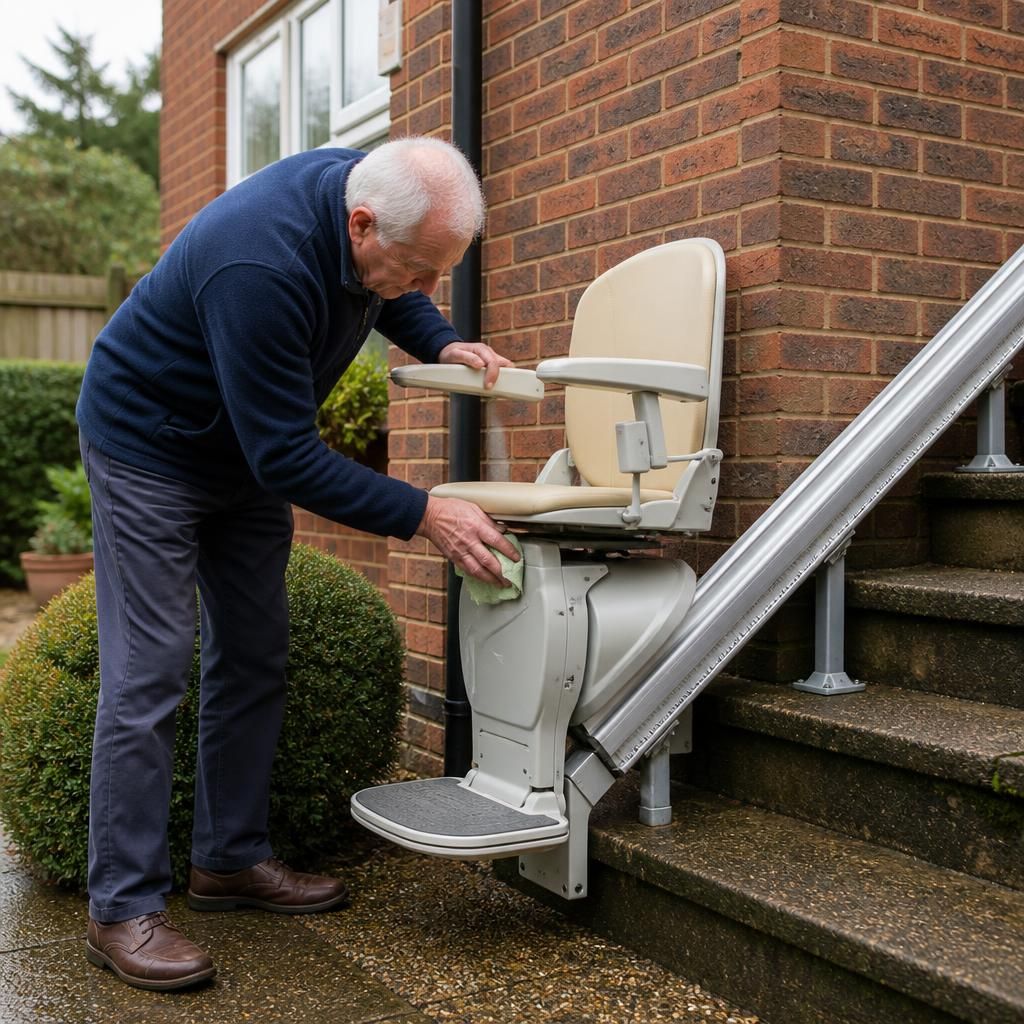
Keeping the lift clean and dry is one of the simplest ways to reduce avoidable wear. Remove leaves, mud, grit and other debris from the steps and track, particularly after storms or periods when the staircase is not used. Use a soft, slightly damp cloth for accessible surfaces and follow the manufacturer’s instructions for any approved cleaning products. Do not hose down the lift or use high-pressure water, as moisture can enter electrical components and controls.
Keep the track clear and do not place objects, plant pots, tools or other items where they could obstruct the carriage or sensors. If the track becomes dirty or develops a film of grit, arrange professional cleaning or servicing rather than applying an unsuitable lubricant. Some tracks and drive systems require specific products, while others should not be lubricated by the user. Incorrect lubrication can attract dirt or affect the braking and drive mechanism.
Use the charging points correctly and avoid leaving the stairlift unused with a flat battery. When the lift is parked, position it at the recommended charging point so the batteries can remain topped up. If the lift gives a low-battery warning, charge it as soon as practical. A battery that no longer holds charge, takes unusually long to recharge or causes the lift to stop unexpectedly should be checked by a qualified engineer. Battery replacement is a normal maintenance task and does not necessarily mean that the complete stairlift needs replacing.
Protect the lift from direct weather wherever possible. A weatherproof cover can help protect the seat, armrests and controls when the lift is not in use, but it should be removed or positioned as instructed before operation. Do not cover a wet lift in a way that traps moisture, and do not use a cover that can catch in the track or moving parts. Where practical, improving drainage around the staircase and reducing overhanging vegetation can also limit standing water, moss and debris.
Professional servicing and inspections
Arrange servicing at the interval recommended for the specific model and its operating environment. An engineer can inspect the track, drive system, carriage, brakes, seat, armrests, footrest, safety sensors, controls, batteries, charging points and electrical connections. They can also identify corrosion, loose fixings, unusual noise and early signs of wear before these develop into a breakdown or safety issue.
Service intervals may need to be more frequent where the stairlift is exposed to severe weather, used heavily, installed close to the coast or affected by dirt and poor drainage. Keep a record of servicing, repairs and battery changes. This helps identify recurring issues and provides useful information when assessing whether continued repair is more suitable than replacement.
Signs that an outdoor stairlift needs attention
Contact Independent Stairlifts or a suitably qualified stairlift engineer if you notice:
- unusual grinding, clicking, juddering or squealing during travel;
- slower movement, repeated stopping or difficulty starting;
- the lift failing to charge or showing a persistent battery warning;
- corrosion, damaged wiring, cracked covers or water ingress;
- loose track fixings, movement in the rail or changes in alignment;
- safety sensors activating without an obvious obstruction; or
- a seat, footrest, swivel mechanism, belt or control becoming difficult to use.
Stop using the stairlift if it behaves unpredictably, appears damaged or has been affected by flooding. Do not remove covers, bypass safety sensors or attempt electrical repairs yourself. Outdoor stairlifts combine moving, braking and electrical systems, so repairs and safety checks should be completed by a trained engineer using suitable replacement parts.
When repair is preferable to replacement
Many faults can be resolved with cleaning, adjustment, a battery change or replacement of an individual worn component. However, if an older lift needs repeated repairs, has extensive corrosion, no longer has suitable parts available or cannot meet current safety requirements, replacement may be more practical. The decision should consider the condition of the track and carriage, the availability of parts, expected future use and the cost and reliability of further repairs.
The best way to maximise an outdoor stairlift’s lifespan is to combine a suitable installation with sensible weather protection, correct charging, regular cleaning and planned professional servicing. If you are unsure whether your lift needs a routine service, battery replacement or a more detailed inspection, contact Independent Stairlifts for advice based on the model and the conditions at your property.
Protecting an outdoor stairlift from rain, frost, sunlight and wind-borne debris is one of the most effective ways to extend its working life. When the lift is parked, use a manufacturer-approved waterproof cover or suitable shelter to reduce exposure to moisture and dirt.
Allow the stairlift to dry before covering it, and make sure the cover cannot catch on the track, carriage or moving parts. Do not hose down the lift or use high-pressure water, as moisture can damage electrical components, controls and charging contacts. Keeping nearby steps clear of leaves, mud and standing water also helps prevent avoidable wear and corrosion.
Need advice on extending your outdoor stairlift’s lifespan?
Need advice on extending your outdoor stairlift’s lifespan? Contact Independent Stairlifts for practical guidance on servicing, weather protection, battery care or repairs for your model.