
What are the power options for outdoor stairlifts, and how do they impact reliability?
Outdoor stairlifts typically use mains electricity with a rechargeable battery backup, allowing the lift to continue operating during a power cut. A well-maintained battery, weather-protected electrical connections and a suitable installation are key to reliable performance in changing UK conditions.
Outdoor stairlifts normally use rechargeable batteries, with mains electricity supplying the charger. This combination is generally more reliable than relying on direct mains power alone: the lift runs from its batteries during travel and remains ready for use during a power cut, provided the batteries were charged beforehand. Reliability depends on the quality of the installation, protection from weather, correct charging and timely battery replacement.
Mains electricity and a charging system
A fixed mains supply powers a charger positioned at a suitable point on or near the stairlift track. The charger continually maintains the batteries when the lift is parked in a charging position. Some installations use charging points at one or both ends of the track, which helps ensure that the stairlift can recharge wherever it is left. This is particularly useful where other household members use the stairs or where the lift is not always returned to the same position.
The electrical supply should be installed in accordance with current UK requirements by a suitably qualified professional. Outdoor components, cable routes and connections need appropriate weather protection, and the circuit should include suitable protective devices. The precise arrangement depends on the property, the existing electrical installation and the stairlift model.
Rechargeable battery operation
The batteries provide the power for normal journeys and act as the backup supply when mains electricity is interrupted. This means a short power cut should not normally leave the user stranded at the top or bottom of the stairs. The battery also allows the stairlift to start and stop smoothly without requiring a high-power mains connection at the rail.
Battery performance is affected by age, usage, charging habits and temperature. An outdoor stairlift may also be exposed to colder conditions than an indoor model, and low temperatures can temporarily reduce available battery capacity. A battery that is old, repeatedly allowed to run flat or no longer holds its charge may provide fewer journeys during a power cut and can eventually prevent the stairlift from operating.
How each option affects reliability
- Mains supply: provides continuous energy to the charger, but the stairlift cannot recharge while the household supply is off.
- Rechargeable batteries: allow operation during a power cut, but only while they retain enough charge.
- Charging points: help maintain battery charge when the stairlift is parked correctly. Leaving the lift away from a charging point for extended periods can reduce its readiness.
- Weather-protected electrical equipment: reduces the risk of moisture, corrosion and connection faults that could interrupt charging or operation.
In practice, a battery-backed system is only as dependable as its charging arrangement. The stairlift should normally be left in its designated charging position when not in use. If it is regularly stopped elsewhere, the batteries may gradually discharge even though the stairlift itself appears to be working normally.
What happens during a power cut?
When mains power fails, the stairlift switches to its charged batteries. It should usually be possible to complete a journey, although the available number of journeys depends on battery condition, the length and design of the staircase, the user’s weight and how long the supply remains off. If the batteries are already low, the lift may have insufficient power for normal operation.
Do not repeatedly run the stairlift during a prolonged power cut unless necessary. If the lift stops because its batteries are depleted, follow the manufacturer’s instructions and contact the appropriate service team rather than attempting to bypass electrical protections. A battery backup is intended to provide continuity for essential use, not unlimited operation without mains charging.
Are alternative power sources available?
Most domestic outdoor stairlift installations do not use solar panels or a portable generator as their primary power source. These options would require careful design to provide the correct voltage, charging behaviour and weather protection, and they may not be compatible with the stairlift’s controls or warranty requirements. Where a property has an unreliable electricity supply, the suitable approach should be assessed during installation rather than adding an improvised power source afterwards.
A dedicated backup system may be possible in some circumstances, but this must be approved for the particular stairlift and installed safely. A household extension lead, unprotected outdoor socket or domestic battery pack should not be treated as a permanent solution.
Practical steps for dependable operation
- Keep the stairlift parked on its charging point when it is not being used.
- Check that the charger is connected and that any charging indicator shows the expected status.
- Keep outdoor plugs, sockets and cables dry and do not use damaged covers or connections.
- Arrange a service if the lift sounds different, moves more slowly, stops unexpectedly or loses charge quickly.
- Have the batteries tested or replaced when advised rather than waiting for complete failure.
- Tell the installer about any recurring power cuts, backup generator or solar installation before work begins.
The most reliable arrangement for a UK outdoor stairlift is usually a properly installed mains supply with weather-protected charging equipment and well-maintained rechargeable batteries. During an assessment, the installer can confirm where the charging points should be placed, whether the existing electrical supply is suitable and how the system will remain accessible and safe in the conditions around your home.
Outdoor stairlifts usually combine a mains-powered charger with rechargeable batteries. The batteries power the lift during normal travel and provide temporary operation during a power cut, while the mains supply restores their charge when the stairlift is parked correctly.
For dependable performance, leave the stairlift on its designated charging point whenever it is not in use. Weather-protected electrical connections and regular battery checks are also important, because cold temperatures, age and repeated deep discharge can reduce the available backup power. If the lift is losing charge quickly, moving more slowly or failing to start, arrange a service before the batteries become completely depleted.
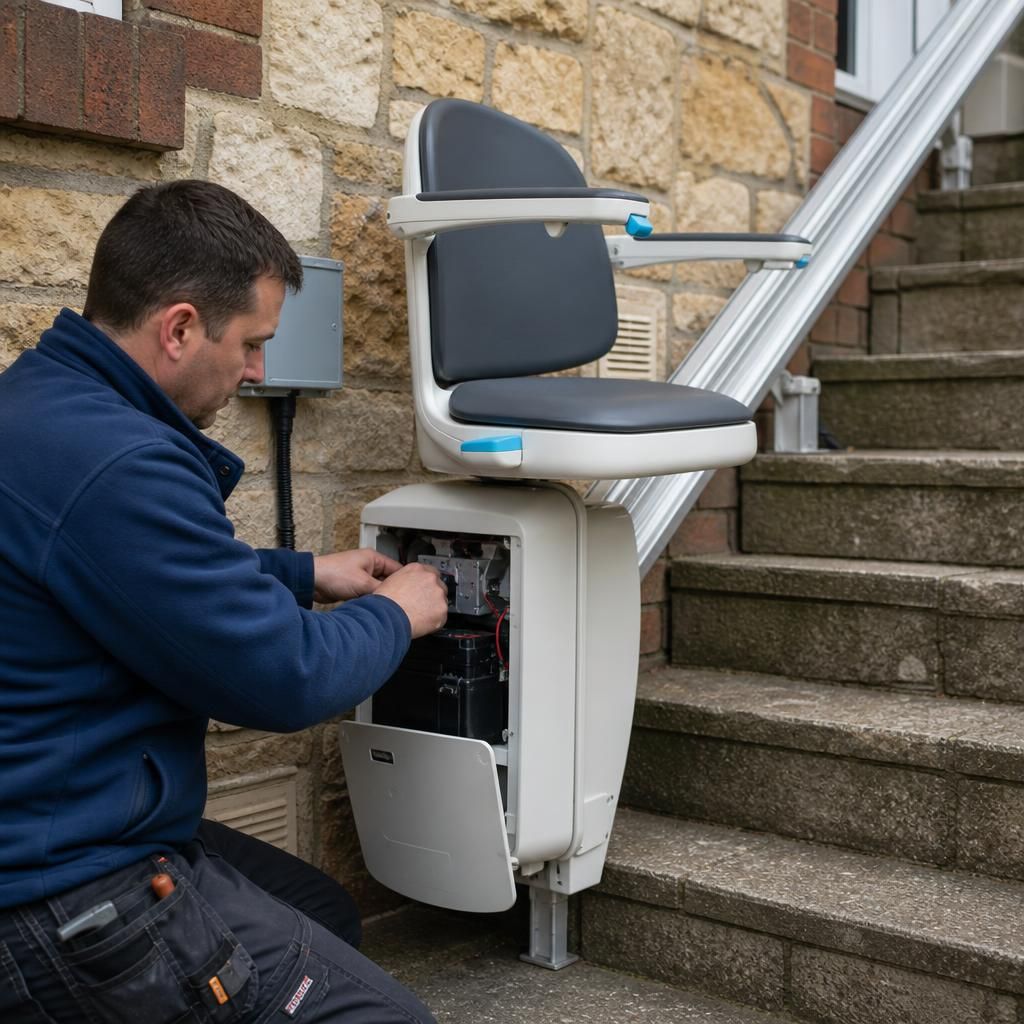
Arrange an outdoor stairlift power assessment
Arrange an outdoor stairlift power assessment to check that your mains supply, charging points, weather protection and battery backup are suitable for your home. Contact Independent Stairlifts to discuss any power-cut concerns or changes in battery performance.