
What are the installation requirements for an outdoor stairlift?
Outdoor stairlift installation requires a suitable, structurally sound staircase, safe access at the top and bottom, and a reliable power supply. The lift and its electrical components must also be weather-resistant, with the exact fixing method and protection confirmed during a professional site assessment.
Outdoor stairlift installation requires a structurally sound staircase, suitable access at the top and bottom, weather-resistant equipment and a safe, reliable power supply. The exact requirements depend on the staircase, its surroundings and how exposed it is to rain, wind, frost and direct sunlight. A professional site assessment is therefore needed before the fixing method, electrical work and weather protection can be confirmed.
The staircase and fixing surface
The steps must be stable, securely supported and free from defects that could affect the stairlift rail or its fixings. The installation team will check the condition and width of the staircase, the gradient, the edges of the steps and any changes in direction. On a straight outdoor staircase, the rail is normally fixed to the steps or their supporting structure. A curved installation may require additional assessment of landings, bends and transitions.
The surface used for fixing must be strong enough to support the equipment and the loads placed on it during use. Loose paving, cracked concrete, rotting timber, corroded metalwork or unstable retaining structures may need repair before installation. The installer will also consider whether the staircase moves or flexes, particularly where it is attached to a balcony, decking or an external structure.
Clear access at the top and bottom
There must be enough safe space for the user to get on and off the stairlift. This includes room for the seat, footrest and controls to operate without striking a wall, gate, door, railing or nearby furniture. The top landing should provide a stable area for transferring from the stairlift, while the bottom should allow the user to dismount without stepping onto an uneven or slippery surface.
Paths, gates and doors should not obstruct the rail or prevent access for servicing. If the staircase forms part of a shared access route, the installation must also preserve a safe and practical passage for other people. Any obstacles such as overhanging branches, low roofs, drainpipes or external lighting should be identified during the survey.
Protection from outdoor conditions
An outdoor stairlift must be designed for external use, with weather-resistant materials and electrical components suitable for the location. This does not mean that every part can be left completely unprotected in all conditions. The installer will assess exposure to driving rain, standing water, coastal air, snow, ice and strong sunlight, then recommend appropriate covers or protective measures.
The stairlift should be positioned so that water can drain away rather than collect around the rail, footrest, charging points or motor. External drainage, guttering and nearby downpipes may need attention if they discharge onto the staircase. The steps and landings should also have a slip-resistant surface, particularly where they are exposed to rain, frost or algae.
When the stairlift is not in use, the seat and controls should normally be left in the recommended position and protective covers should be used where provided. Covers must be fitted correctly and should not trap moisture against the equipment. Regular cleaning and maintenance remain important, especially in exposed or coastal locations.
Electrical supply and charging
Outdoor stairlifts generally use rechargeable batteries, with charging points positioned at one or both ends of the rail. The installation survey will establish whether the existing supply is suitable and where the charger and isolation controls can be located safely. Any new external electrical work should be completed by a suitably qualified electrician using equipment and cable routes appropriate for outdoor use.
The power supply should be protected against electrical faults and positioned away from areas where water can pool or be regularly splashed. Cables must be secured so they cannot become a trip hazard, be damaged by gardening equipment or interfere with gates and walkways. The charging position must remain accessible so the stairlift can recharge whenever it is parked.
Ground conditions and surrounding environment
The installer will check for uneven ground, loose gravel, nearby vegetation, surface water and other hazards around the staircase. A firm approach is important for both the stairlift user and anyone assisting them. If the staircase is close to a road, public footpath or boundary, the proposed position must not create an obstruction or unsafe projection.
Where the staircase is attached to a property or external structure, the assessment may also consider wall condition, drainage, corrosion and the effect of any planned building work. A listed property, conservation area or property managed by a landlord may require permission before alterations are made. The need for permission depends on the property and the proposed work, so it should be checked before installation.
What happens during the assessment
The surveyor will measure the staircase and landings, inspect the fixing surfaces, identify hazards and discuss how the stairlift will be used. They will also review access for installation, the location of charging equipment, weather exposure and any adaptations needed at the top or bottom. This assessment determines whether a standard outdoor model is suitable or whether a bespoke rail, additional protection or preparatory work is required.
Before work begins, you should receive clear information about the proposed position, electrical requirements, any necessary repairs and the expected maintenance arrangements. After installation, the stairlift should be tested, safety features demonstrated and charging and weather-protection instructions explained. Keep the manufacturer’s guidance available and report unusual noise, movement, charging problems or damage promptly rather than continuing to use a stairlift that may be unsafe.
In practice, the most important preparation is to keep the staircase and access areas clear, resolve structural or drainage problems identified during the survey, and ensure that any required electrical or property permissions are in place. Independent Stairlifts can confirm the installation requirements for your particular staircase during a tailored assessment and advise on any work needed before fitting.
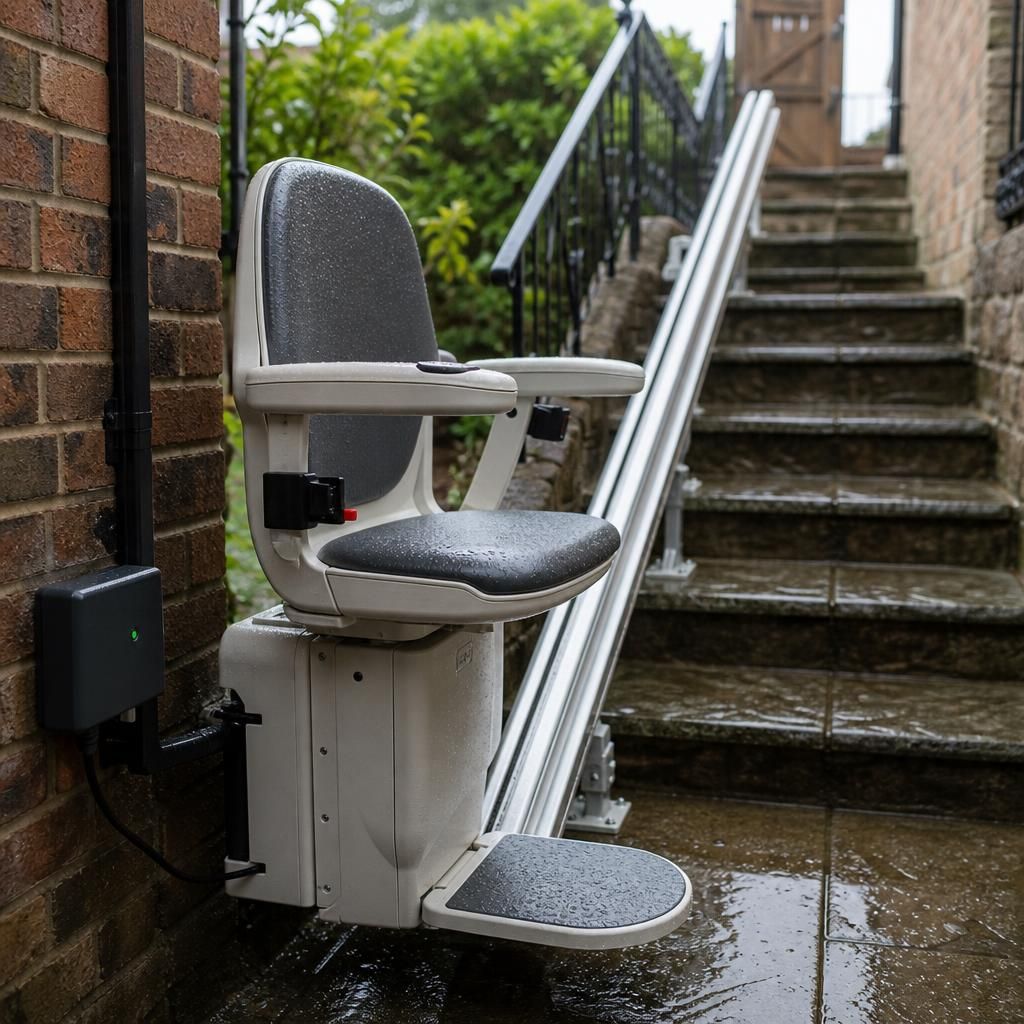
Weather protection is a core installation requirement for an outdoor stairlift. The lift, rail, controls and charging equipment must be suitable for external use, while the installation site should protect them from avoidable exposure to driving rain, standing water, frost, coastal air and strong sunlight.
During the assessment, the installer checks that water can drain away from the rail, motor and charging points, and that nearby gutters or downpipes are not discharging onto the stairs. The surrounding steps and landings should also provide a firm, slip-resistant route. Where the stairlift is particularly exposed, a correctly fitted protective cover or other measures may be recommended. These precautions support reliable operation, but do not replace regular cleaning, charging and maintenance.
Arrange Your Outdoor Stairlift Assessment
Arrange an outdoor stairlift assessment with Independent Stairlifts to confirm the structural, access, weatherproofing and electrical requirements for your staircase. We can advise on any preparation needed and provide a tailored quote.