
How does the outdoor stairlift installation process work?
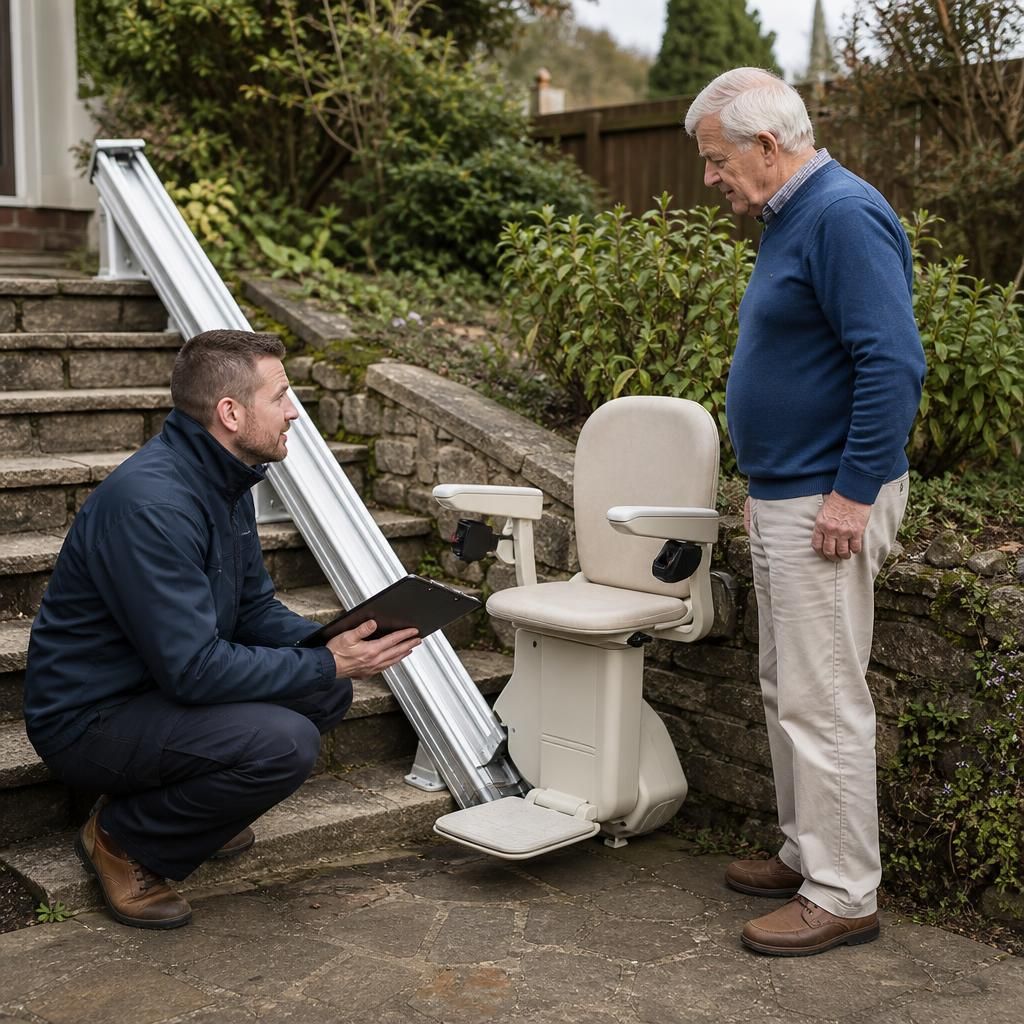
Outdoor stairlift installation begins with a home assessment to check the steps, access route, power supply and exposure to weather. Once the suitable stairlift is selected, trained installers securely fit the rail and lift, connect and test the system, then explain its safe operation and care.
Outdoor stairlift installation is a planned process that starts with an assessment of your steps and finishes with the lift being tested and demonstrated at your home. A trained installer checks the staircase, landing areas, power supply, drainage, weather exposure and the user’s requirements before fitting a suitable outdoor-rated stairlift.
Home assessment and site survey
The first stage is a detailed assessment of the route the stairlift will follow. This is usually carried out at your property so the installer can examine the staircase rather than relying on photographs or measurements alone. They will consider:
- The width, length, gradient and surface of the steps.
- Any bends, intermediate landings, gates, walls, paths or obstructions.
- Whether the chair needs to stop at the top, bottom or another access point.
- The available space for getting on and off the lift safely.
- How rain, frost, sunlight, wind and standing water may affect the installation.
- The position of a suitable electrical supply and how the charger will be protected.
- The user’s mobility, weight, height, transfer ability and preferred operating position.
For a straight outdoor staircase, the rail may follow a relatively simple route. A staircase with corners or changes in direction normally requires a curved rail made to the measurements of the individual steps. The survey also identifies whether a folding or swivelling seat, powered footrest, safety belt or other access aid would make the lift easier and safer to use.
Choosing the suitable equipment
The stairlift is selected for outdoor use, rather than adapting an indoor model to an exposed location. Outdoor models are designed with weather-resistant materials and protective finishes, although they still need sensible care and, where appropriate, a cover when not in use. The specification may include weatherproof controls, sealed electrical components, a durable seat and a rail finish suited to the environment.
At this stage, the installer should explain the proposed route, the position of the charging point, how the lift will be secured and any preparation needed before fitting. You should also receive clear information about the quotation, the work included, the expected installation arrangements and any limitations caused by the site.
Preparing the installation area
Before the fitting begins, the access route needs to be clear. Remove loose items, plant pots and other objects from the steps and landings, and make sure the installer can reach the relevant electrical connection. If the staircase has damaged paving, poor drainage, loose handrails or overhanging vegetation, these issues may need attention first.
Outdoor stairlifts are generally fixed to the steps or another suitable supporting surface. The installer will not rely on an unstable wall, loose paving or a surface that cannot safely carry the required fixings. Where the steps are uneven or exposed to water, the fitting method and rail supports may need to be adjusted to provide a secure and practical result.
Fitting the rail and lift
The installer positions and secures the rail along the surveyed route. Fixings are placed carefully so the rail remains stable while leaving adequate clearance for the chair, footrest and the person using it. On a curved staircase, the rail is manufactured or configured to follow the individual shape of the steps and landings.
The lift carriage, seat, footrest, controls and safety components are then fitted to the rail. The electrical connection and charging point are installed in a protected position, with cables routed so they do not create a trip hazard or become unnecessarily exposed to water. Installation work should preserve access to the steps and should not obstruct doors, gates or essential paths.
Connecting and testing the system
Once the stairlift is assembled, the installer connects the power supply and carries out operational checks. These normally include travel in both directions, stopping and starting, charging, the controls, the seat, the safety belt, armrests, footrest and any swivel or folding mechanisms. Safety sensors are checked to confirm that the lift stops if it encounters an obstruction.
The installer also checks that the chair stops in the correct position, that passengers can get on and off safely, and that the rail and fixings remain secure during operation. If the lift is installed on a route exposed to rain or spray, the weather protection and positioning of electrical parts are reviewed as part of the final checks.
Demonstration and handover
After testing, the installer demonstrates the complete operating sequence. This includes how to:
- Unlock or switch on the stairlift, if required.
- Use the controls and call or send the chair to another level.
- Put on and release the safety belt.
- Use the swivel seat, powered footrest or folding features safely.
- Park the lift correctly and leave it charging.
- Respond to an obstruction, low battery indication or other warning.
- Use the manual or emergency release procedure where the model provides one.
Do not use the lift independently until you are comfortable with these controls. If more than one person will use it, each person should receive an explanation suited to their needs. The installer should also provide the operating instructions, warranty or service information and advice on keeping the equipment clean and protected.
What can affect the installation time?
The work involved depends on the staircase and the condition of the surrounding area. A straightforward route may require less preparation than a curved staircase with several landings, while difficult access, damaged steps, poor drainage or the need for electrical work can add to the installation. Bespoke curved rails may also require additional manufacturing time before the fitting date.
Weather can affect outdoor work, particularly when surfaces are wet, icy or unsafe for installers. If conditions prevent secure fitting or testing, the appointment may need to be rearranged. This protects both the installation team and the reliability of the finished system.
After installation
Keep the steps and rail clear, wipe away dirt and moisture as recommended, and avoid covering or storing items against the stairlift. Park the chair at its designated charging point when it is not in use, and report unusual noises, slow movement, repeated stopping or charging problems rather than continuing to operate a potentially faulty lift.
Regular servicing is particularly important for an outdoor stairlift because moving parts and electrical components are exposed to changing conditions. Follow the care instructions provided for the model and arrange professional attention if the lift has suffered impact, flooding, storm damage or prolonged exposure to standing water. With a proper survey, secure fitting, thorough testing and appropriate maintenance, an outdoor stairlift can provide dependable access between levels while keeping the installation suited to the property and the person using it.
The home assessment is the foundation of an outdoor stairlift installation. A trained installer examines the full route, including the steps, landings, access points, drainage, weather exposure and available power supply. They also consider how the user will transfer onto the seat and whether features such as a swivel seat, folding rail or powered footrest would improve safe access.
This assessment determines whether a straight or curved rail is suitable and where the stairlift should park and charge. It also identifies preparation work, such as repairing loose paving, improving drainage or clearing obstructions, before the rail and lift are fitted.
Arrange your outdoor stairlift assessment
Arrange your outdoor stairlift assessment with Independent Stairlifts to check your steps, access points, power supply and weather exposure. We’ll recommend a suitable installation and explain what preparation may be needed.