
How do outdoor stairlifts handle different weather conditions throughout the year?
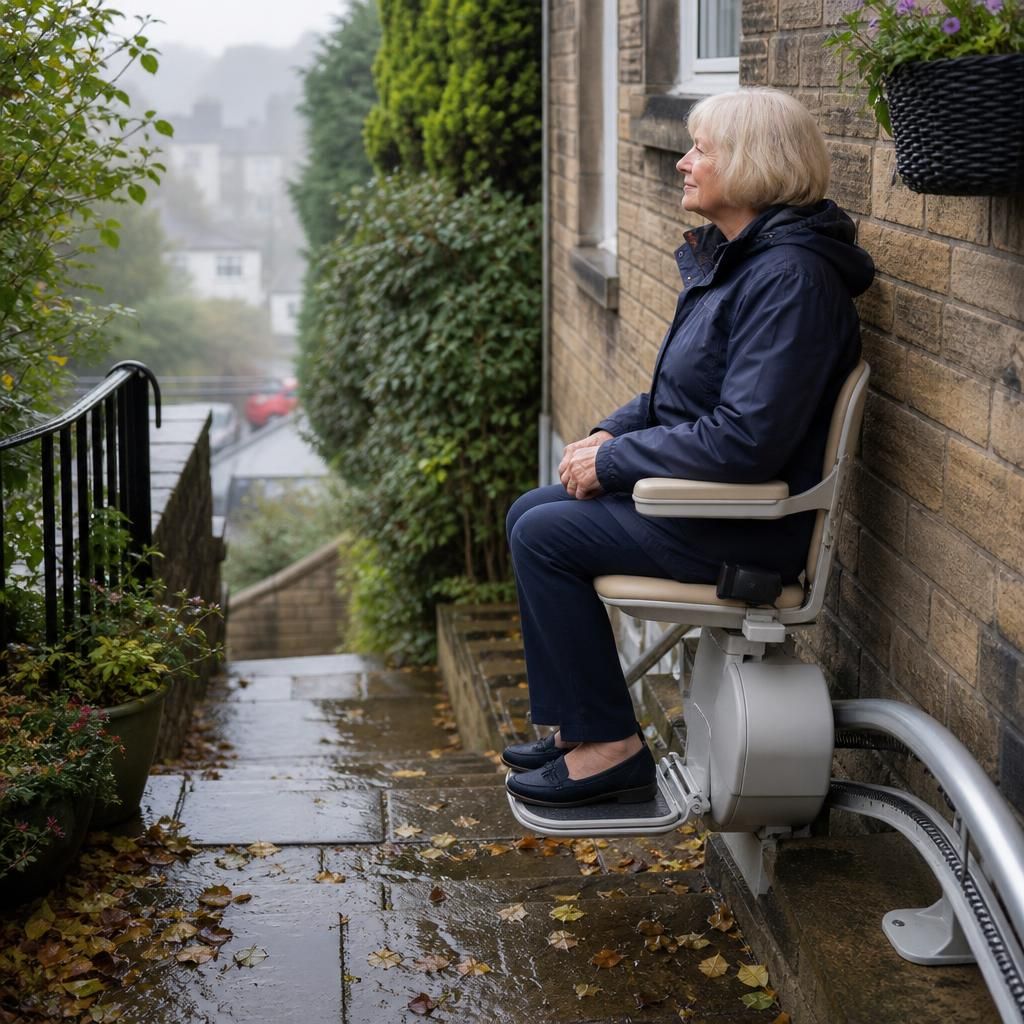
Outdoor stairlifts are designed with weather-resistant components, protective finishes and sealed controls to operate reliably through typical UK rain, wind, frost, snow and summer heat. Regular cleaning, correct use of the protective cover and keeping the rails and seat free from ice, leaves and standing water help maintain safe performance throughout the year.
Outdoor stairlifts are built to operate in typical UK weather by using weather-resistant materials, sealed electrical components, protective finishes and rechargeable batteries. These features help the lift cope with rain, wind, frost, snow and summer heat, but they do not make it completely waterproof or suitable for use when the stairs are dangerously icy, flooded or obstructed. Correct installation, sensible use and routine cleaning remain important throughout the year.
The exact level of weather protection depends on the model and its installation environment. An outdoor stairlift normally has a corrosion-resistant rail, a durable seat and armrests, sealed controls and covers over vulnerable electrical parts. The charging points are positioned so the batteries can recharge when the lift is parked, while the protective cover helps shield the seat and controls when the stairlift is not being used.
Rain and damp conditions
Rain is a normal operating condition for an outdoor stairlift. Water-resistant controls and enclosed electrical connections help prevent moisture from reaching sensitive components during ordinary showers and prolonged wet weather. The stairlift should still be parked in its recommended position and covered when not in use, particularly where it is exposed to driving rain.
- Keep the seat, armrests, joystick and footplate as dry as reasonably possible before use.
- Remove standing water from the seat or footplate with a soft cloth rather than using a pressure washer.
- Check that the rail and steps are clear of leaves, mud and water that could affect safe travel.
- Do not leave the lift immersed in water or use it on steps affected by flooding.
Persistent damp can also encourage corrosion, especially in exposed or coastal locations. A suitable installation position, effective drainage and regular inspection help reduce this risk.
Wind and storms
Wind does not usually prevent an outdoor stairlift from operating, but strong gusts can affect the user and any loose cover. The lift should be parked securely, with its cover fastened as intended. Avoid using the stairlift during severe winds if branches, debris or other objects could fall onto the staircase.
After a storm, inspect the route before travelling. Look for fallen branches, damaged rail sections, displaced covers or water around the charging point. If any part appears damaged, stop using the stairlift and contact the service team rather than attempting a repair yourself.
Frost, ice and snow
Cold weather can affect both the stairlift and the staircase. Batteries may provide less effective performance in very low temperatures, while ice on the rail, steps or footplate can create a slipping hazard. Snow can also obstruct the carriage or prevent the stairlift from reaching its charging position.
- Clear snow and ice from the full travel path before use.
- Check that the footplate, seat and controls are not frozen or slippery.
- Do not force the stairlift if the carriage or rail appears obstructed.
- Keep the lift parked at its charging point so the batteries remain topped up.
Use a suitable domestic de-icer on the steps where appropriate, but avoid applying salt or corrosive products directly to the lift mechanism. Do not pour hot water over frozen components, as this can refreeze and may allow water to enter areas where it should not.
Cold temperatures and battery performance
Rechargeable batteries are affected by temperature. In cold conditions, a battery can appear to lose charge more quickly or the lift may have reduced range between charges. This is one reason to return the stairlift to its charging point after every journey and to check that the charging indicator shows normal operation.
If the lift repeatedly reports a low battery, fails to charge or stops unexpectedly, do not rely on repeated resets. Check that it is correctly positioned on the charger and contact the service team if the issue continues. The batteries and charging system should be checked by a qualified engineer.
Sunlight and summer heat
Outdoor stairlifts are designed for exposure to normal outdoor temperatures and sunlight. However, prolonged direct sun can heat the seat, armrests and metal surfaces, while ultraviolet light can gradually affect some plastics, fabrics and finishes. Using the protective cover when the lift is parked helps reduce this exposure.
In hot weather, check the seat and controls before use and allow very hot surfaces to cool if necessary. Do not cover the lift with an unapproved material while it is charging, as ventilation around electrical equipment must not be restricted. Keep the charging area clear and follow the instructions supplied for the specific model.
Leaves, dirt and seasonal debris
Autumn leaves, grit, pollen and mud can collect on outdoor stairs and around the rail. These materials may make the steps slippery and can interfere with moving parts if they are allowed to build up. Clean the rail and accessible surfaces with a soft, damp cloth and use only cleaning products recommended for the stairlift. Keep drainage channels and the area around the charging point clear.
Never use abrasive pads, solvents, a hose directed at electrical components or a pressure washer. These can damage protective finishes and seals.
When an outdoor stairlift should not be used
Weather-resistant does not mean that every condition is safe for travel. Do not use the stairlift if the steps are covered by ice, deep snow, floodwater or loose debris, or if there is visible damage following extreme weather. Lightning, falling branches and other immediate hazards also require the route to be avoided until conditions are safe.
If the stairlift becomes wet internally, makes an unusual noise, moves unevenly, loses power or shows a fault message, stop using it and arrange an inspection. Do not remove covers or attempt to dry internal components with a heat source.
Year-round preparation and servicing
A practical seasonal check should include the cover, rail, charging points, seat belt, footplate, controls and battery indicator. Keep the lift parked and charging when it is not in use, especially during periods of cold weather or when access is needed less frequently. Report worn covers, corrosion, loose fittings or changes in performance promptly.
Professional servicing is particularly valuable for lifts exposed to heavy rain, coastal air or substantial temperature changes. An engineer can inspect the electrical protection, batteries, charging system, drive mechanism and fixings, and can confirm whether any component needs adjustment or replacement. Following the model’s operating instructions and the maintenance guidance provided at installation will help the stairlift remain reliable across the seasons.
Outdoor stairlifts handle changing UK weather through weather-resistant materials, sealed controls and protective covers, but the staircase must still be kept clear and safe. Rain, frost, snow, leaves and standing water can affect the route even when the stairlift itself remains operational.
- Park the stairlift at its charging point when not in use.
- Use the supplied cover to protect the seat and controls from rain, frost and direct sunlight.
- Clear ice, snow, leaves and debris from the steps, rail and footplate before travelling.
- After severe weather, check for damage, flooding or displaced covers before using the lift.
Do not use the stairlift if the route is icy, flooded or obstructed, or if the lift shows a fault or unusual movement. Contact a qualified service engineer if weather exposure has affected charging, battery performance or any electrical component.
Arrange Your Outdoor Stairlift Assessment
Arrange your outdoor stairlift assessment with Independent Stairlifts to discuss your staircase, local weather exposure and the most suitable weather-resistant solution.