
How do I maintain an outdoor stairlift in optimal condition?
Maintain an outdoor stairlift by keeping the seat, controls, footrest and track clean and dry, removing leaves or debris, and checking the weatherproof covers and charging points regularly. Arrange professional servicing at the recommended intervals, and report unusual noises, reduced movement, warning lights or charging problems rather than attempting electrical or mechanical repairs yourself.
Maintaining an outdoor stairlift in optimal condition involves regular cleaning, sensible protection from the weather, careful charging and prompt professional servicing. Keep the seat, controls, footrest and track free from dirt and moisture, check the protective covers and charging points, and report any change in performance rather than attempting electrical or mechanical repairs yourself.
Keep the stairlift clean and dry
- Wipe the seat, armrests, footrest and control buttons with a soft, slightly damp cloth. Use a mild detergent if needed, following the manufacturer’s guidance.
- Remove leaves, soil, grit and other debris from the track, particularly after windy weather. Debris can affect smooth travel and may enter moving components.
- Dry exposed surfaces after cleaning or heavy rain. Do not use a pressure washer, hose or excessive water around the motor, controls, charging points or electrical connections.
- Clean bird droppings, tree sap and other deposits promptly, as they can damage finishes if left in place.
Protect the stairlift from UK weather
Outdoor stairlifts are designed with weather-resistant materials and covers, but they are not maintenance-free. Make sure the seat, joystick or remote control and motor housing are covered when the lift is not in use, where the design allows. Replace a cover if it is torn, poorly fitting or allowing water to collect.
- After strong winds, check that covers have not come loose and that no branches or other objects are obstructing the track.
- In freezing conditions, remove ice and snow before operating the stairlift. Never force the seat or footrest if they are frozen in position.
- During hot, sunny periods, check for cracking, fading or deterioration in covers and exposed plastic components.
- In coastal areas, or where roads and paths are treated with salt, wipe away salt residue and arrange checks for corrosion more promptly.
Do not apply lubricants, anti-corrosion products or household cleaning chemicals unless they are approved for the stairlift. The wrong product can attract grit, damage seals or interfere with the braking and drive systems.
Check charging and power regularly
Leave the stairlift parked at its designated charging point when it is not being used, unless your installer or manufacturer has provided different instructions. Check that the charging contacts are clean and unobstructed and that any indicator light shows normal charging. Avoid covering or blocking ventilation areas around the charger.
If the lift moves more slowly than usual, stops before completing its journey, gives a low-battery warning or fails to charge, stop relying on it until it has been checked. Repeatedly running a stairlift with a poorly charged battery can reduce reliability and may leave it unavailable when needed.
Carry out simple visual and operational checks
Before use, look for anything unusual around the track, steps and landing. Check that:
- the track is secure and free from obstruction;
- the seat, armrests and footrest move and lock as intended;
- the seat belt fastens correctly;
- the controls and remote controls respond normally;
- the safety sensors stop the lift when they encounter an obstruction; and
- there are no loose covers, exposed wires, fluid leaks or visible corrosion.
Only test safety functions in the manner explained in your user instructions. Keep hands, clothing and other items away from moving parts, and do not continue using the lift if a safety edge, belt, swivel mechanism or control does not work correctly.
Arrange professional servicing
Routine servicing should be carried out at the intervals recommended for your model and usage. A qualified engineer can inspect the batteries, charging system, drive mechanism, track, fixings, brakes, sensors and weather seals, as well as identify wear that may not be visible during everyday cleaning. Keep service records and mention any recent weather damage, unusual sounds or changes in performance during the appointment.
Contact Independent Stairlifts promptly if you notice grinding, juddering, repeated stopping, unusual movement, warning lights, a burning smell, charging faults, water ingress or visible damage. Switch off the stairlift only as described in the user instructions and do not remove covers or attempt to adjust mechanical or electrical parts. If the stairlift is unsafe or has been affected by flooding, lightning or impact, keep it out of use until it has been professionally assessed.
Good maintenance does not require dismantling the stairlift. Consistent cleaning, sensible weather protection, correct charging and timely servicing help preserve safe operation and make developing faults easier to identify.
Weather protection is a key part of maintaining an outdoor stairlift because rain, frost, sunlight, salt and wind-blown debris can affect its covers, controls, track and electrical connections. Use the supplied protective covers whenever the stairlift is not in use, and replace any cover that is torn, loose or allowing water to collect.
After strong winds, heavy rain or snowfall, remove leaves, branches, ice and standing water before operating the lift. Wipe away salt and bird deposits promptly, particularly in coastal areas, but do not use a pressure washer or apply unapproved cleaning chemicals and lubricants. If you notice water ingress, corrosion, damaged covers or changes in movement after severe weather, stop using the stairlift and arrange a professional inspection.
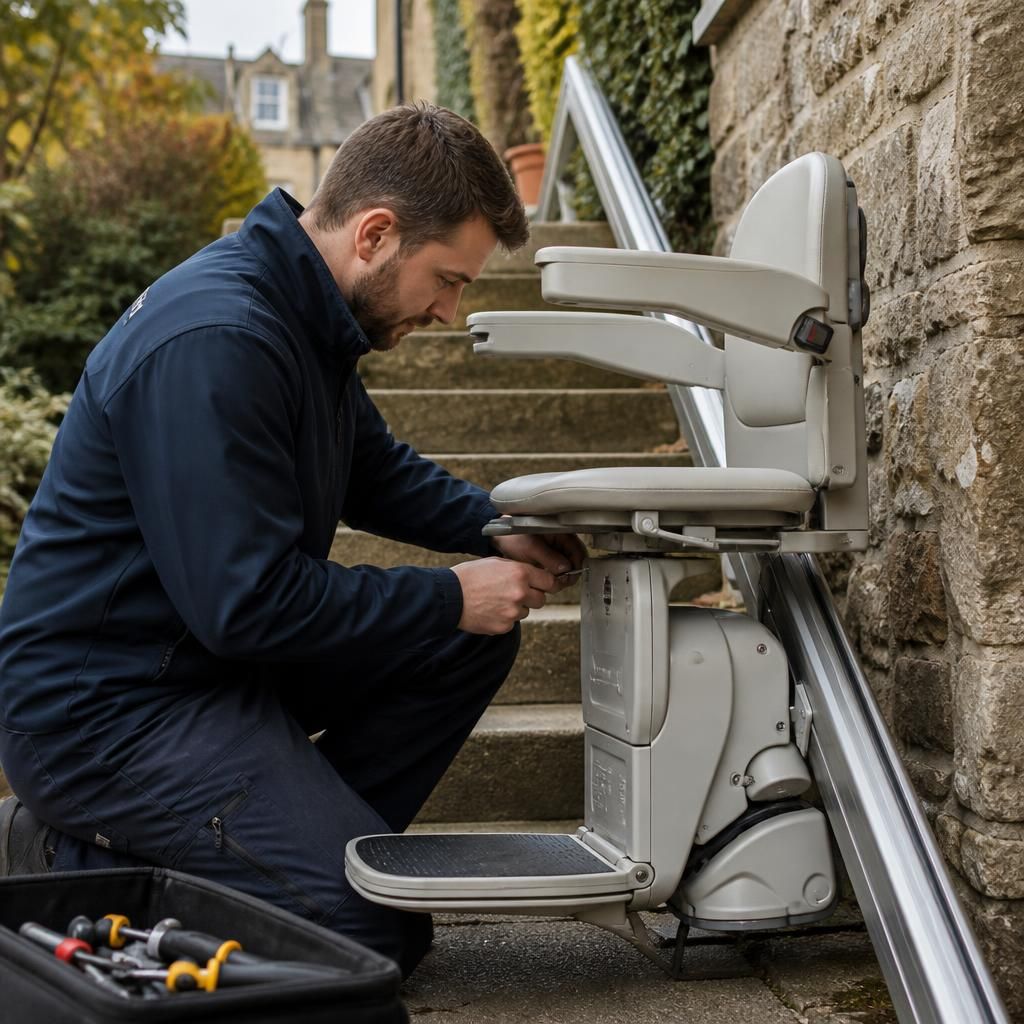
Arrange an outdoor stairlift service
Arrange an outdoor stairlift service with Independent Stairlifts to check the batteries, charging system, track, safety features and weather seals. Contact us if you have noticed unusual movement, charging problems or weather-related damage.