
Are there specific safety features unique to outdoor stairlifts?
Outdoor stairlifts include standard safety features such as seat belts, sensors and obstruction detection, together with weather-resistant adaptations for external use. These typically include waterproof or weatherproof controls, corrosion-resistant components, sealed electrical parts and durable covers to help protect the lift from rain, moisture, dirt and temperature changes.
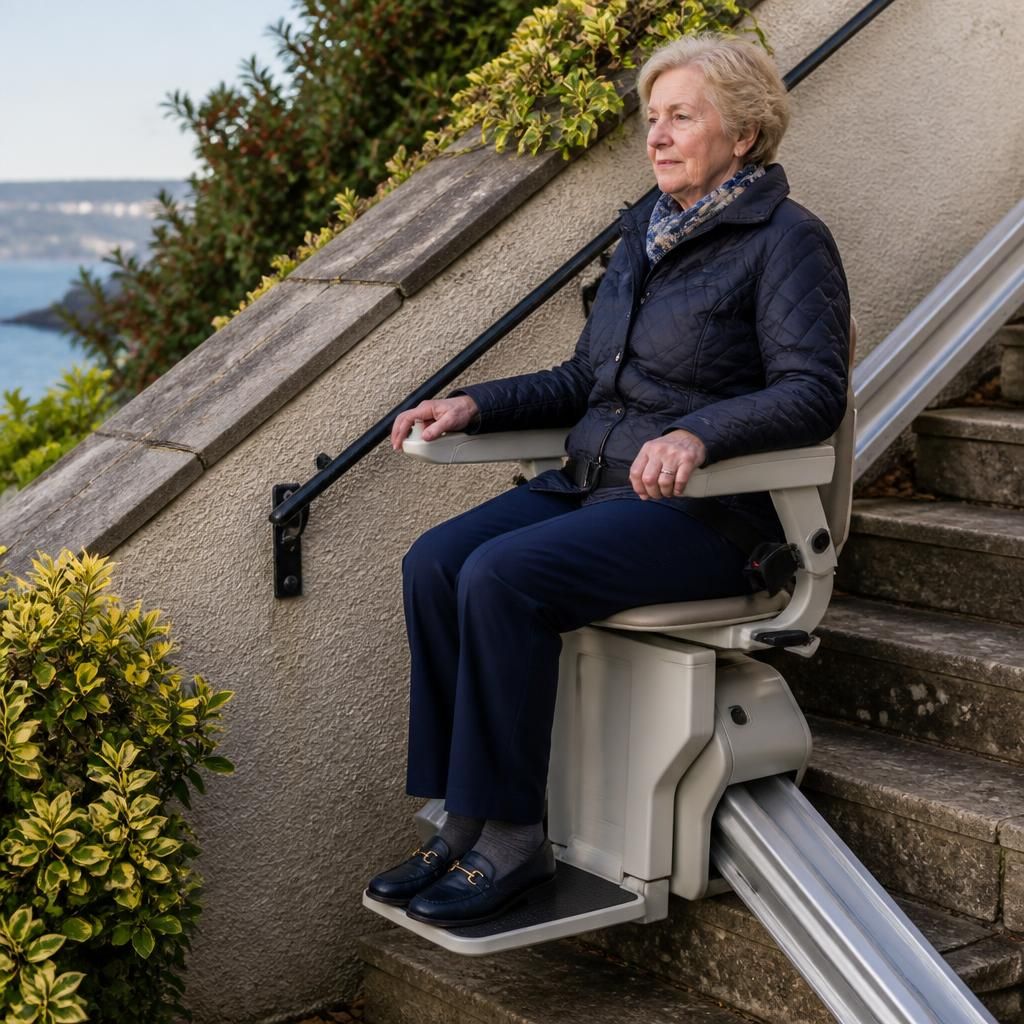
Outdoor stairlifts use the same core safety systems as indoor models, but add protection against rain, moisture, dirt, sunlight and temperature changes. The outdoor-specific safety measures usually relate to weather resistance, corrosion prevention, grip and reliable operation in changing conditions. The exact specification varies between models, so the lift should be assessed against the location, exposure and condition of the stairs before installation.
Important outdoor adaptations can include:
- Weather-resistant controls: the armrest controls, remote controls and call/send units are designed to resist moisture. Some controls have sealed housings or protective covers, but they should still not be left submerged or exposed unnecessarily.
- Sealed electrical components: protected wiring, connectors and control equipment help reduce the risk of moisture entering the electrical system. The installer should position components so that water can drain away rather than collect around them.
- Corrosion-resistant construction: rails, fixings and exposed metalwork may use stainless, treated or otherwise corrosion-resistant materials. This is particularly important in coastal areas, where salt-laden air can accelerate corrosion.
- Weatherproof seating and upholstery: outdoor seats and armrests are made from materials that tolerate damp conditions and sunlight better than standard indoor upholstery. A seat may also have a protective cover when the lift is not in use.
- Non-slip surfaces: the footrest and other contact surfaces are designed to provide secure footing. Keeping these areas clean and free from leaves, ice, algae and standing water remains essential, as weather-resistant materials cannot prevent slipping caused by contamination.
- Protective covers and charging arrangements: covers can shield the seat and controls from heavy rain, frost and ultraviolet exposure. Battery charging equipment should remain protected and positioned in accordance with the manufacturer’s instructions.
Outdoor stairlifts also retain standard safety features. These commonly include a lap belt or other restraint, obstruction sensors, a safety edge on the footrest and drive unit, controlled starting and stopping, swivel-seat safety mechanisms and manual lowering or emergency procedures. Obstruction detection is especially useful outdoors because grit, fallen leaves, small stones and other debris can enter the path of the lift. Sensors are not a substitute for keeping the rail and steps clear, however, and some obstructions may not be detected in every situation.
Some outdoor models have additional protection against unintended movement or operation in unsafe conditions. For example, a swivel seat can help the user get on and off away from the edge of the stairs, while interlocks can prevent travel if the seat, armrests or footrest are not correctly positioned. Where the stairway is exposed, the installation may also include a suitable parking position that leaves the lift in a less vulnerable location and keeps access routes clear.
Weather resistance does not mean that an outdoor stairlift can be used without precautions in every condition. Heavy snow, ice, flooding, severe winds or accumulated debris can affect the steps, rail, sensors and moving parts. The lift may need to be covered, cleared or taken out of use temporarily. Never operate it when the steps or seat are unsafe, and do not use electrical equipment if there is visible damage, water ingress or an unusual smell or sound. Contact the installer or service provider if a fault occurs rather than attempting to bypass a safety device.
When choosing or reviewing an outdoor stairlift, ask which parts are specifically rated for external use and how the manufacturer defines that protection. A weather-resistant control is not necessarily fully waterproof, and a corrosion-resistant rail still needs inspection and cleaning. The installation should also account for drainage, exposure to direct sunlight, nearby trees, coastal conditions, the position of the charging point and safe access at the top and bottom of the stairs.
Regular checks are part of the safety system. Keep the rail, footrest, seat and sensors free from mud, leaves and ice; check that covers are secure; look for rust, cracked plastics, loose fixings or damaged cables; and report changes in braking, noise or movement. Scheduled servicing allows the batteries, sensors, fastenings and weather seals to be examined before a small outdoor-related issue affects reliability. If the stairlift is intended for someone with limited balance or strength, the assessment should also confirm that the seat, belt, controls and transfer points are suitable for that person.
In short, the features most distinctive to outdoor stairlifts are sealed or weather-resistant controls and electrics, corrosion-resistant materials, outdoor-grade seating, protective covers and surfaces intended to remain usable in damp conditions. These work alongside ordinary stairlift safety systems, but safe operation still depends on a suitable installation, sensible use and maintenance appropriate to the British weather.
The main safety feature unique to an outdoor stairlift is protection against moisture and changing weather. Sealed controls, protected electrical connections and corrosion-resistant components help reduce the risk of faults caused by rain, damp air, dirt and salt, particularly in exposed or coastal locations.
These features do not make the stairlift completely waterproof. Keep controls, sensors, the rail and footrest clear of standing water, leaves, ice and grit, and use the supplied cover when the lift is parked. If you notice water ingress, damaged seals, unusual sounds or unreliable movement, stop using the stairlift and contact the service team for advice.
Ask us about outdoor stairlift safety features
If you would like advice about the safety features or suitability of your outdoor stairlift, speak to our team for a practical assessment of your installation.